
Title
Rotten States?: Corruption, Postcommunism, And Neoliberalism,Used
Sold by Ergodebooks, an authorized reseller.
Returns accepted within 30 days | support@ergodebooks.com
Shipping Information
- Free Standard Shipping — United States only
- Processing Time: 3–5 business days
- Estimated Delivery: 6–10 business days after dispatch
- Double-boxed, fully insured & discreetly packaged
- Tracking number sent via email once dispatched
Returns & Refund
Returns accepted within 30 days of delivery.
Damaged or Defective Item
Free return shipping + replacement or full refund
Wrong Item Received
Free return shipping + replacement or full refund
Change of Mind
Return shipping at customer's expense · 25% restocking fee applies
Payment Option

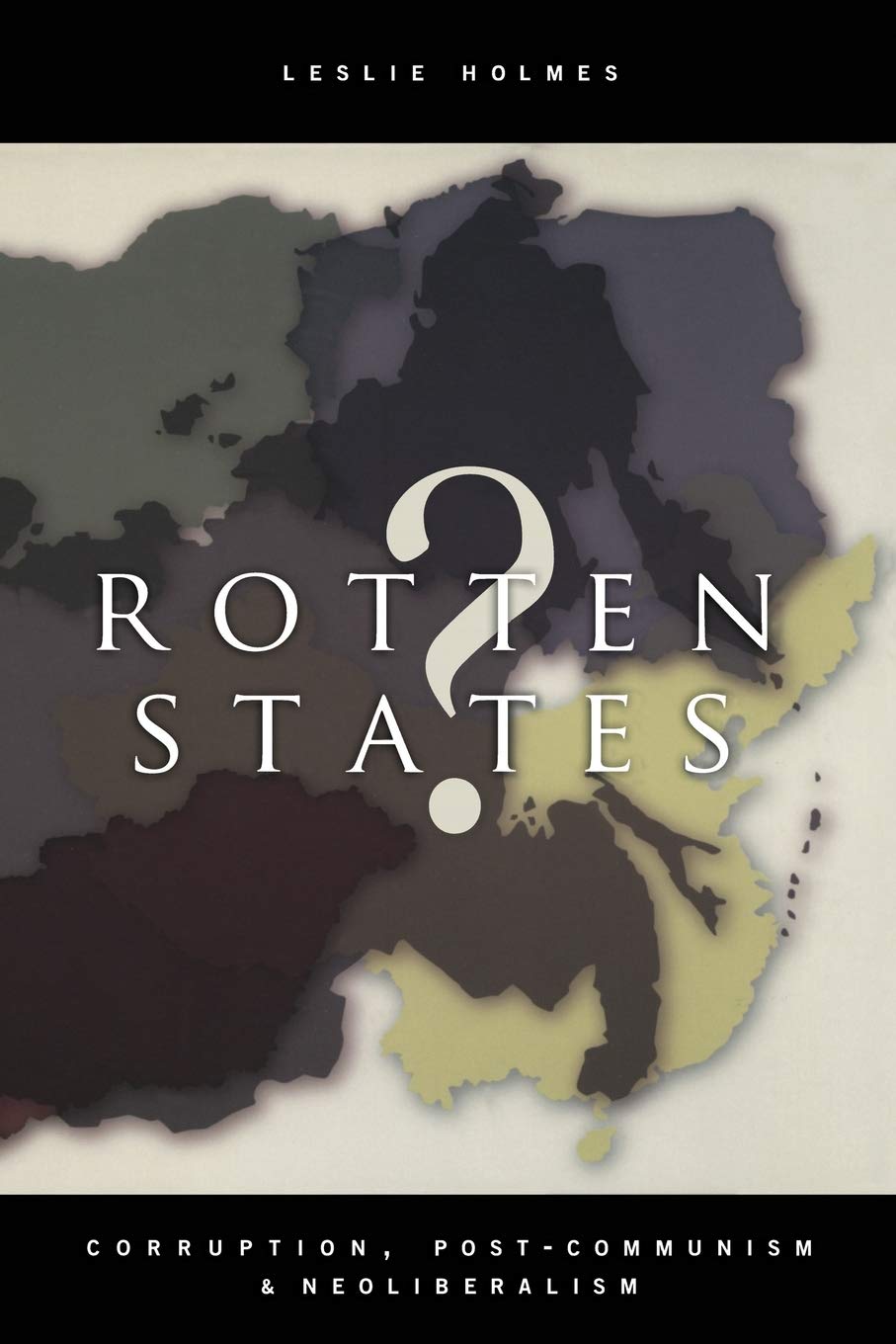
Official corruption has become increasingly prevalent around the world since the early 1990s. The situation appears to be particularly acute in the postcommunist states. Corruptionbe it real or perceivedis a major problem with concrete implications, including a lowered likelihood of foreign investment. In Rotten States? Leslie Holmes analyzes corruption in postcommunist countries, paying particular attention to Bulgaria, Hungary, Poland, and Russia, as well as China, which Holmes argues has produced, through its recent economic liberalization, a system similar to postcommunism. As he points out, these countries offer useful comparisons: they vary in terms of size, religious orientation, ethnic homogeneity, and their approaches to and economic success with the transition from communism.Drawing on data including surveys commissioned especially for this study, Holmes examines the causes and consequences of official corruption as well as ways of combating it. He focuses particular attention on the timing of the recent increase in reports of corruption, the relationship between postcommunism and corruption, and the interplay between corruption and the delegitimation and weakening of the state. Holmes argues that the global turn toward neoliberalismwith its focus on ends over means, flexibility, and a reduced role for the statehas generated much of the corruption in postcommunist states. At the same time, he points out that neoliberalism is perhaps the single most powerful tool for overcoming the communist legacy, which is an even more significant cause of corruption. Among the conclusions that Holmes draws is that a strong democratic state is needed in the early stages of the transition from communism in order to prevent corruption from taking hold.
⚠️ WARNING (California Proposition 65):
This product may contain chemicals known to the State of California to cause cancer, birth defects, or other reproductive harm.
For more information, please visit www.P65Warnings.ca.gov.