
Title
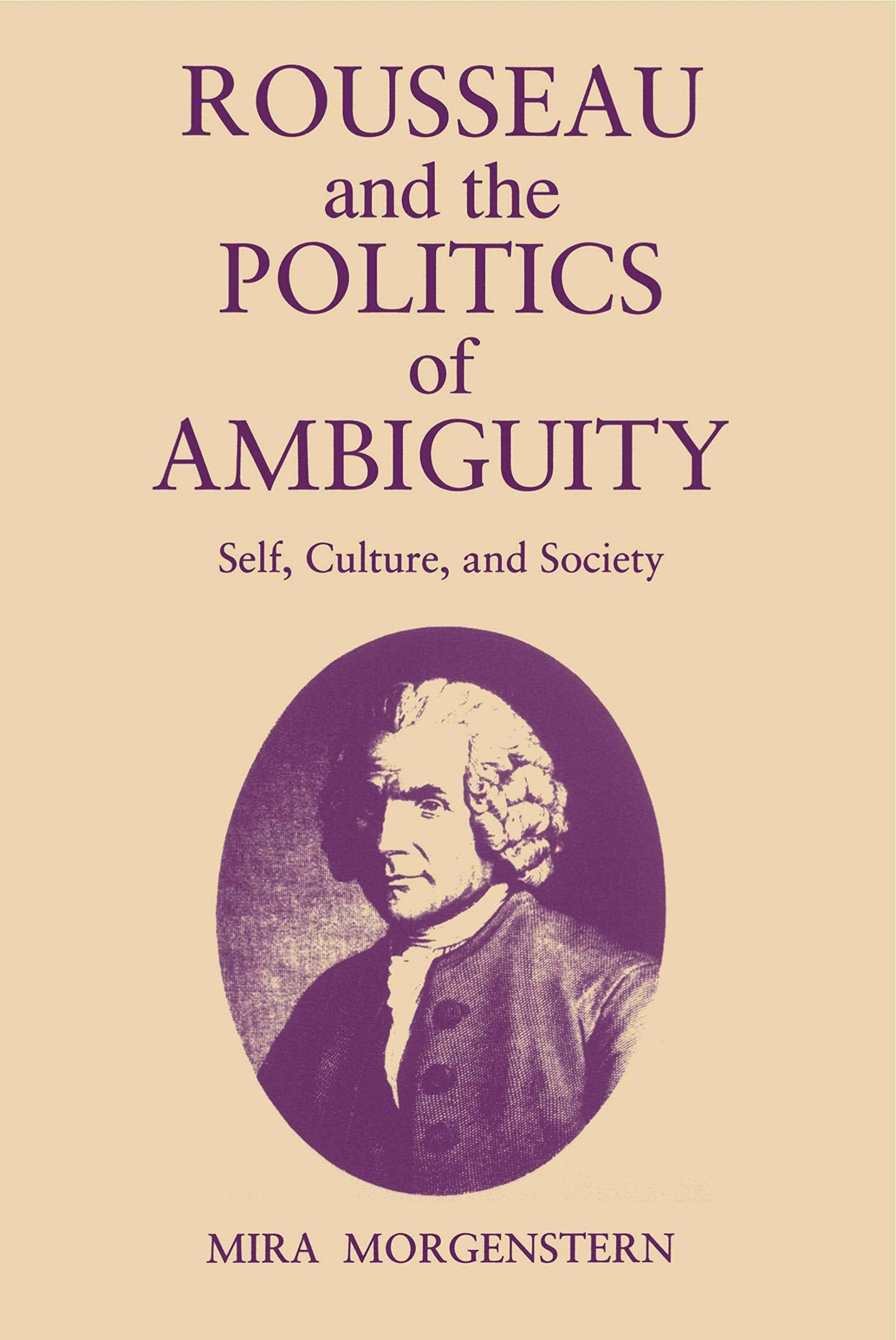
Rousseau and the Politics of Ambiguity: Self, Culture, and Society,Used
Sold by Ergodebooks, an authorized reseller.
Returns accepted within 30 days | support@ergodebooks.com
Shipping Information
- Free Standard Shipping — United States only
- Processing Time: 3–5 business days
- Estimated Delivery: 6–10 business days after dispatch
- Double-boxed, fully insured & discreetly packaged
- Tracking number sent via email once dispatched
Returns & Refund
Returns accepted within 30 days of delivery.
Damaged or Defective Item
Free return shipping + replacement or full refund
Wrong Item Received
Free return shipping + replacement or full refund
Change of Mind
Return shipping at customer's expense · 25% restocking fee applies
Payment Option

This new reading of JeanJacques Rousseau challenges traditional views of the eighteenthcentury political philosopher's attitudes toward women and his perceived pessimism about human experience. Mira Morgenstern finds in Rousseau an appreciation of the complexities and multidimensionality of life that allowed him to criticize various easy dualisms promoted by his fellow liberal thinkers and point to the crucial mediating role that women fulfill between the private and public spheres.Morgenstern sees Rousseau as an important contributor to the feminist thoughts and concerns that animate so much of our public and private discourse today. While Rousseau is commonly seen as a patriarchal misogynist, Morgenstern finds evidence in his writing that belies much of this claim. Rousseau was very much a man of his time, but he also believed that women were the key to transmitting his ideals of personal and political authenticity, thereby transforming his theory from ephemeral ideas into practical reality.A careful evaluation of Rousseau's writings on women reveals his highly complex sense of reality, especially his awareness that the solutions to life's complex problems are often temporary and must be renegotiated over time. Rousseau is more persistent than most in highlighting the weaknesses and pitfalls of liberal political thought, whose fundamental characteristic is its categorization of life on the basis of dualistic categories: public and private, outside and inside, male and female.Ultimately, what makes Rousseau worth reading today, argues Morgenstern, is his ability to illuminate critical weaknesses in the dualisms of liberal political theory and his pointing out, if only by implication, alternative ways of reaching the full measure of our individual and communal humanity. In honoring the traditional liberal emphasis on individual liberty and selfdevelopment, Rousseaus meditations on the proper aim of political life are especially helpful to those today who seek ways to expand liberalism's promise of freedom and authenticity, while not losing sight of the common threads of meaning and community that continue to bind us together.
⚠️ WARNING (California Proposition 65):
This product may contain chemicals known to the State of California to cause cancer, birth defects, or other reproductive harm.
For more information, please visit www.P65Warnings.ca.gov.