
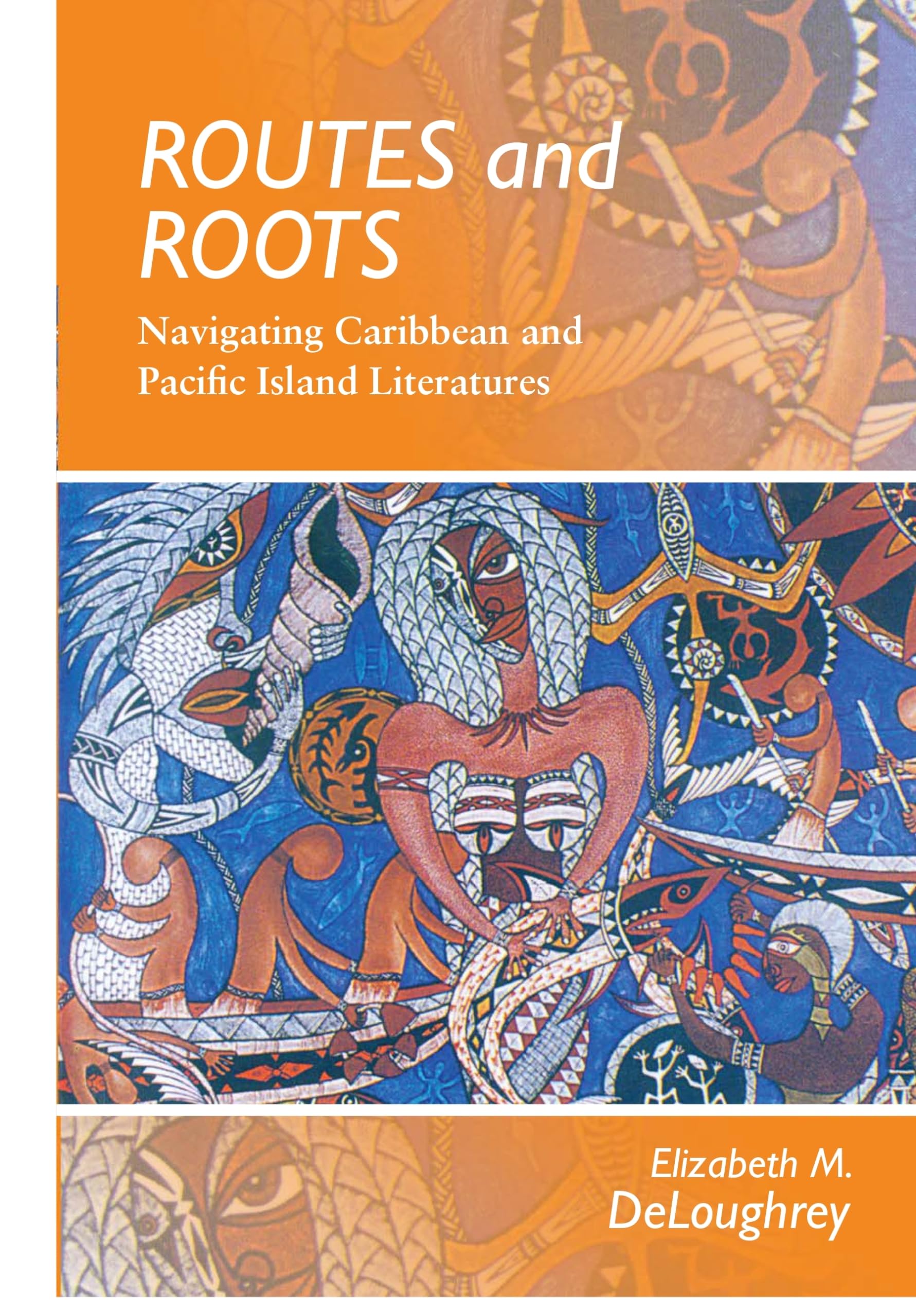
Title
Routes and Roots: Navigating Caribbean and Pacific Island Literatures,New
Sold by Ergodebooks, an authorized reseller.
Returns accepted within 30 days | support@ergodebooks.com
Shipping Information
- Free Standard Shipping — United States only
- Processing Time: 3–5 business days
- Estimated Delivery: 6–10 business days after dispatch
- Double-boxed, fully insured & discreetly packaged
- Tracking number sent via email once dispatched
Returns & Refund
Returns accepted within 30 days of delivery.
Damaged or Defective Item
Free return shipping + replacement or full refund
Wrong Item Received
Free return shipping + replacement or full refund
Change of Mind
Return shipping at customer's expense · 25% restocking fee applies
Payment Option

Routes and Roots is the first comparative study of Caribbean and Pacific Island literatures and the first work to bring indigenous and diaspora literary studies together in a sustained dialogue. Taking the 'tidalectic' between land and sea as a dynamic starting point, Elizabeth DeLoughrey foregrounds geography and history in her exploration of how island writers inscribe the complex relation between routes and roots. The first section looks at the sea as history in literatures of the Atlantic middle passage and Pacific Island voyaging, theorizing the transoceanic imaginary. The second section turns to the land to examine indigenous epistemologies in nationbuilding literatures. Both sections are particularly attentive to the ways in which the metaphors of routes and roots are gendered, exploring how masculine travelers are naturalized through their voyages across feminized lands and seas. This methodology of charting transoceanic migration and landfall helps elucidate how theories and people travel, positioning island cultures in the world historical process. In fact, DeLoughrey demonstrates how these tropical island cultures helped constitute the very metropoles that deemed them peripheral to modernity.Routes and Roots moves beyond restrictive national, colonial, and regional frameworks and makes a compelling argument to foreground how island histories are shaped by geography. It offers an innovative and interdisciplinary approach that places postcolonial islands in a dialogue with each other as well as with their continental counterparts, engaging with writers such as Kamau Brathwaite, Derek Walcott, John Hearne, Epeli Hauofa, Albert Wendt, Keri Hulme, Jamaica Kincaid, and Michelle Cliff. Overall, this book navigates uncharted spaces in postcolonial studies by historicizing the ways in which indigenous discourses of landfall have mitigated and contested productions of transoceanic diaspora. The result is a powerful argument for a type of postcolonial sovereignty that is global in scope yet rooted in indigenous knowledge of the land.Fresh in its ideas, original in its approach, Routes and Roots engages broadly with history, anthropology, and feminist, postcolonial, Caribbean, and Pacific literary and cultural studies. It productively traverses diaspora and indigenous studies in a way that will facilitate broader discussion between these often segregated disciplines.
⚠️ WARNING (California Proposition 65):
This product may contain chemicals known to the State of California to cause cancer, birth defects, or other reproductive harm.
For more information, please visit www.P65Warnings.ca.gov.
- Q: What is the binding type of this book? A: This book has a paperback binding. Paperback bindings are flexible and generally more affordable than hardcover options.
- Q: How many pages does 'Routes and Roots' have? A: This book contains three hundred fifty-two pages. This length allows for an in-depth exploration of its themes and subjects.
- Q: What are the dimensions of this book? A: The book measures five point nine one inches in length, zero point nine one inches in width, and eight point nine inches in height. These dimensions make it a portable option for readers.
- Q: Who is the author of 'Routes and Roots'? A: The author of this book is Elizabeth DeLoughrey. She is known for her work in postcolonial and environmental literary studies.
- Q: What category does this book belong to? A: This book is categorized under Caribbean and Latin American literature. It offers a comparative analysis of literatures from these regions.
- Q: What themes are explored in 'Routes and Roots'? A: The book explores themes like transoceanic migration, indigenous epistemologies, and the dynamics between land and sea. It offers a nuanced understanding of how these themes intersect.
- Q: How should I approach reading this book? A: You can read this book as a comparative study of Caribbean and Pacific Island literatures. It is suitable for readers interested in postcolonial studies, history, and cultural analysis.
- Q: Is this book suitable for academic research? A: Yes, this book is suitable for academic research. It engages with important literary figures and concepts relevant to postcolonial and diaspora studies.
- Q: Can this book be used for casual reading? A: Yes, this book can be enjoyed for casual reading. Its engaging narrative makes complex themes accessible to a general audience.
- Q: What is the recommended audience for 'Routes and Roots'? A: The recommended audience includes scholars and students of literature, as well as general readers interested in cultural studies. It is particularly relevant for those studying Caribbean and Pacific literatures.
- Q: How should I care for this paperback book? A: To care for this paperback book, store it in a cool, dry place and avoid exposure to direct sunlight. Handle it gently to prevent damage to the binding.
- Q: Is there a warranty for this book? A: No, books typically do not come with a warranty. However, you can check the return policy where you purchased it if it arrives damaged.
- Q: What if I receive a damaged copy of this book? A: If you receive a damaged copy, contact the retailer for return instructions. Most sellers will provide a replacement or refund.
- Q: Are there discussions on gender in this book? A: Yes, the book discusses how metaphors of routes and roots are gendered, exploring the roles of masculine travelers and feminized landscapes. This adds depth to its analysis.
- Q: How does this book contribute to postcolonial studies? A: The book contributes to postcolonial studies by historicizing indigenous discourses and examining their impact on transoceanic diaspora. It offers fresh perspectives on the subject.