
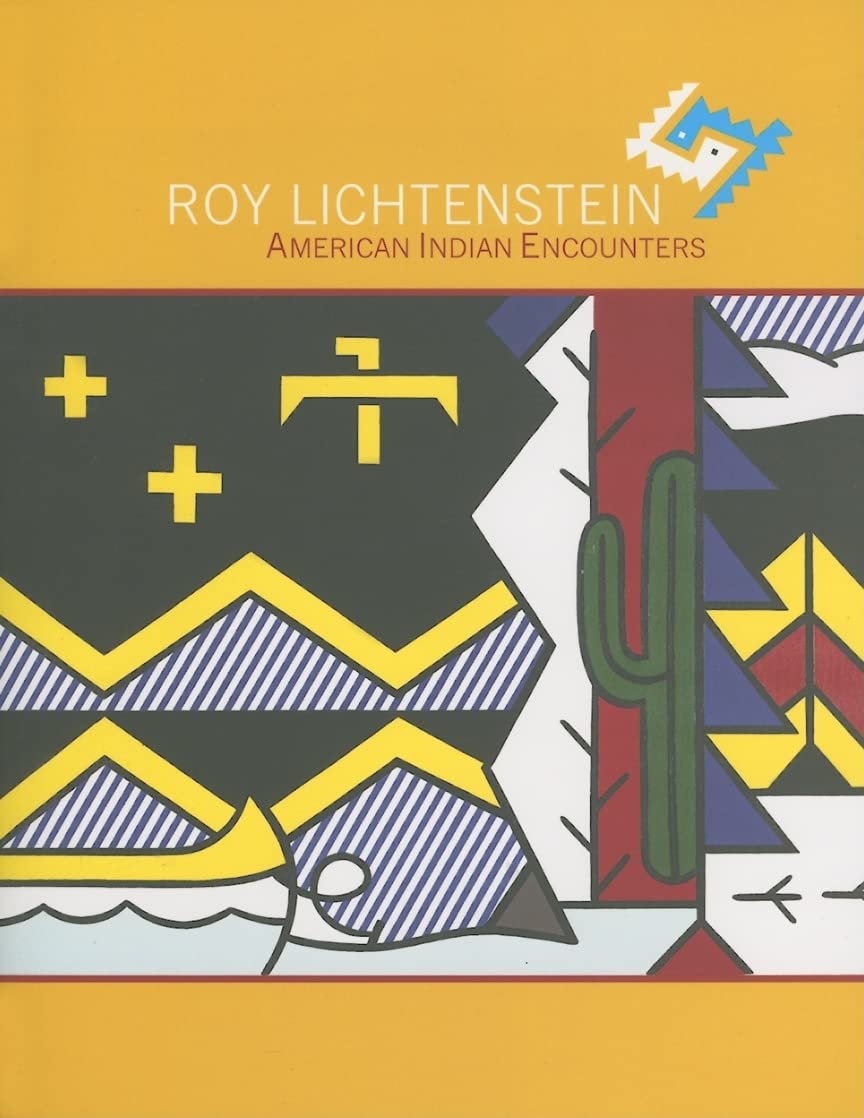
Title
Roy Lichtenstein: American Indian Encounters,Used
Sold by Ergodebooks, an authorized reseller.
Returns accepted within 30 days | support@ergodebooks.com
Shipping Information
- Free Standard Shipping — United States only
- Processing Time: 3–5 business days
- Estimated Delivery: 6–10 business days after dispatch
- Double-boxed, fully insured & discreetly packaged
- Tracking number sent via email once dispatched
Returns & Refund
Returns accepted within 30 days of delivery.
Damaged or Defective Item
Free return shipping + replacement or full refund
Wrong Item Received
Free return shipping + replacement or full refund
Change of Mind
Return shipping at customer's expense · 25% restocking fee applies
Payment Option

One of Americas leading Pop artists, Roy Lichtenstein was a master of stereotype. Bringing sophisticated analyses to visual conventions, he had a distinct flair for using irony to exploit past and existing styles. Today, his name is typically associated with whimsical renderings of comic strips and advertisementspaintings marked by their bold colors, prominent black outlines, and patterns of Ben Day dots.Beyond his fascination for icons of popular culture, however, Lichtenstein had a littleknown, but deep appreciation for the objects and images of American Indian culture. This book explores in detail and fully illustrates a virtually unknown collection of his paintings and works on paper that were influenced by his encounters with Native American subjects.Lichtensteins cubist abstractions from the early 1950s reflect his interest in European modernism, specifically the work of artists such as Pablo Picasso, Joan Mir, and Paul Klee. The Native American subjects of these works also suggest the artists interest in nineteenthcentury sources such as George Catlin, the Swiss painter Karl Bodmer, the German artist Charles Wimar, and the American artist John Vanderlyn. Lichtenstein himself characterized the paintings from this period as reinterpretations of those artists concerned with the opening of the west . . . with the subject matter of cowboys, Indians, treaty signingsa sort of Western official art in a style broadly influenced by modern European painting.The themes and compositions of these oftenignored early works are revisited in Lichtensteins 1979 Amerindian paintings and related drawings and prints. His paintings from this period were primarily inspired by his extensive collection of catalogues of Native American design motifs. Lichtenstein also attended powwows at the nearby Shinnecock Indian reservation in Southhampton, Long Island.For Lichtenstein, Native American art provided a historical base for American art, reminiscent of African arts relationship to early European modernism. This catalogue, including forty color illustrations, is the first to examine the compelling details of this foundation.
⚠️ WARNING (California Proposition 65):
This product may contain chemicals known to the State of California to cause cancer, birth defects, or other reproductive harm.
For more information, please visit www.P65Warnings.ca.gov.