If you have any questions, you are always welcome to contact us. We'll get back to you as soon as possible, withing 24 hours on weekdays.
Customer service
All questions about your order, return and delivery must be sent to our customer service team by e-mail at yourstore@yourdomain.com
Sale & Press
If you are interested in selling our products, need more information about our brand or wish to make a collaboration, please contact us at press@yourdomain.com
Help
If you have any questions, you are always welcome to contact us. We'll get back to you as soon as possible, withing 24 hours on weekdays.
Customer service
All questions about your order, return and delivery must be sent to our customer service team by e-mail at yourstore@yourdomain.com
Sale & Press
If you are interested in selling our products, need more information about our brand or wish to make a collaboration, please contact us at press@yourdomain.com
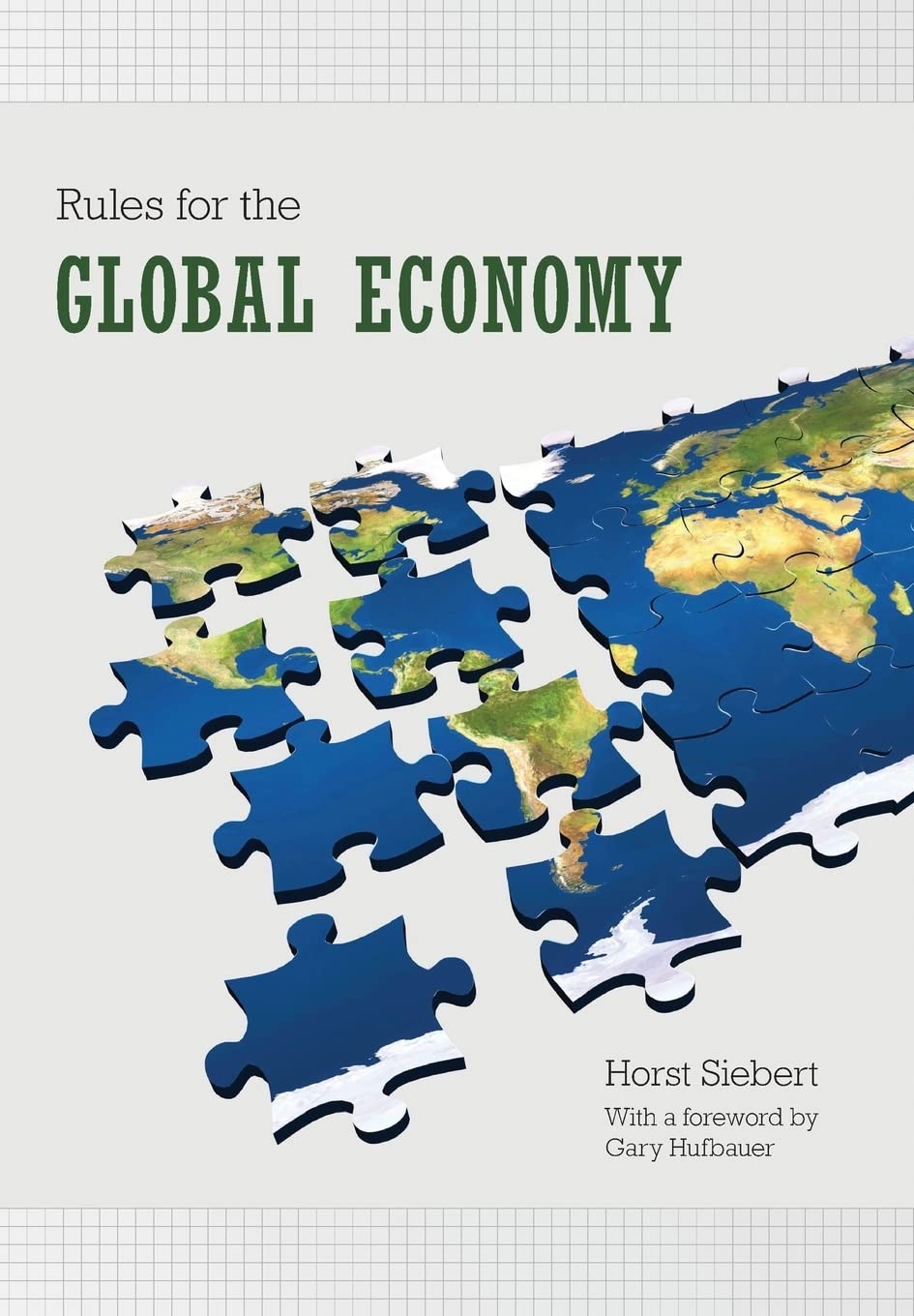
Rules for the Global Economy is a timely examination of the conditions under which international rules of globalization come into existence, enabling world economic and financial systems to function and stabilize. Horst Siebert, a leading figure in international economics, explains that these institutional arrangements, such as the ones that govern banking, emerge when countries fail to solve economic problems on their own and cede part of their sovereignty to an international order. Siebert demonstrates that the rules result from a trialanderror processand usually after a crisisin order to prevent pointless transaction costs and risks.Using an accessible and nonmathematical approach, Siebert links the rules to four areas: international trade relations, factor movements, financial flows, and the environment. He looks at the international division of labor in the trade of goods and services; flow of capital; diffusion of technology; migration of people, including labor and human capital; protection of the global environment; and stability of the monetaryfinancial system. He discusses the role of ethical norms and human rights in defining international regulations, and argues that the benefits of any rules system should be direct and visible. Comprehensively supporting rulesbased interactions among international players, the book considers future issues of the global rules system.
⚠️ WARNING (California Proposition 65):
This product may contain chemicals known to the State of California to cause cancer,
birth defects, or other reproductive harm.
For MAP (Minimum Advertised Price) violations and Intellectual Property (IP) or Trademark concerns, please contact:
support@ergodebooks.com
⚠️ California Proposition 65 Warning: Some products sold on this website may expose you to chemicals known to the State of California to cause cancer, birth defects, or other reproductive harm. For more information, visit www.P65Warnings.ca.gov.