
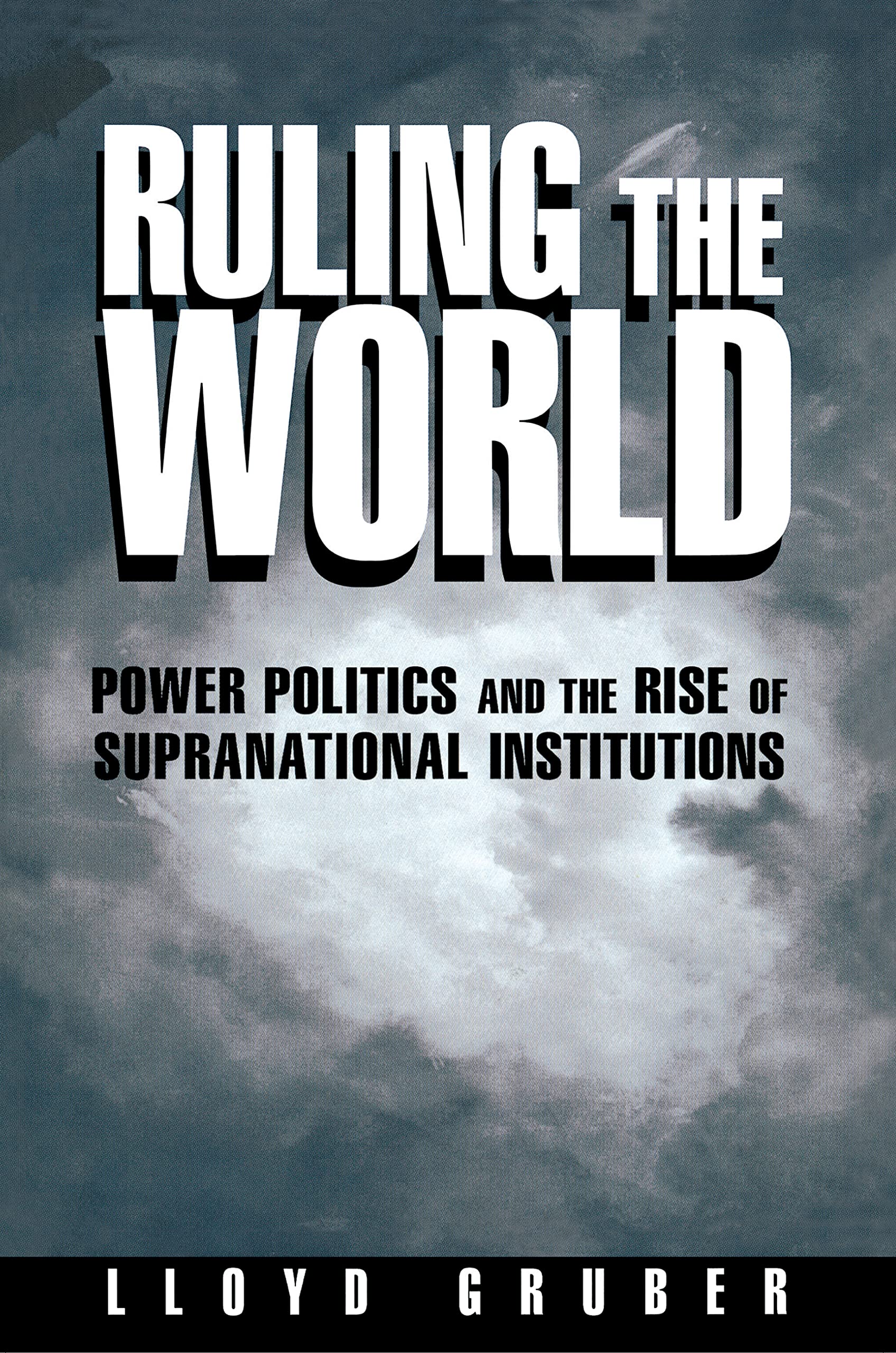
Title
Ruling the World,New
Sold by Ergodebooks, an authorized reseller.
Returns accepted within 30 days | support@ergodebooks.com
Shipping Information
- Free Standard Shipping — United States only
- Processing Time: 3–5 business days
- Estimated Delivery: 6–10 business days after dispatch
- Double-boxed, fully insured & discreetly packaged
- Tracking number sent via email once dispatched
Returns & Refund
Returns accepted within 30 days of delivery.
Damaged or Defective Item
Free return shipping + replacement or full refund
Wrong Item Received
Free return shipping + replacement or full refund
Change of Mind
Return shipping at customer's expense · 25% restocking fee applies
Payment Option

The last few decades have witnessed an extraordinary transfer of policymaking prerogatives from individual nationstates to supranational institutions. If you think this is cause for celebration, you are not alone. Within the academic community (and not only among students of international cooperation), the notion that political institutions are mutually beneficialthat they would never come into existence, much less grow in size and assertiveness, were they not 'Paretoimproving'is today's conventional wisdom. But is it true? In this richly detailed and strikingly original study, Lloyd Gruber suggests that this emphasis on cooperation's positivesum consequences may be leading scholars of international relations down the wrong theoretical path.The fact that membership in a cooperative arrangement is voluntary, Gruber argues, does not mean that it works to everyone's advantage. To the contrary, some cooperators may incur substantial losses relative to the original, noncooperative status quo. So what, then, keeps these participants from withdrawing? Gruber's answer, in a word, is powerspecifically the 'goitalone power' exercised by the regime's beneficiaries, many of whom would continue to benefit even if their partners, the losers, were to opt out. To lend support to this thesis, Gruber takes a fresh look at the political origins and structures of European Monetary Unification and NAFTA. But the theoretical arguments elaborated in Ruling the World extend well beyond money and trade, touching upon issues of longstanding interest to students of security cooperation, environmental politics, nationbuildingeven political philosophy. Bold and compelling, this book will appeal to anyone interested in understanding how 'power politics' really operates and why, for better or worse, it is fueling much of the supranational activity we see today.
⚠️ WARNING (California Proposition 65):
This product may contain chemicals known to the State of California to cause cancer, birth defects, or other reproductive harm.
For more information, please visit www.P65Warnings.ca.gov.