If you have any questions, you are always welcome to contact us. We'll get back to you as soon as possible, withing 24 hours on weekdays.
Customer service
All questions about your order, return and delivery must be sent to our customer service team by e-mail at yourstore@yourdomain.com
Sale & Press
If you are interested in selling our products, need more information about our brand or wish to make a collaboration, please contact us at press@yourdomain.com
Help
If you have any questions, you are always welcome to contact us. We'll get back to you as soon as possible, withing 24 hours on weekdays.
Customer service
All questions about your order, return and delivery must be sent to our customer service team by e-mail at yourstore@yourdomain.com
Sale & Press
If you are interested in selling our products, need more information about our brand or wish to make a collaboration, please contact us at press@yourdomain.com
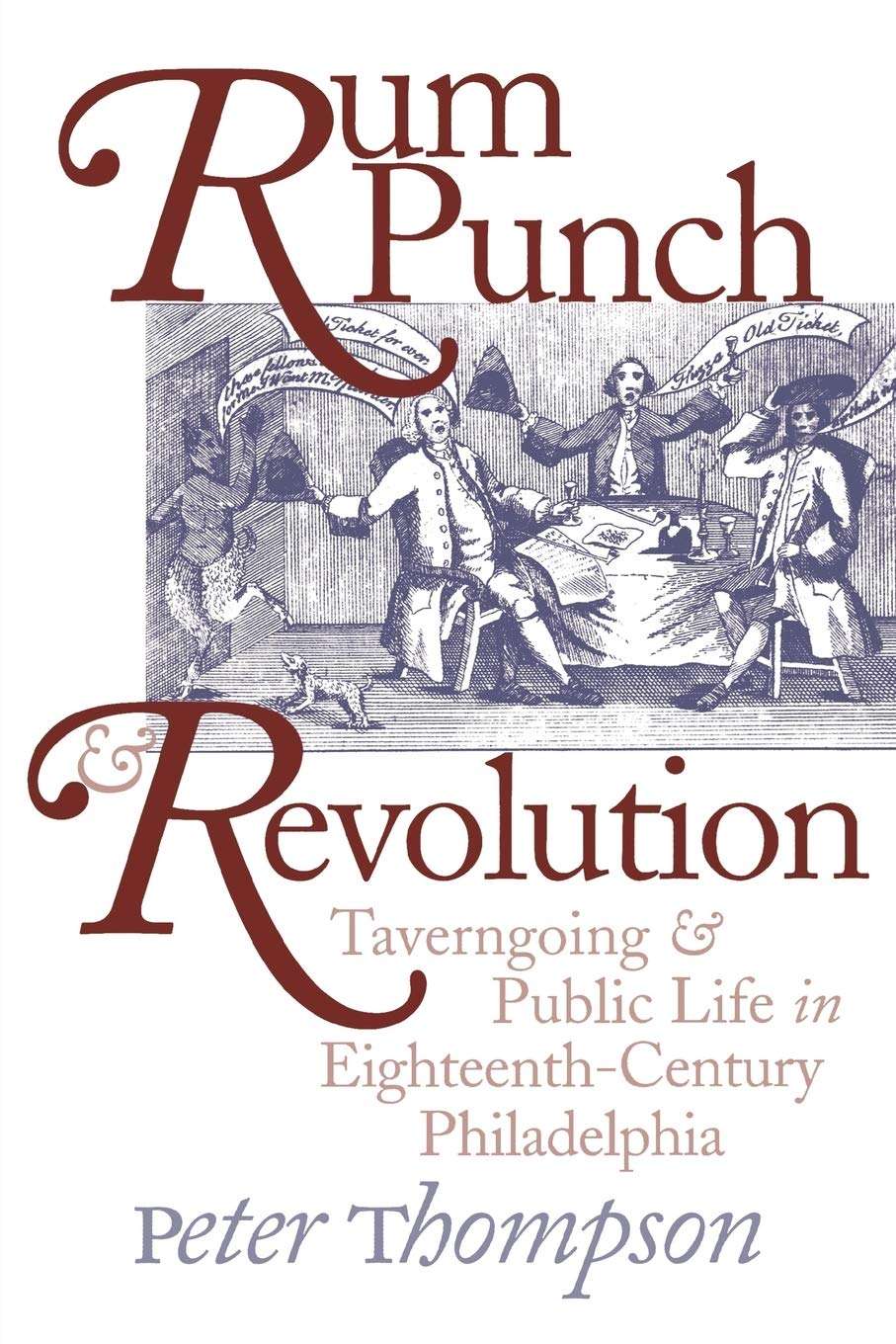
'Twas Honest old Noah first planted the VineAnd mended his morals by drinking its Wine.from a drinking song by Benjamin FranklinThere were, Peter Thompson notes, some one hundred and fifty synonyms for inebriation in common use in colonial Philadelphia and, on the eve of the Revolution, just as many licensed drinking establishments. Clearly, eighteenthcentury Philadelphians were drawn to the tavern. In addition to the obvious lure of the liquor, taverns offered overnight accommodations, meals, and stabling for visitors. They also served as places to gossip, gamble, find work, make trades, and gather news.In Rum Punch and Revolution, Thompson shows how the public houses provided a setting in which Philadelphians from all walks of life revealed their characters and ideas as nowhere else. He takes the reader into the cramped confines of the colonial bar room, describing the friendships, misunderstandings and conflicts which were generated among the city's drinkers and investigates the profitability of running a tavern in a city which, until independence, set maximum prices on the cost of drinks and services in its public houses.Taverngoing, Thompson writes, fostered a sense of citizenship that influenced political debate in colonial Philadelphia and became an issue in the city's revolution. Opinionated and profoundly undeferential, taverngoers did more than drink; they forced their political leaders to consider whether and how public opinion could be represented in the counsels of a newly independent nation.
⚠️ WARNING (California Proposition 65):
This product may contain chemicals known to the State of California to cause cancer,
birth defects, or other reproductive harm.
For MAP (Minimum Advertised Price) violations and Intellectual Property (IP) or Trademark concerns, please contact:
support@ergodebooks.com
⚠️ California Proposition 65 Warning: Some products sold on this website may expose you to chemicals known to the State of California to cause cancer, birth defects, or other reproductive harm. For more information, visit www.P65Warnings.ca.gov.