If you have any questions, you are always welcome to contact us. We'll get back to you as soon as possible, withing 24 hours on weekdays.
Customer service
All questions about your order, return and delivery must be sent to our customer service team by e-mail at yourstore@yourdomain.com
Sale & Press
If you are interested in selling our products, need more information about our brand or wish to make a collaboration, please contact us at press@yourdomain.com
Help
If you have any questions, you are always welcome to contact us. We'll get back to you as soon as possible, withing 24 hours on weekdays.
Customer service
All questions about your order, return and delivery must be sent to our customer service team by e-mail at yourstore@yourdomain.com
Sale & Press
If you are interested in selling our products, need more information about our brand or wish to make a collaboration, please contact us at press@yourdomain.com
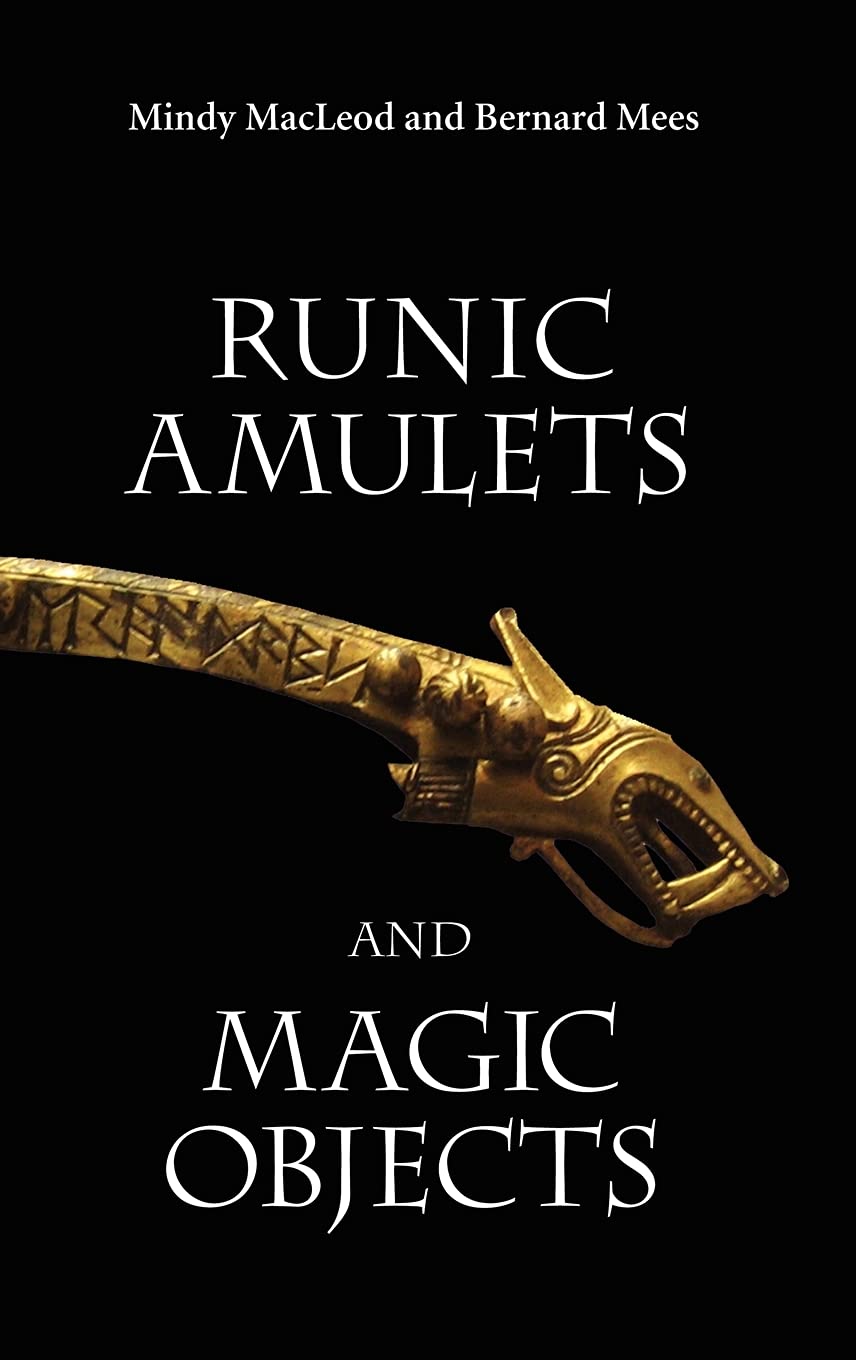
A fresh examination of one of the most contentious issues in runic scholarship magical or not?The runic alphabet, in use for well over a thousand years, was employed by various Germanic groups in a variety of ways, including, inevitably, for superstitious and magical rites. Formulaic runic words were inscribed onto small items that could be carried for good luck; runic charms were carved on metal or wooden amulets to ensure peace or prosperity. There are invocations and allusions to pagan and Christian gods and heroes, to spirits of disease, and even to potential lovers. Few such texts are completely unique to Germanic society, and in fact, most of the runic amulets considered in this book show wideranging parallels from a variety of European cultures.The question ofwhether runes were magical or not has divided scholarship in the area. Early criticism embraced fantastic notions of runic magic leading not just to a healthy scepticism, but in some cases to a complete denial of any magical element whatsoever in the runic inscriptions. This book seeks to reevaulate the whole question of runic sorcery, attested to not only in the medieval Norse literature dealing with runes but primarily in the fascinating magical texts of the runic inscriptions themselves.Dr MINDY MCLEOD teaches in the Department of Linguistics, Deakin University, Melbourne; Dr BERNARD MEES teaches in the Department of History at the University of Melbourne.
⚠️ WARNING (California Proposition 65):
This product may contain chemicals known to the State of California to cause cancer,
birth defects, or other reproductive harm.
For MAP (Minimum Advertised Price) violations and Intellectual Property (IP) or Trademark concerns, please contact:
support@ergodebooks.com
⚠️ California Proposition 65 Warning: Some products sold on this website may expose you to chemicals known to the State of California to cause cancer, birth defects, or other reproductive harm. For more information, visit www.P65Warnings.ca.gov.