
Title
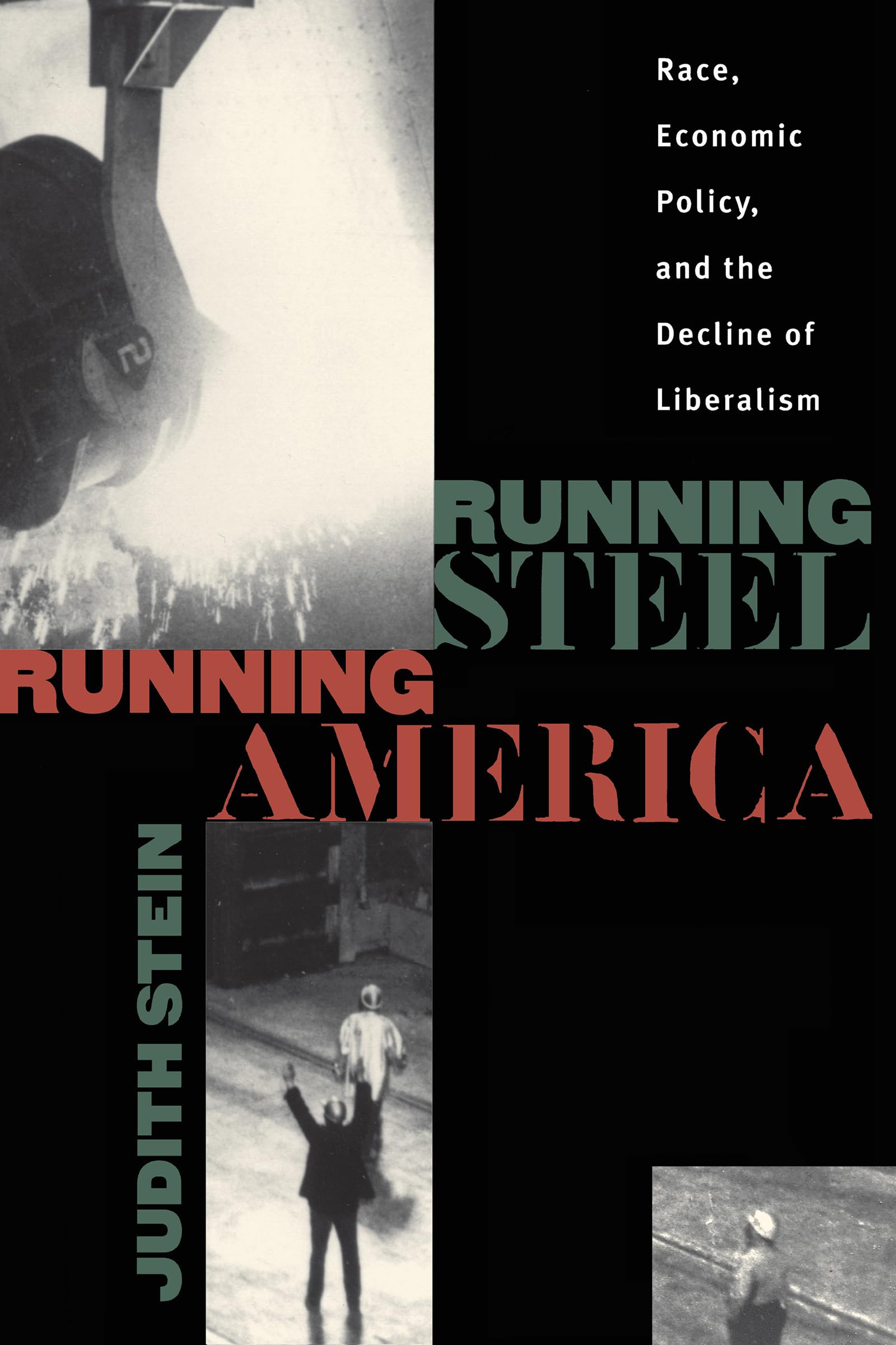
Running Steel, Running America : Race, Economic Policy, And The Decline Of Liberalism,New
Sold by Ergodebooks, an authorized reseller.
Returns accepted within 30 days | support@ergodebooks.com
Shipping Information
- Free Standard Shipping — United States only
- Processing Time: 3–5 business days
- Estimated Delivery: 6–10 business days after dispatch
- Double-boxed, fully insured & discreetly packaged
- Tracking number sent via email once dispatched
Returns & Refund
Returns accepted within 30 days of delivery.
Damaged or Defective Item
Free return shipping + replacement or full refund
Wrong Item Received
Free return shipping + replacement or full refund
Change of Mind
Return shipping at customer's expense · 25% restocking fee applies
Payment Option

The History Of Modern Liberalism Has Been Hotly Debated Incontemporary Politics And The Academy. Here, Judith Stein Usesthe Steel Industrylong Considered Fundamental To The U.S. Economyto Examine Liberal Policies And Priorities After Worldwar Ii. In A Provocative Revision Of Postwar American History, She Argues That It Was The Primacy Of Foreign Commitments And Theoutdated Economic Policies Of The State, More Than The Nation'Sracial Conflicts, That Transformed American Liberalism From Thepowerful Progressivism Of The New Deal To The Feeble Policies Ofthe 1990S. Stein Skillfully Integrates A Number Of Narratives Usuallytreated In Isolationlabor, Civil Rights, Politics, Business, And Foreign Policywhile Underscoring The State'S Focus On Thesteel Industry And Its Workers. By Showing How Those Whointervened In The Industry Treated Such Economic Issues As Freetrade And The Globalization Of Steel Production In Isolation Fromthe Social Issues Of The Daymost Notably Civil Rights And Theimplementation Of Affirmative Actionstein Advances A Largerargument About Postwar Liberalism. Liberal Attempts To Addresssocial Inequalities Without Reference To The Fundamental Andchanging Workings Of The Economy, She Says, Have Led To Thefoundering Of The New Deal State.
⚠️ WARNING (California Proposition 65):
This product may contain chemicals known to the State of California to cause cancer, birth defects, or other reproductive harm.
For more information, please visit www.P65Warnings.ca.gov.
- Q: What is the page count of 'Running Steel, Running America'? A: The book has four hundred twenty-eight pages. This length allows for an in-depth exploration of postwar American history.
- Q: What is the binding type of this book? A: This book is a paperback edition. Paperback bindings are flexible and lightweight, making it easy to carry.
- Q: What are the dimensions of this book? A: The book measures six point fourteen inches in length, one point zero seven inches in width, and nine point twenty-one inches in height. These dimensions make it a convenient size for reading.
- Q: How does Judith Stein approach the topic of liberalism in this book? A: Judith Stein examines the steel industry to analyze liberal policies post-World War II. She integrates various narratives including labor and civil rights to present her argument.
- Q: Is this book suitable for academic study? A: Yes, it is suitable for academic study. The book offers a detailed examination of liberalism and economic policies, making it valuable for students and scholars.
- Q: Who is the target audience for 'Running Steel, Running America'? A: The target audience includes historians, students of political science, and anyone interested in economic policy. The book provides insights into complex social issues.
- Q: How should I care for this paperback book? A: To care for this book, keep it in a dry place and avoid exposure to direct sunlight. This will help preserve the pages and binding.
- Q: Can this book be read by beginners in economic theory? A: Yes, beginners can read this book, though some prior knowledge of economic history may enhance understanding. The author's clear writing style aids in comprehension.
- Q: Is there a warranty or return policy for this book? A: Typically, used books like this one do not have a warranty. However, check with the seller for their specific return policy.
- Q: What if the book arrives damaged? A: If the book arrives damaged, contact the seller immediately for assistance. Most sellers will offer a replacement or refund for damaged items.
- Q: What themes are explored in 'Running Steel, Running America'? A: The book explores themes of economic policy, race, and the evolution of liberalism in America. It provides a critical view of historical events.
- Q: Who is the author of this book? A: The author is Judith Stein. She is known for her work on economic history and policy analysis.
- Q: Is this book focused on a specific time period? A: Yes, it primarily focuses on the post-World War II era in America. It examines the shifts in liberalism during this time.
- Q: What type of illustrations are included in the book? A: The book includes eighteen illustrations. These illustrations complement the text and provide visual context to the discussions.
- Q: Is 'Running Steel, Running America' a scholarly work? A: Yes, it is considered a scholarly work. The author employs research and analysis to support her arguments about liberalism and economic policy.