
Title
Rural Road Investment Efficiency: Lessons From Burkina Faso, Cameroon, And Uganda (Directions In Development),Used
Sold by Ergodebooks, an authorized reseller.
Returns accepted within 30 days | support@ergodebooks.com
Shipping Information
- Free Standard Shipping — United States only
- Processing Time: 3–5 business days
- Estimated Delivery: 6–10 business days after dispatch
- Double-boxed, fully insured & discreetly packaged
- Tracking number sent via email once dispatched
Returns & Refund
Returns accepted within 30 days of delivery.
Damaged or Defective Item
Free return shipping + replacement or full refund
Wrong Item Received
Free return shipping + replacement or full refund
Change of Mind
Return shipping at customer's expense · 25% restocking fee applies
Payment Option

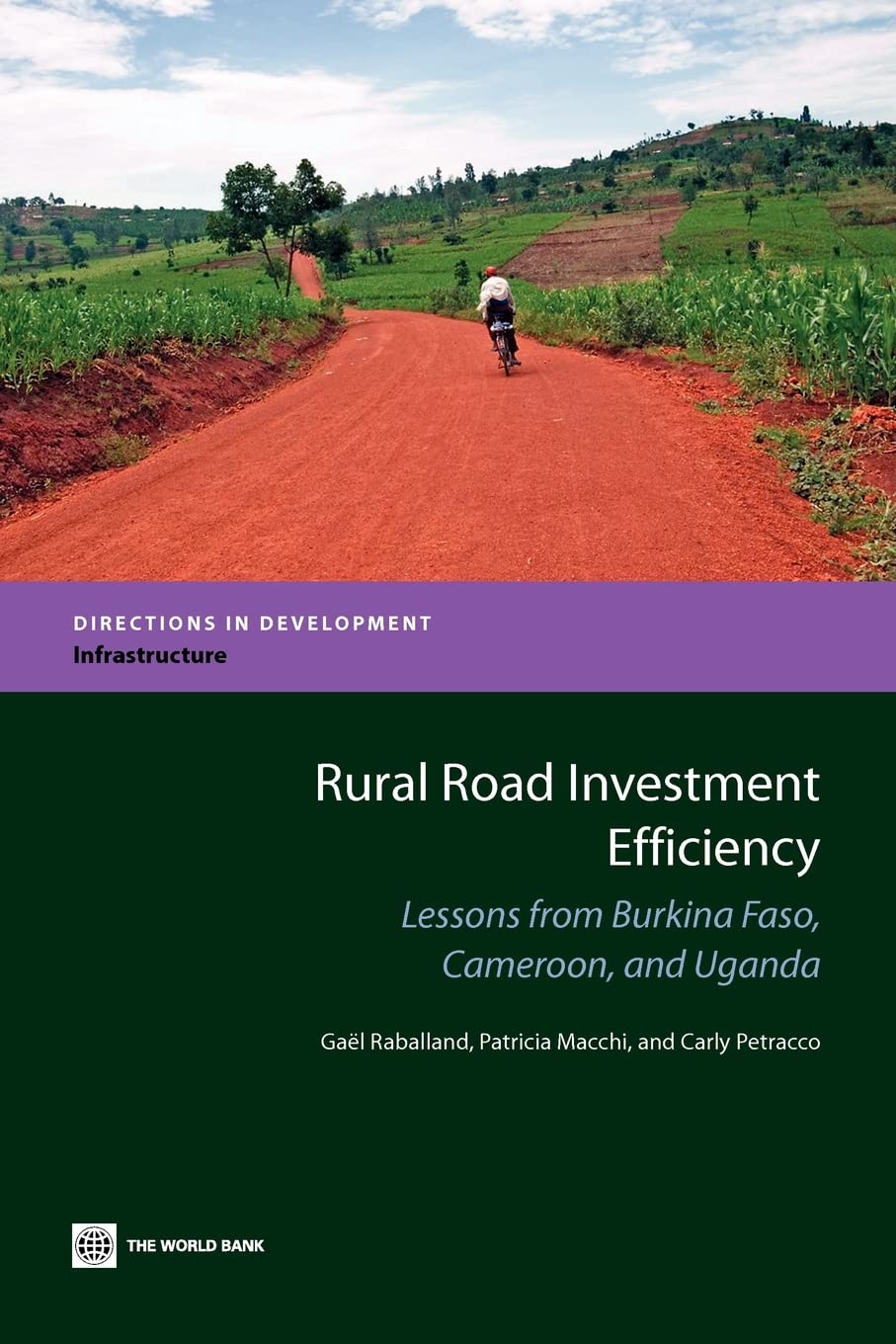
This book was written because at the time when Development Partners focus especially on rural mobility, it is worth trying to know how to achieve better aid effectiveness in rural transport. So far, most Development Partners and governments in SSA have relied on two overarching assumptions, which have led to massive road investments: (i) most households in rural areas in Africa are not connected to markets and therefore need a road passable for a truck (all the more as they are remote), (ii) roads with high level of service are crucial to achieve high economic impact. We demonstrate in this book that these assumptions may be questioned in many cases in SSA. Based on data collection from various sources in Burkina Faso, Cameroon and Uganda, we demonstrate that from a costbenefit perspective, the additional cost of extending an allweather road 2 more km to the farmer??s door outweigh the benefits in most cases. Therefore, a one size fits all approach, such as achieving the Rural Access Index, is not wishful from an aid effectiveness perspective. We should realize that a sevenmeter road may not be required in most rural areas in SSA. Some pilots should be supported locally to potentially meet the demand for Intermediate Means of Transport (although any success may not be replicable to another region or country). The last mile should not be a road for a truck but the secondary network, which link secondary cities, should be in good condition (paved or unpaved) to enable truck fleet efficiency and competition. Finally, donor coordination is a must to avoid for example the rehabilitation of rural roads not connected to passable secondary roads.
⚠️ WARNING (California Proposition 65):
This product may contain chemicals known to the State of California to cause cancer, birth defects, or other reproductive harm.
For more information, please visit www.P65Warnings.ca.gov.