If you have any questions, you are always welcome to contact us. We'll get back to you as soon as possible, withing 24 hours on weekdays.
Customer service
All questions about your order, return and delivery must be sent to our customer service team by e-mail at yourstore@yourdomain.com
Sale & Press
If you are interested in selling our products, need more information about our brand or wish to make a collaboration, please contact us at press@yourdomain.com
Help
If you have any questions, you are always welcome to contact us. We'll get back to you as soon as possible, withing 24 hours on weekdays.
Customer service
All questions about your order, return and delivery must be sent to our customer service team by e-mail at yourstore@yourdomain.com
Sale & Press
If you are interested in selling our products, need more information about our brand or wish to make a collaboration, please contact us at press@yourdomain.com
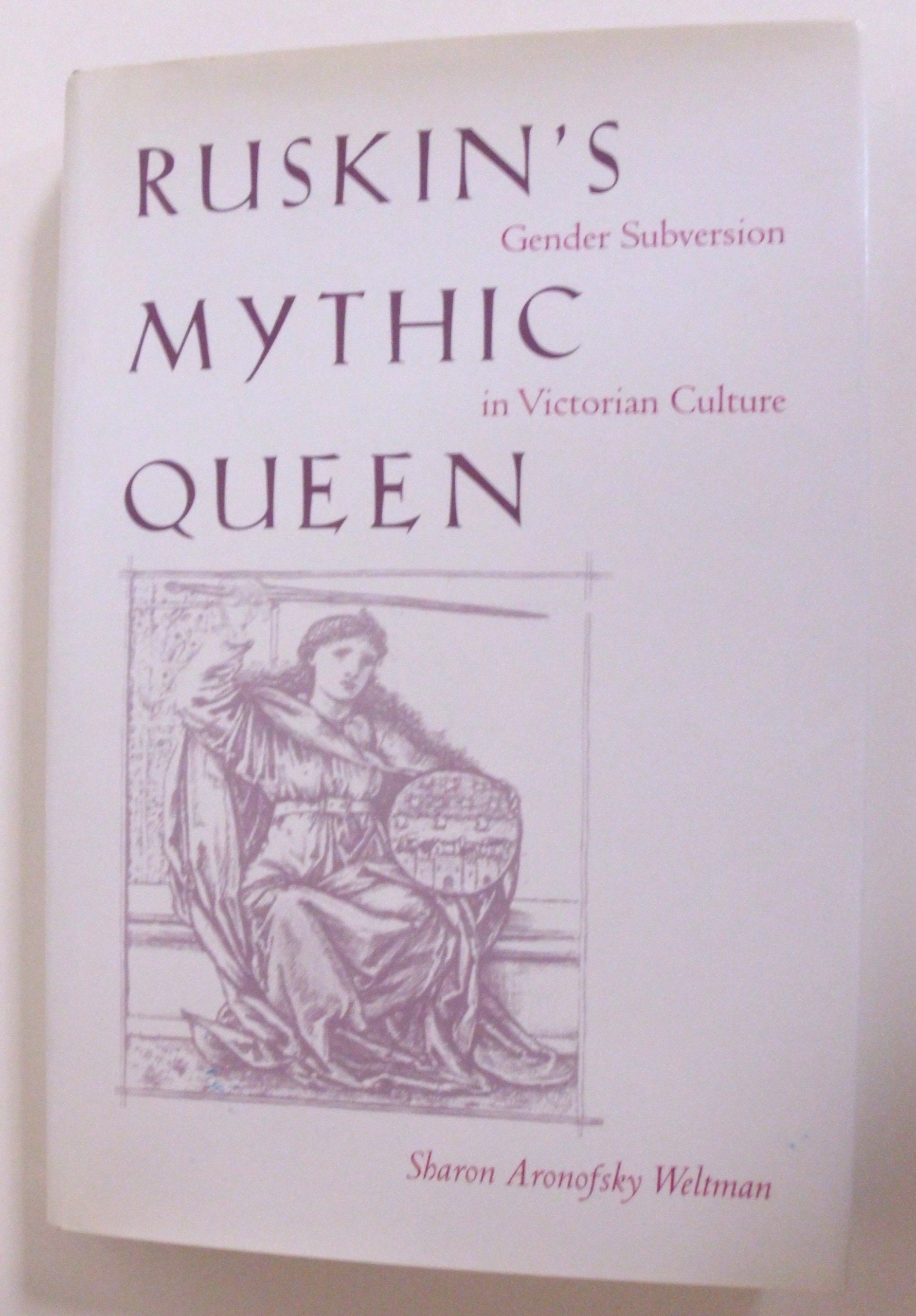
John Ruskins prominence as the author of Of Queens Gardens, his principal statement of Victorian gender opposition, makes him an ideal example for analyzing the power of mythic discourse to undermine gender division. Here, Ruskin creates a vision of feminine authority that draws simultaneously upon several sources (including the goddess Athena and Queen Victoria herself) to empower women in a worldwide arena redefined as a broader version of their domestic realm. In Ruskins effort to promote womens expanded sphere of action, his mythmaking goes further than he anticipates: Ruskin feminizes both metaphor and language, and finally destabilizes the very notion of gender.Ruskins Mythic Queen demonstrates that Victorian authors and artists used myth to challenge their cultures rigid gender dichotomy. While Ruskin is usually seen as the most articulate advocate of nineteenthcentury Englands sharply differentiated gender roles, Sharon Weltman shows that his mythopoetic prose yields many tools to break down fixed categories of gender.This exciting revision of Ruskin situates him within a tradition of nineteenth and twentiethcentury myth, metaphor, and gender theorists, arguing for his significance as an example of how mythic discourse disrupts gender dichotomy even among those writers who seek to establish it.
⚠️ WARNING (California Proposition 65):
This product may contain chemicals known to the State of California to cause cancer,
birth defects, or other reproductive harm.
For MAP (Minimum Advertised Price) violations and Intellectual Property (IP) or Trademark concerns, please contact:
support@ergodebooks.com
⚠️ California Proposition 65 Warning: Some products sold on this website may expose you to chemicals known to the State of California to cause cancer, birth defects, or other reproductive harm. For more information, visit www.P65Warnings.ca.gov.