
Title
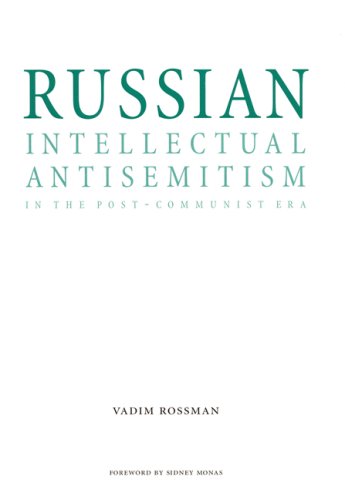
Russian Intellectual Antisemitism In The Postcommunist Era (Studies In Antisemitism),Used
Processing time: 1-3 days
US Orders Ships in: 3-5 days
International Orders Ships in: 8-12 days
Return Policy: 15-days return on defective items
Payment Option

Antisemitism Has Had A Long And Complex History In Russian Intellectual Life And Has Revived In The Postcommunist Era. In Their Concept Of The Identity Of The Jewish People, Many Academics And Other Thinkers In Russia Continue To Cast Jews In A Negative Or Ambivalent Role. An Inherent Rivalry Exists Between 'Russia' And 'The Jews' Because Russians Have Often Viewed Themselveswhether Through The Lens Of Atheistic Communism Or That Of The Most Conservative Elements Of The Orthodox Churchas A Chosen People Whose Destiny Is To Lead The Way To World Salvation.In This Book, Vadim Rossman Presents The Foundations And Present Influence Of Intellectual Antisemitism In Russia. He Examines The Antisemitic Roots Of Some Major Trends In Russian Intellectual Thought That Emerged In Earlier Decades Of The Twentieth Century And Are Still Significant In The Postcommunist Era: Neoeurasianism, Eurasian Historiography, National Bolshevism, Neoslavophilism, National Orthodoxy, And Various Forms Of Racism. Such Extreme Rightwing Ideology Continues To Appeal To A Certain Segment Of The Russian Population And Seems Unlikely To Disappear Soon. Rossman Confronts And Challenges A Range Of Disturbing, Sometimes Contradictory, But Often Quite Sophisticated Antisemitic Ideas Posed By Russian Sociologists, Historians, Philosophers, Theologians, Political Analysts, Anthropologists, And Literary Critics.
⚠️ WARNING (California Proposition 65):
This product may contain chemicals known to the State of California to cause cancer, birth defects, or other reproductive harm.
For more information, please visit www.P65Warnings.ca.gov.
- Q: What is the page count of the book? A: The book contains three hundred nineteen pages. This length allows for an in-depth exploration of Russian intellectual antisemitism.
- Q: What type of binding does the book have? A: The book is bound in hardcover. This ensures durability and longevity, making it suitable for repeated readings.
- Q: Who is the author of this book? A: The author is Vadim Rossman. He provides a thorough examination of antisemitism in Russian intellectual thought.
- Q: What is the size of the book? A: The book measures six point two six inches in length, one point two six inches in width, and nine point zero two inches in height. This size makes it portable for reading.
- Q: What are the main themes explored in the book? A: The book explores themes of antisemitism in post-Communist Russia, including various intellectual movements. Rossman discusses neo-Eurasianism and National Bolshevism, among others.
- Q: What is the target audience for this book? A: The book is suitable for scholars and readers interested in Russian history and antisemitism. It provides academic insights into complex social issues.
- Q: Is this book suitable for academic study? A: Yes, this book is suitable for academic study. It presents detailed analysis and references that can support research in related fields.
- Q: How should I read and engage with this book? A: Readers should approach the book critically, taking notes on key ideas and themes. Engaging with the text will enhance understanding of the arguments presented.
- Q: How do I keep this book in good condition? A: To keep the book in good condition, store it upright on a shelf and avoid exposure to direct sunlight. This prevents wear and fading over time.
- Q: What if the book arrives damaged? A: If the book arrives damaged, contact the seller for a return or exchange. Most sellers have policies in place to address such issues.
- Q: Can I return the book if I'm not satisfied? A: Yes, you can typically return the book if you're not satisfied. Check the specific return policy of the seller for details.
- Q: Is this book appropriate for younger audiences? A: No, this book is not appropriate for younger audiences. The content discusses complex and potentially disturbing themes related to antisemitism.
- Q: What makes this book different from others on the same topic? A: This book is distinct due to its focus on Russian intellectual perspectives on antisemitism. Rossman provides a nuanced analysis of historical and contemporary issues.
- Q: Are there any similar books on this topic? A: Yes, there are similar books that explore antisemitism and Russian history. Look for titles that focus specifically on intellectual movements in Russia.
- Q: What is the significance of the book's publication by University of Nebraska Press? A: The University of Nebraska Press is known for academic publications. This adds credibility and scholarly weight to the book's content.