
Title
Russian Minority Politics in PostSoviet Latvia and Kyrgyzstan: The Transformative Power of Informal Networks (National and Ethn,New
Sold by Ergodebooks, an authorized reseller.
Returns accepted within 30 days | support@ergodebooks.com
Shipping Information
- Free Standard Shipping — United States only
- Processing Time: 3–5 business days
- Estimated Delivery: 6–10 business days after dispatch
- Double-boxed, fully insured & discreetly packaged
- Tracking number sent via email once dispatched
Returns & Refund
Returns accepted within 30 days of delivery.
Damaged or Defective Item
Free return shipping + replacement or full refund
Wrong Item Received
Free return shipping + replacement or full refund
Change of Mind
Return shipping at customer's expense · 25% restocking fee applies
Payment Option

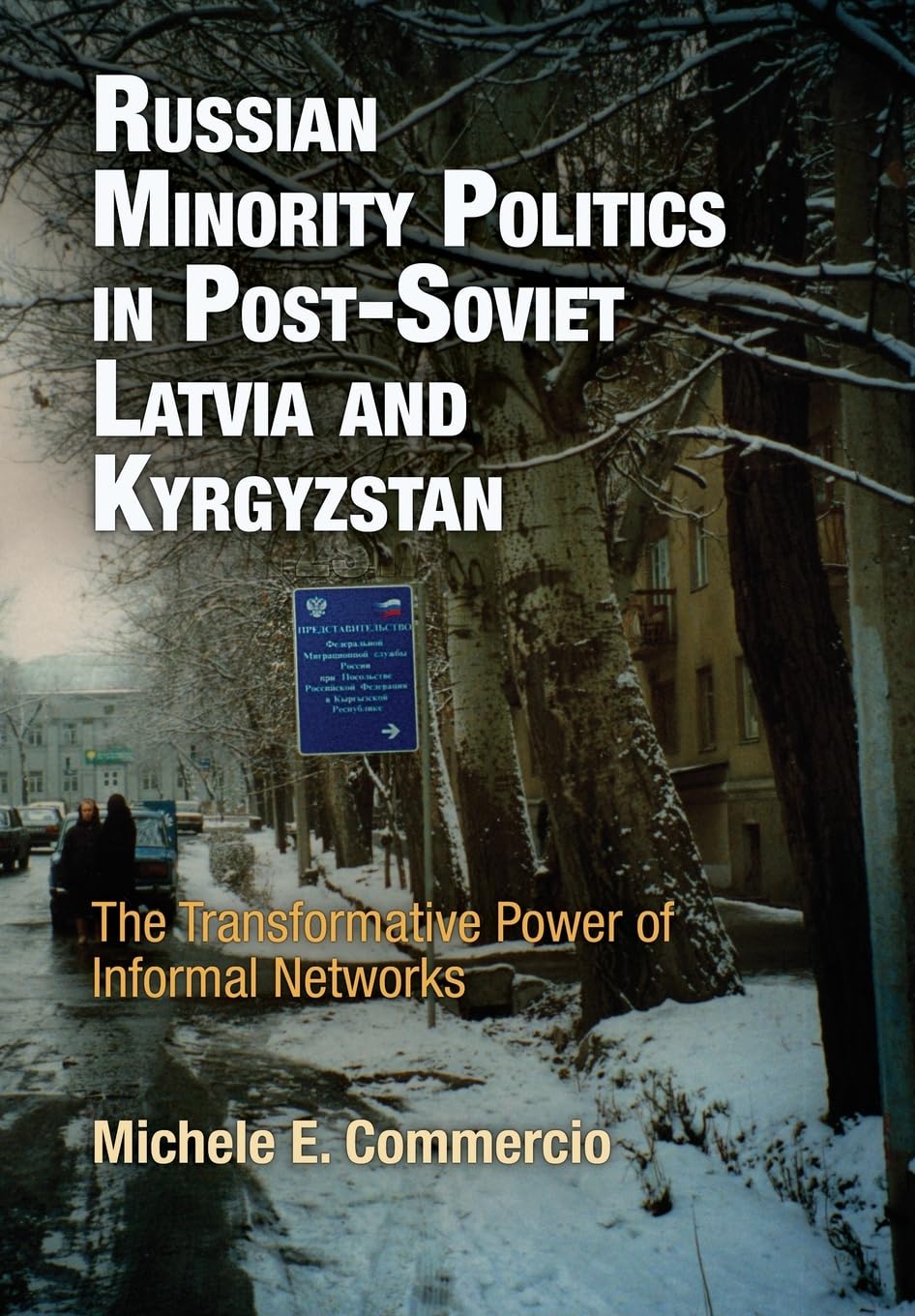
The collapse of the Soviet Union suddenly rendered ethnic Russians living in nonRussian successor states like Latvia and Kyrgyzstan new minorities subject to dramatic political, economic, and social upheaval. As elites in these new states implemented formal policies and condoned informal practices that privileged nonRussians, ethnic Russians had to react. In Russian Minority Politics in PostSoviet Latvia and Kyrgyzstan, Michele E. Commercio draws on extensive field research, including hundreds of personal interviews, to analyze the responses of minority Russians to such policies and practices. In particular, she focuses on the role played by formal and informal institutions in the crystallization of Russian attitudes, preferences, and behaviors in these states.Commercio asks why there is more outmigration and less political mobilization among Russians in Kyrgyzstan, a state that adopts policies that placate both Kyrgyz and Russians, and less outmigration and more political mobilization among Russians in Latvia, a state that adopts policies that favor Latvians at the expense of Russians. Challenging current thinking, she suggests that the answer to this question lies in the power of informal networks.After the fall of the Soviet Union, the Communist party, Komsomol youth organization, and KGB networks were transformed into informal networks. Russians in Kyrgyzstan were for various reasons isolated from such networks, and this isolation restricted their access to the country's private sector, making it difficult for them to create effective associations capable of representing their interests. This resulted in a high level of Russian exit and the silencing of Russian voices. In contrast, Russians in Latvia were well connected to such networks, which provided them with access to the country's private sector and facilitated the establishment of political parties and nongovernmental organizations that represented their interests. This led to a low level of Russian exit and high level of Russian voice. Commercio concludes that informal networks have a stronger influence on minority politics than formal institutions.
⚠️ WARNING (California Proposition 65):
This product may contain chemicals known to the State of California to cause cancer, birth defects, or other reproductive harm.
For more information, please visit www.P65Warnings.ca.gov.