
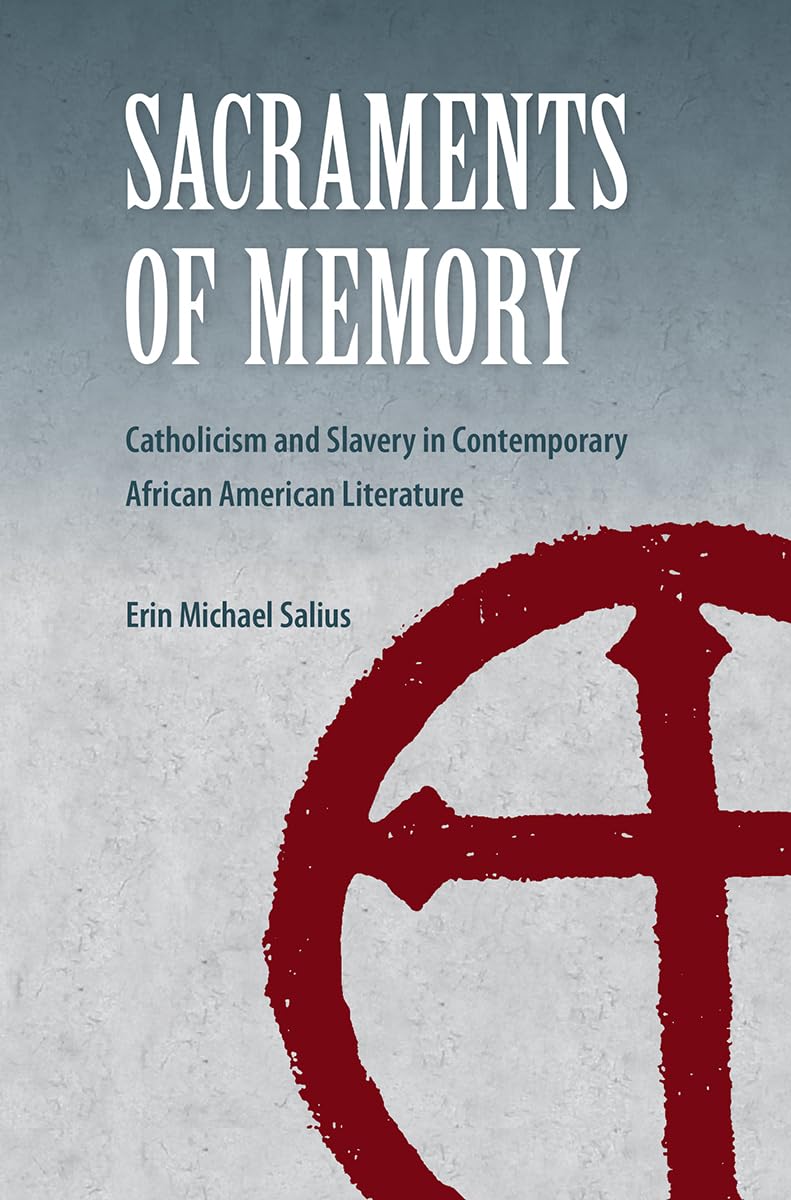
Title
Sacraments Of Memory: Catholicism And Slavery In Contemporary African American Literature,Used
Sold by Ergodebooks, an authorized reseller.
Returns accepted within 30 days | support@ergodebooks.com
Shipping Information
- Free Standard Shipping — United States only
- Processing Time: 3–5 business days
- Estimated Delivery: 6–10 business days after dispatch
- Double-boxed, fully insured & discreetly packaged
- Tracking number sent via email once dispatched
Returns & Refund
Returns accepted within 30 days of delivery.
Damaged or Defective Item
Free return shipping + replacement or full refund
Wrong Item Received
Free return shipping + replacement or full refund
Change of Mind
Return shipping at customer's expense · 25% restocking fee applies
Payment Option

Catholic themes and imagery in the work of writers including Toni Morrison, Leon Forrest, Phyllis Alesia Perry, and Charles JohnsonSacraments of Memory is the first book to focus on Catholic themes and imagery in African American literature. Erin Michael Salius discovers striking elements of the religion in neoslave narratives written by Toni Morrison, Leon Forrest, Phyllis Alesia Perry, and Charles Johnson, among others. Examining the emergence of this major literary genre following Vatican II and amidst the Black Power and civil rights movements, she uncovers the presence of Catholic rituals and mysteriesincluding references to the Eucharist, Augustinian theology, spirit possession, and stigmata. These textual references occur alongside and in tension with criticisms of the Church's political and social policies.Salius offers a nuanced reading of Beloved that interprets the novel in light of Toni Morrison's affiliation with the religion. She argues that Morrison, and the other novelists in this study, draw on a Catholic countertradition in American literature that resists Enlightenment rationality. She highlights allusions to Catholic tropes such as the connections between spirit possession and the hijacking of Jane's narrative voice in Ernest Gaines's The Autobiography of Miss Jane Pittman. Salius also identifies Augustinian theology on the prescience of God in the flashforward narrative techniques used in Edward P. Jones's The Known World.These authors use Catholicism to challenge the historical realism of past slave autobiographies and the conventional story of American slavery. Ultimately, Salius contends that this tradition enables these novelists to imagine and express radically different ways of remembering the past.Publication of the paperback edition made possible by a Sustaining the Humanities through the American Rescue Plan grant from the National Endowment for the Humanities.
⚠️ WARNING (California Proposition 65):
This product may contain chemicals known to the State of California to cause cancer, birth defects, or other reproductive harm.
For more information, please visit www.P65Warnings.ca.gov.