If you have any questions, you are always welcome to contact us. We'll get back to you as soon as possible, withing 24 hours on weekdays.
Customer service
All questions about your order, return and delivery must be sent to our customer service team by e-mail at yourstore@yourdomain.com
Sale & Press
If you are interested in selling our products, need more information about our brand or wish to make a collaboration, please contact us at press@yourdomain.com
Help
If you have any questions, you are always welcome to contact us. We'll get back to you as soon as possible, withing 24 hours on weekdays.
Customer service
All questions about your order, return and delivery must be sent to our customer service team by e-mail at yourstore@yourdomain.com
Sale & Press
If you are interested in selling our products, need more information about our brand or wish to make a collaboration, please contact us at press@yourdomain.com
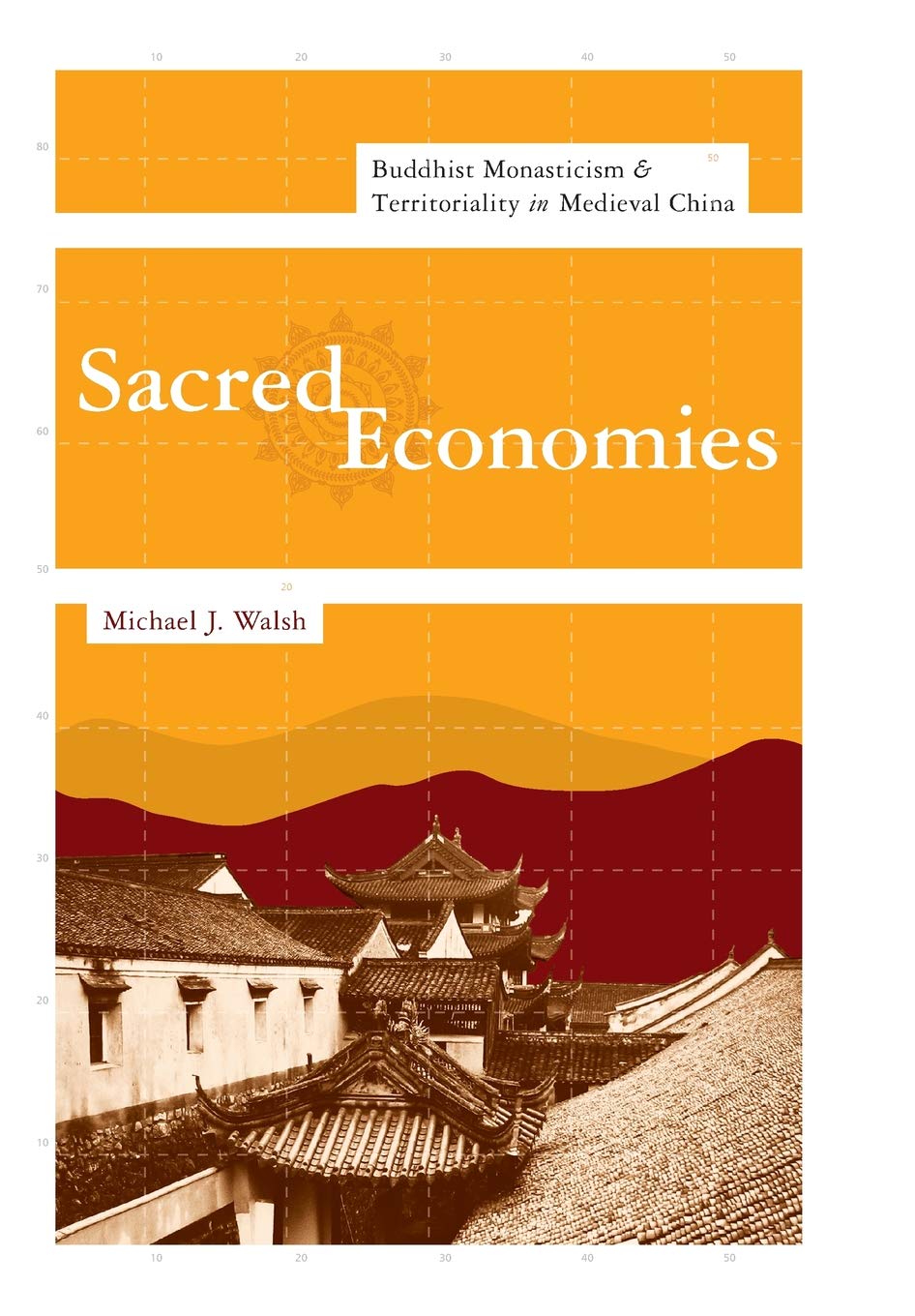
Buddhist monasteries in medieval China employed a variety of practices to ensure their ascendancy and survival. Most successful was the exchange of material goods for salvation, as in the donation of land, which allowed monks to spread their teachings throughout China. By investigating a variety of socioeconomic spaces produced and perpetuated by Chinese monasteries, Michael J. Walsh reveals the 'sacred economies' that shaped early Buddhism and its relationship with consumption and salvation.Centering his study on Tiantong, a Buddhist monastery that has thrived for close to seventeen centuries in southeast China, Walsh follows three main topics: the spaces monks produced, within and around which a community could pursue a meaningful existence; the social and economic avenues through which monasteries provided diverse sacred resources and secured the primacy of Buddhist teachings within an agrarian culture; and the nature of 'transactive' participation within monastic spaces, which later became a fundamental component of a broader Chinese religiosity.Unpacking these sacred economies and repositioning them within the history of religion in China, Walsh encourages a different approach to the study of Chinese religion, emphasizing the critical link between religious exchange and the production of material culture.
⚠️ WARNING (California Proposition 65):
This product may contain chemicals known to the State of California to cause cancer,
birth defects, or other reproductive harm.
For MAP (Minimum Advertised Price) violations and Intellectual Property (IP) or Trademark concerns, please contact:
support@ergodebooks.com
⚠️ California Proposition 65 Warning: Some products sold on this website may expose you to chemicals known to the State of California to cause cancer, birth defects, or other reproductive harm. For more information, visit www.P65Warnings.ca.gov.