
Title
Saint Bonaventure
Sold by Ergodebooks, an authorized reseller.
Returns accepted within 30 days | support@ergodebooks.com
Shipping Information
- Free Standard Shipping — United States only
- Processing Time: 3–5 business days
- Estimated Delivery: 6–10 business days after dispatch
- Double-boxed, fully insured & discreetly packaged
- Tracking number sent via email once dispatched
Returns & Refund
Returns accepted within 30 days of delivery.
Damaged or Defective Item
Free return shipping + replacement or full refund
Wrong Item Received
Free return shipping + replacement or full refund
Change of Mind
Return shipping at customer's expense · 25% restocking fee applies
Payment Option

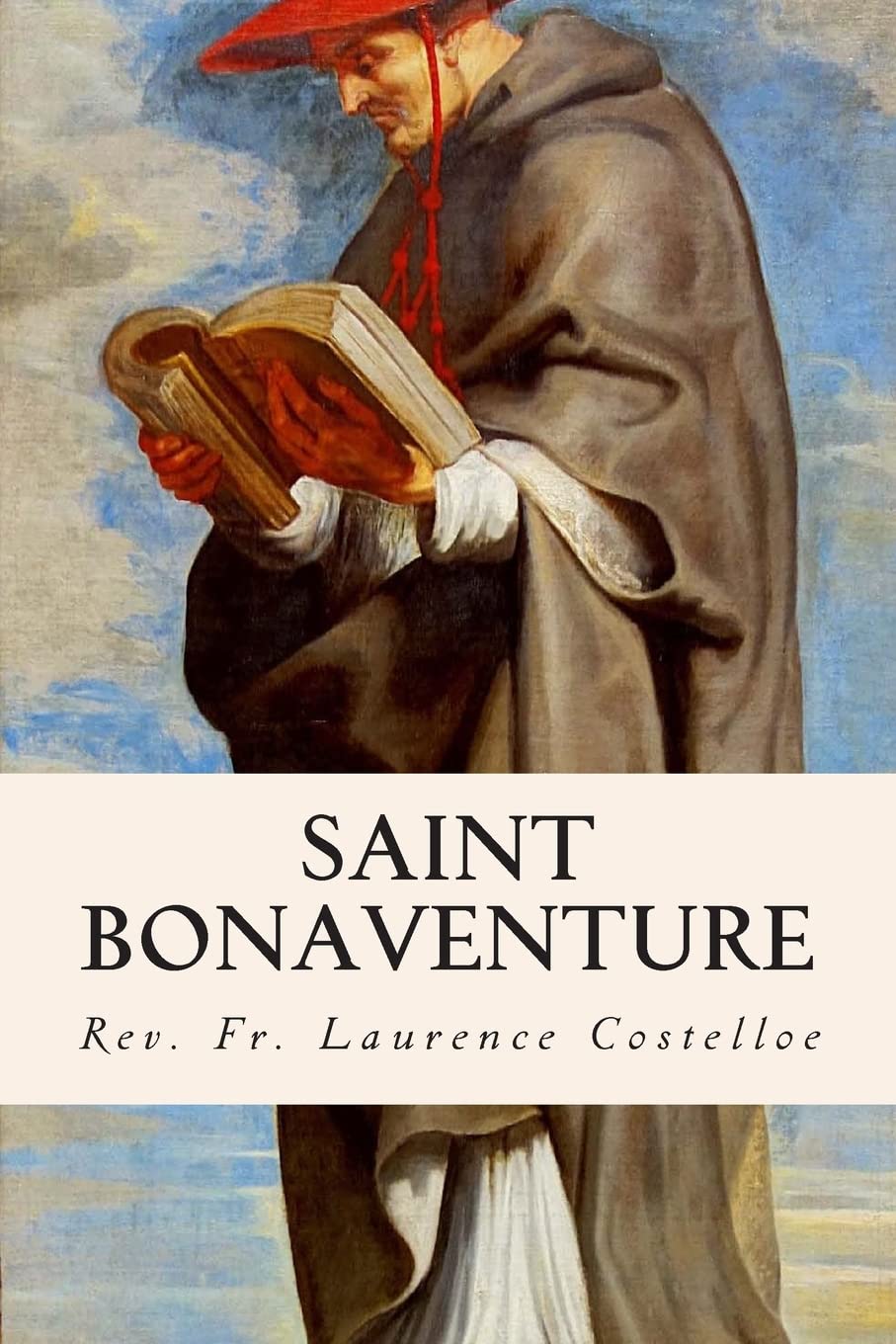
The Life Of Saint Bonaventure, The Seraphic Doctor, Is Now Appropriately Presented To The Public As The First Of The Franciscan Lives In This Series Of The Lives Of The Friar Saints. Till The Days Of This Second Founder Of The Franciscan Order, The Simplicity Of Our Holy Father St. Francis Had Been The Salient Feature Of His Institute: No Successful Effort Had Hitherto Been Made To Organize The Growing Order Unto The Full Measure Of Its Efficiency. Saint Bonaventure (1221 15 July 1274), Born Giovanni Di Fidanza, Was An Italian Medieval Franciscan, Scholastic Theologian And Philosopher. The Seventh Minister General Of The Order Of Friars Minor, He Was Also Cardinal Bishop Of Albano. He Was Canonised On 14 April 1482 By Pope Sixtus Iv And Declared A Doctor Of The Church In The Year 1588 By Pope Sixtus V. He Is Known As The Seraphic Doctor (Latin: Doctor Seraphicus). Many Writings Believed In The Middle Ages To Be His Are Now Collected Under The Name Pseudobonaventure. He Was Born At Bagnorea In Umbria, Not Far From Viterbo, Then Part Of The Papal States. Almost Nothing Is Known Of His Childhood, Other Than The Names Of His Parents, Giovanni Di Fidanza And Maria Di Ritella. He Entered The Franciscan Order In 1243 And Studied At The University Of Paris, Possibly Under Alexander Of Hales, And Certainly Under Alexander'S Successor, John Of Rochelle. In 1253 He Held The Franciscan Chair At Paris. A Dispute Between Seculars And Mendicants Delayed His Reception As Master Until 1257, Where His Degree Was Taken In Company With Thomas Aquinas. Three Years Earlier His Fame Had Earned Him The Position Of Lecturer On The Four Books Of Sentencesa Book Of Theology Written By Peter Lombard In The Twelfth Centuryand In 1255 He Received The Degree Of Master, The Medieval Equivalent Of Doctor. After Having Successfully Defended His Order Against The Reproaches Of The Antimendicant Party, He Was Elected Minister General Of The Franciscan Order. On 24 November 1265, He Was Selected For The Post Of Archbishop Of York; However, He Was Never Consecrated And Resigned The Appointment In October 1266. During His Tenure, The General Chapter Of Narbonne, Held In 1260, Promulgated A Decree Prohibiting The Publication Of Any Work Out Of The Order Without Permission From The Higher Superiors. This Prohibition Has Induced Modern Writers To Pass Severe Judgment Upon Roger Bacon'S Superiors Being Envious Of Bacon'S Abilities. However, The Prohibition Enjoined On Bacon Was A General One, Which Extended To The Whole Order. Its Promulgation Was Not Directed Against Him, But Rather Against Gerard Of Borgo San Donnino. Gerard Had Published In 1254 Without Permission A Heretical Work, Introductorius In Evangelium Ternum (An Introduction To The Eternal Gospel). Thereupon The General Chapter Of Narbonne Promulgated The Abovementioned Decree, Identical With The Constitutio Gravis In Contrarium Bacon Speaks Of. The Abovementioned Prohibition Was Rescinded In Roger'S Favour Unexpectedly In 1266. Bonaventure'S Coat Of Arms Of Cardinal Bishop Of Albano Bonaventure Was Instrumental In Procuring The Election Of Pope Gregory X, Who Rewarded Him With The Title Of Cardinal Bishop Of Albano, And Insisted On His Presence At The Great Second Council Of Lyon In 1274. There, After His Significant Contributions Led To A Union Of The Greek And Latin Churches, Bonaventure Died Suddenly And In Suspicious Circumstances. The 1913 Edition Of The Catholic Encyclopedia Has Citations That Suggest He Was Poisoned, But No Mention Is Made Of This In The 2003 Second Edition Of The New Catholic Encyclopedia. The Only Extant Relic Of The Saint Is The Arm And Hand With Which He Wrote His Commentary On The Sentences, Which Is Now Conserved At Bagnoregio, In The Parish Church Of St. Nicholas
⚠️ WARNING (California Proposition 65):
This product may contain chemicals known to the State of California to cause cancer, birth defects, or other reproductive harm.
For more information, please visit www.P65Warnings.ca.gov.
- Q: What is the page count of 'Saint Bonaventure'? A: This book contains eighty-four pages. It provides a detailed account of the life of Saint Bonaventure, a significant figure in the Franciscan Order.
- Q: What are the dimensions of this paperback book? A: The dimensions are six inches in length and nine point zero two inches in height. This size makes it easy to handle and read.
- Q: Who is the author of 'Saint Bonaventure'? A: The author is Rev. Fr. Laurence Costelloe. He offers insights into the life and contributions of Saint Bonaventure.
- Q: How do I read 'Saint Bonaventure'? A: You simply open the paperback and start reading. The book is designed for easy comprehension and engagement.
- Q: Is this book suitable for all ages? A: Yes, this book can be suitable for a wide range of ages. It discusses religious themes that may appeal to both younger and older readers.
- Q: What is the genre of 'Saint Bonaventure'? A: This book falls under the Religious genre. It provides an exploration of the life of a significant religious figure.
- Q: How should I store this paperback book? A: Store it in a cool, dry place. Keeping it away from direct sunlight will help preserve its condition.
- Q: Can I clean the pages of this book? A: No, it is not recommended to clean the pages. Instead, handle the book carefully to avoid dirt and damage.
- Q: Is there a warranty for 'Saint Bonaventure'? A: No, this book typically does not come with a warranty. However, be sure to check the return policy at the point of purchase.
- Q: What if the book arrives damaged? A: If the book arrives damaged, contact the seller for a return or exchange. Most sellers have policies in place for such issues.
- Q: How does this book compare to other religious biographies? A: This book focuses specifically on Saint Bonaventure, providing unique insights compared to other general religious biographies.
- Q: Is 'Saint Bonaventure' a good choice for beginners in religious studies? A: Yes, it is an excellent choice for beginners. The writing is accessible and informative, making it easy to understand.
- Q: Are there illustrations in 'Saint Bonaventure'? A: Yes, the book includes black and white illustrations. These visuals complement the text and enhance the reading experience.
- Q: What themes are explored in 'Saint Bonaventure'? A: Themes include spirituality, leadership in the Franciscan Order, and the historical context of Saint Bonaventure's life.
- Q: Is there an index or glossary in this book? A: No, 'Saint Bonaventure' does not include an index or glossary. It focuses on narrative content rather than reference material.