If you have any questions, you are always welcome to contact us. We'll get back to you as soon as possible, withing 24 hours on weekdays.
Customer service
All questions about your order, return and delivery must be sent to our customer service team by e-mail at yourstore@yourdomain.com
Sale & Press
If you are interested in selling our products, need more information about our brand or wish to make a collaboration, please contact us at press@yourdomain.com
Help
If you have any questions, you are always welcome to contact us. We'll get back to you as soon as possible, withing 24 hours on weekdays.
Customer service
All questions about your order, return and delivery must be sent to our customer service team by e-mail at yourstore@yourdomain.com
Sale & Press
If you are interested in selling our products, need more information about our brand or wish to make a collaboration, please contact us at press@yourdomain.com
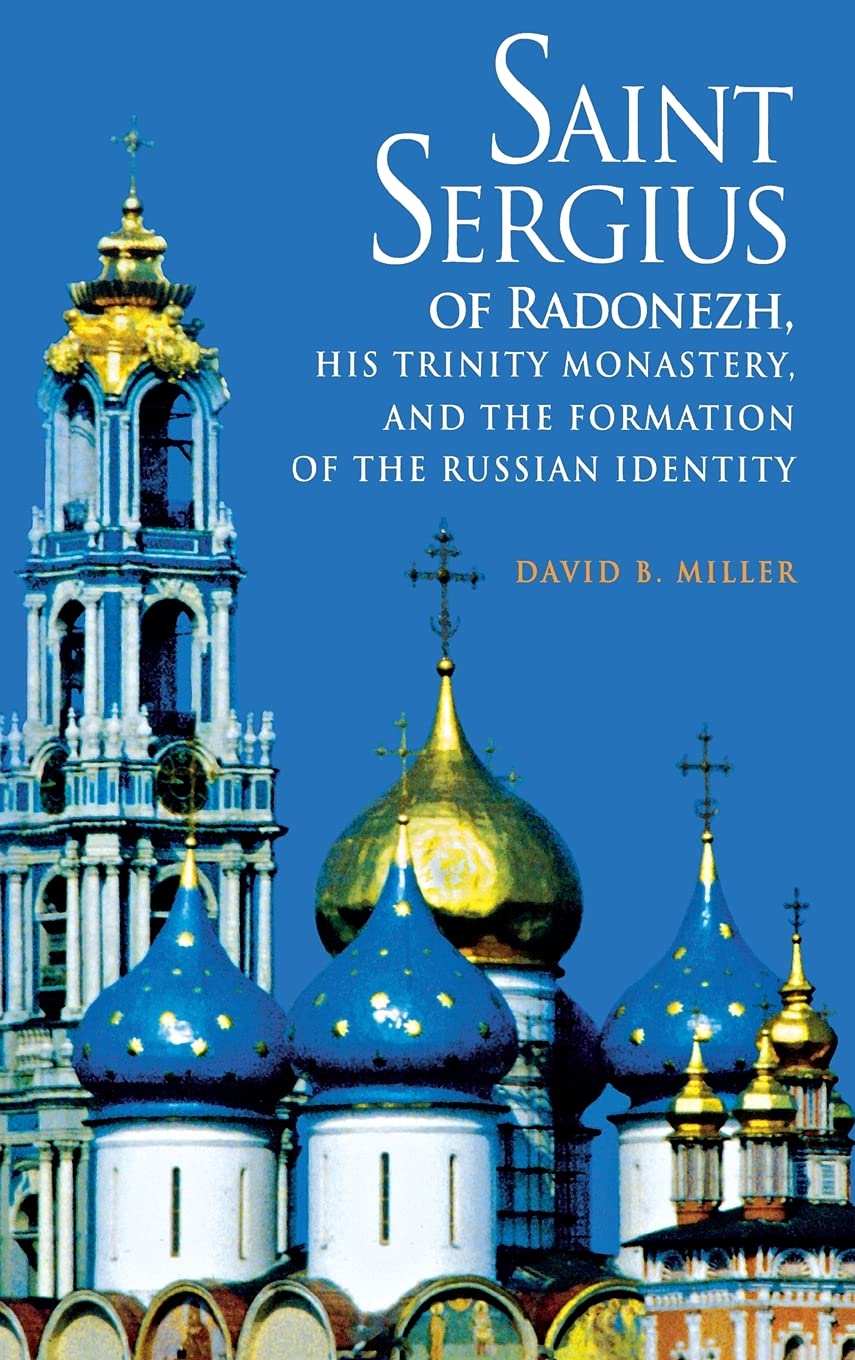
When Sergius of Radonezh founded a monastery near Moscow, his example spawned a movement of monastic foundations throughout Russia. Within three decades of his death in 1392, Sergius was recognized as a saint, and by 1450 many considered him the intercessor for the Russian land who freed its people from Mongol rule. Over the next century and a half, thousands sought St. Sergius' intercession with gifts to the monastery. Moscow's rulers made Sergius patron saint of their dynasty and of the Russian tsardom. By 1605, the TrinitySergius monastery was the biggest house in Russia. Miller presents Trinity's dramatic history from the fourteenth century to the beginning of the Time of Troubles. Using extensive archival materials, he traces the evolution of Trinity's relationship to Sergius' venerators and its traditions, governance, social composition, and the lifestyle of its members. In lucid prose, Miller argues that St. Sergius' cult and monastery became integrating forces on a national scale and vital elements in the forging of a Russian identity, economy, and cohesive society. The power of religion to shape national identity is a lively topic today, and Miller's study will interest both medievalists and modern historians, as well as readers of Orthodox Church history.
⚠️ WARNING (California Proposition 65):
This product may contain chemicals known to the State of California to cause cancer,
birth defects, or other reproductive harm.
For MAP (Minimum Advertised Price) violations and Intellectual Property (IP) or Trademark concerns, please contact:
support@ergodebooks.com
⚠️ California Proposition 65 Warning: Some products sold on this website may expose you to chemicals known to the State of California to cause cancer, birth defects, or other reproductive harm. For more information, visit www.P65Warnings.ca.gov.