If you have any questions, you are always welcome to contact us. We'll get back to you as soon as possible, withing 24 hours on weekdays.
Customer service
All questions about your order, return and delivery must be sent to our customer service team by e-mail at yourstore@yourdomain.com
Sale & Press
If you are interested in selling our products, need more information about our brand or wish to make a collaboration, please contact us at press@yourdomain.com
Help
If you have any questions, you are always welcome to contact us. We'll get back to you as soon as possible, withing 24 hours on weekdays.
Customer service
All questions about your order, return and delivery must be sent to our customer service team by e-mail at yourstore@yourdomain.com
Sale & Press
If you are interested in selling our products, need more information about our brand or wish to make a collaboration, please contact us at press@yourdomain.com
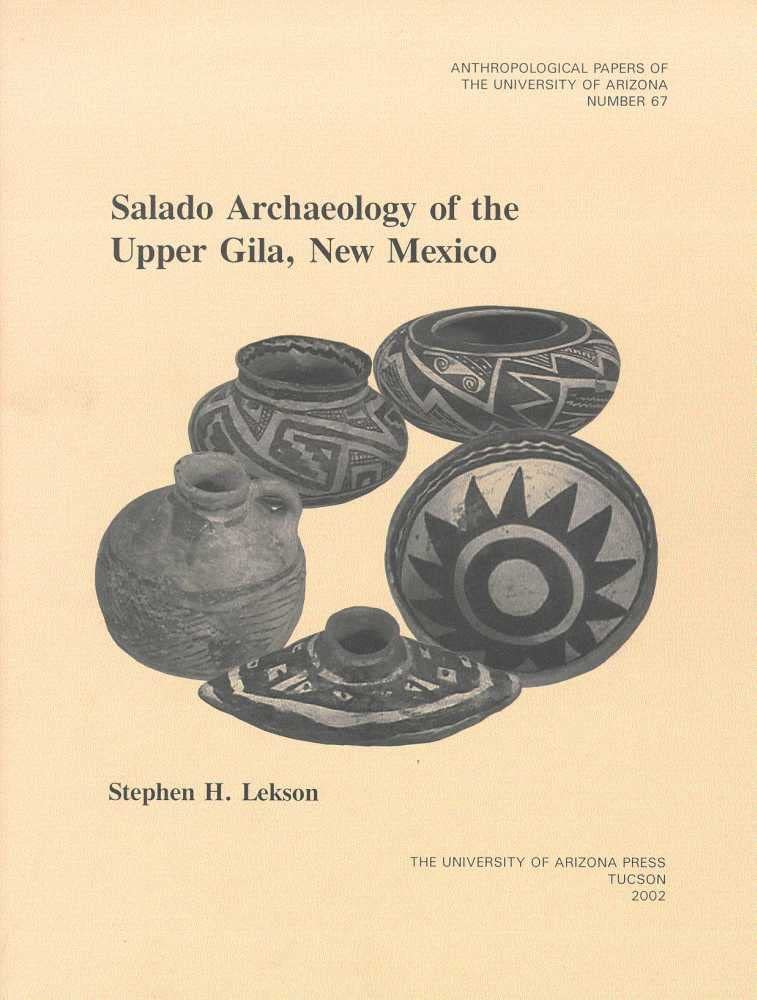
Salado is an enigma of the past. One of the most spectacular cultures of the ancient Southwest, its brilliant polychrome pottery has been subjected to varied interpretations, from religious cult to artistic horizon. Stephen Lekson now uses data from two Salado sitesa large pueblo and a small farmsteadto clarify longstanding misconceptions about this culture. By combining analysis of the large wholevessel collection at Dutch Ruin with the scientific excavation of Villareal II, a picture of Salado emerges that enables Lekson to evaluate previous competing theories and propose that Salado represents a major fourteenthcentury migration of Pueblo peoples into the Chihuahuan deserts. Lekson demonstrates that late, shortlived Salado farmsteadsdifficult to identify archaeologically in areas with larger Mimbres concentrationscoexisted with larger Salado towns, and he argues that Salado in the Upper Gila region appears as a substantial inmigration of Mogollon Uplands populations into what was a vacant river valley. Throughout the fourteenth century, Salado communities in the Upper Gila were integrated into the larger Salado horizon and were closely connected to Casas Grandes, as indicated by the export of serpentine to the city of Paquim and the occurrence of Casas Grandes pottery at Upper Gila Salado sites. The book includes illustrations of 71 vessels from Dutch Ruin plus a fullcolor frontispiece. Through analysis of these two sites, Lekson has taken a large step toward clearing up the mystery of Salado. His work will be welcomed by all who study the movements of peoples in the prehispanic Southwest.
⚠️ WARNING (California Proposition 65):
This product may contain chemicals known to the State of California to cause cancer,
birth defects, or other reproductive harm.
For MAP (Minimum Advertised Price) violations and Intellectual Property (IP) or Trademark concerns, please contact:
support@ergodebooks.com
⚠️ California Proposition 65 Warning: Some products sold on this website may expose you to chemicals known to the State of California to cause cancer, birth defects, or other reproductive harm. For more information, visit www.P65Warnings.ca.gov.