
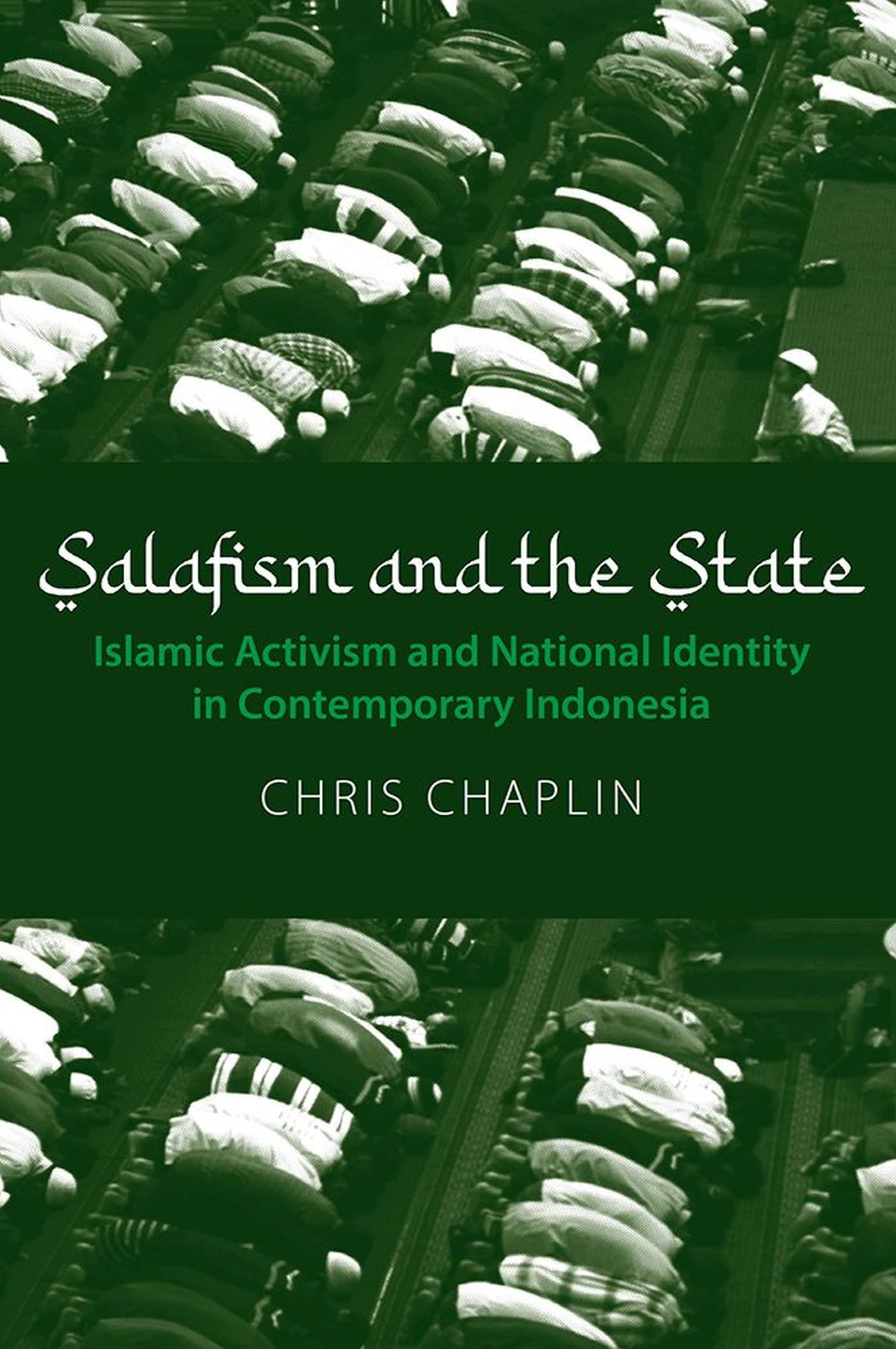
Title
Salafism and the State: Islamic Activism and National Identity in Contemporary Indonesia (NIAS Monographs, 151),Used
Sold by Ergodebooks, an authorized reseller.
Returns accepted within 30 days | support@ergodebooks.com
Shipping Information
- Free Standard Shipping — United States only
- Processing Time: 3–5 business days
- Estimated Delivery: 6–10 business days after dispatch
- Double-boxed, fully insured & discreetly packaged
- Tracking number sent via email once dispatched
Returns & Refund
Returns accepted within 30 days of delivery.
Damaged or Defective Item
Free return shipping + replacement or full refund
Wrong Item Received
Free return shipping + replacement or full refund
Change of Mind
Return shipping at customer's expense · 25% restocking fee applies
Payment Option

Recent studies of Indonesian Islam have pointed to the growing prominence of ?onservative?and globally expansive Islamic doctrines. Salafism is one such doctrine, and it has gained increasing popularity in Indonesia over the past several decades. Aiming to propagate a ?iteralist?interpretation of Islam, Salafi activists argue that many local Islamic traditions, histories and cultures are unIslamic. This has led to significant controversy, and accusations by many Indonesians that Salafism is foreign to country, an intolerant religion, and should have no part in the religious life of the nation.This book offers an ethnographic study of this often misunderstood and controversial movement. It explains why Salafism is growing in numbers, especially amongst young people, and how Salafi activists promote their faith within the wider public. It explores the range of propagational activities and products Salafis use in their public outreach, including literature, mosque sermons, social media ventures, and even fashion, and describes how these activities are tailored to a young Indonesian audience. Salafis may have global roots, but as this book outlines, its success in Indonesia is best understood as an intrinsically local phenomenon entangled within Indonesian ideas of Islamic praxis, consumerism, modernity, political action and citizenship. Salafi activists do not see themselves as foreign religious agents or detached from Indonesian life, but increasingly as part of a religiously conservative moral vanguard. Salafism is, consequently, part of the broader reorientation of social, cultural and political life we are seeing in contemporary Indonesia.
⚠️ WARNING (California Proposition 65):
This product may contain chemicals known to the State of California to cause cancer, birth defects, or other reproductive harm.
For more information, please visit www.P65Warnings.ca.gov.