If you have any questions, you are always welcome to contact us. We'll get back to you as soon as possible, withing 24 hours on weekdays.
Customer service
All questions about your order, return and delivery must be sent to our customer service team by e-mail at yourstore@yourdomain.com
Sale & Press
If you are interested in selling our products, need more information about our brand or wish to make a collaboration, please contact us at press@yourdomain.com
Help
If you have any questions, you are always welcome to contact us. We'll get back to you as soon as possible, withing 24 hours on weekdays.
Customer service
All questions about your order, return and delivery must be sent to our customer service team by e-mail at yourstore@yourdomain.com
Sale & Press
If you are interested in selling our products, need more information about our brand or wish to make a collaboration, please contact us at press@yourdomain.com
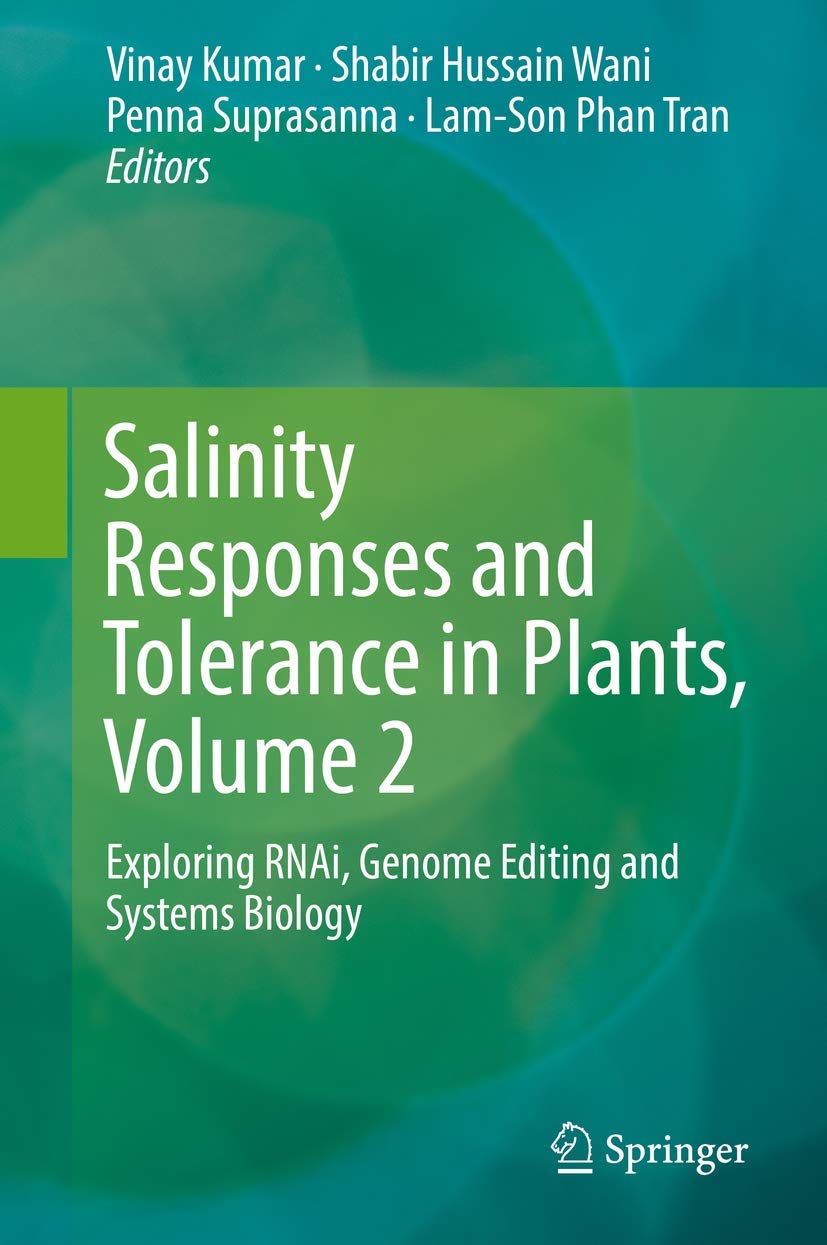
Soil salinity is a key abioticstress and poses serious threats to crop yields and quality of produce. Owing to the underlying complexity, conventional breeding programs have met with limited success. Even genetic engineering approaches, via transferring/overexpressing a single direct action gene per event did not yield optimal results. Nevertheless, the biotechnological advents in last decade coupled with the availability of genomic sequences of major crops and model plants have opened new vistas for understanding salinityresponses and improving salinity tolerance in important glycophytic crops. Our goal is to summarize these findings for those who wish to understand and target the molecular mechanisms for producing salttolerant and highyielding crops. Through this 2volume book series, we critically assess the potential venues for imparting salt stress tolerance to major crops in the postgenomic era. Accordingly, perspectives on improving crop salinity tolerance by targeting the sensory, iontransport and signaling mechanisms were presented in Volume 1. Volume 2 now focuses on the potency of postgenomic era tools that include RNAi, genomic intervention, genome editing and systems biology approaches for producing salt tolerant crops.
⚠️ WARNING (California Proposition 65):
This product may contain chemicals known to the State of California to cause cancer,
birth defects, or other reproductive harm.
For MAP (Minimum Advertised Price) violations and Intellectual Property (IP) or Trademark concerns, please contact:
support@ergodebooks.com
⚠️ California Proposition 65 Warning: Some products sold on this website may expose you to chemicals known to the State of California to cause cancer, birth defects, or other reproductive harm. For more information, visit www.P65Warnings.ca.gov.