
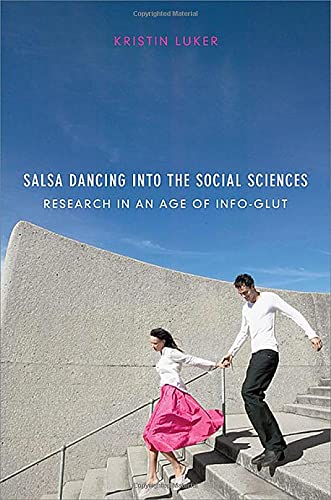
Salsa Dancing Into The Social Sciences: Research In An Age Of Infoglut,New
$73.99
Title
Salsa Dancing Into The Social Sciences: Research In An Age Of Infoglut,New
Free Standard Shipping Across USA
Quantity
Sold by Ergodebooks, an authorized reseller.
Returns accepted within 30 days | support@ergodebooks.com
Shipping Information
- Free Standard Shipping — United States only
- Processing Time: 3–5 business days
- Estimated Delivery: 6–10 business days after dispatch
- Double-boxed, fully insured & discreetly packaged
- Tracking number sent via email once dispatched
Returns & Refund
Returns accepted within 30 days of delivery.
Damaged or Defective Item
Free return shipping + replacement or full refund
Wrong Item Received
Free return shipping + replacement or full refund
Change of Mind
Return shipping at customer's expense · 25% restocking fee applies
All returns require a Return Authorization (RA) number before sending.
View Full Return & Refund Policy
Payment Option

Salsa Dancing Into The Social Sciences: Research In An Age Of Infoglut
⚠️ WARNING (California Proposition 65):
This product may contain chemicals known to the State of California to cause cancer, birth defects, or other reproductive harm.
For more information, please visit www.P65Warnings.ca.gov.
- Q: How many pages does this book have? A: This book contains three hundred thirty-six pages. It provides an in-depth exploration of social research methods.
- Q: What is the binding type of this book? A: This book has a hardcover binding. This ensures durability and a professional appearance on your bookshelf.
- Q: What are the dimensions of this book? A: The book measures five point seventy-five inches in length, one point twenty-six inches in width, and eight point five inches in height. These dimensions make it easy to handle and read.
- Q: Who is the author of this book? A: The author of this book is Kristin Luker. She is known for her expertise in social science research.
- Q: What is the main theme of this book? A: The main theme revolves around integrating salsa dancing into social research methodologies. It emphasizes creativity in academic work.
- Q: What audience is this book suitable for? A: This book is suitable for novice researchers and students in social sciences. It provides practical guidance for those new to research.
- Q: How can I apply the methods discussed in this book? A: You can apply the methods by following the structured approach Kristin Luker outlines for defining and completing research projects. This includes mastering sampling and operationalization.
- Q: Is this book suitable for someone with no prior research experience? A: Yes, this book is designed for beginners. It offers step-by-step guidance and practical tips for starting research projects.
- Q: Does this book provide strategies for overcoming writer's block? A: Yes, it includes strategies to beat writer's block. Kristin shares personal anecdotes and techniques to help you write effectively.
- Q: What should I do if I want to explore social science further? A: You can explore social science further by reading this book and utilizing its methods in your own research projects. It serves as a comprehensive introductory guide.
- Q: Is this book a good resource for academic writing? A: Yes, this book is a valuable resource for academic writing. It covers essential aspects of conducting research and writing effectively.
- Q: Can this book help improve my research skills? A: Yes, it is designed to enhance your research skills. The author provides insights into effective research practices and methodologies.
- Q: What unique perspectives does this book offer on social research? A: It offers unique perspectives by integrating personal interests, like salsa dancing, into research methodologies. This approach promotes a more holistic view of research.
- Q: Is there a specific research philosophy discussed in this book? A: Yes, the book discusses changeable philosophies in modern social science. It encourages readers to think critically about different research approaches.
- Q: How does this book differentiate between research topics and areas of interest? A: The book clearly defines the difference between an area of interest and a research topic. This distinction is critical for effective research planning.