If you have any questions, you are always welcome to contact us. We'll get back to you as soon as possible, withing 24 hours on weekdays.
Customer service
All questions about your order, return and delivery must be sent to our customer service team by e-mail at yourstore@yourdomain.com
Sale & Press
If you are interested in selling our products, need more information about our brand or wish to make a collaboration, please contact us at press@yourdomain.com
Help
If you have any questions, you are always welcome to contact us. We'll get back to you as soon as possible, withing 24 hours on weekdays.
Customer service
All questions about your order, return and delivery must be sent to our customer service team by e-mail at yourstore@yourdomain.com
Sale & Press
If you are interested in selling our products, need more information about our brand or wish to make a collaboration, please contact us at press@yourdomain.com
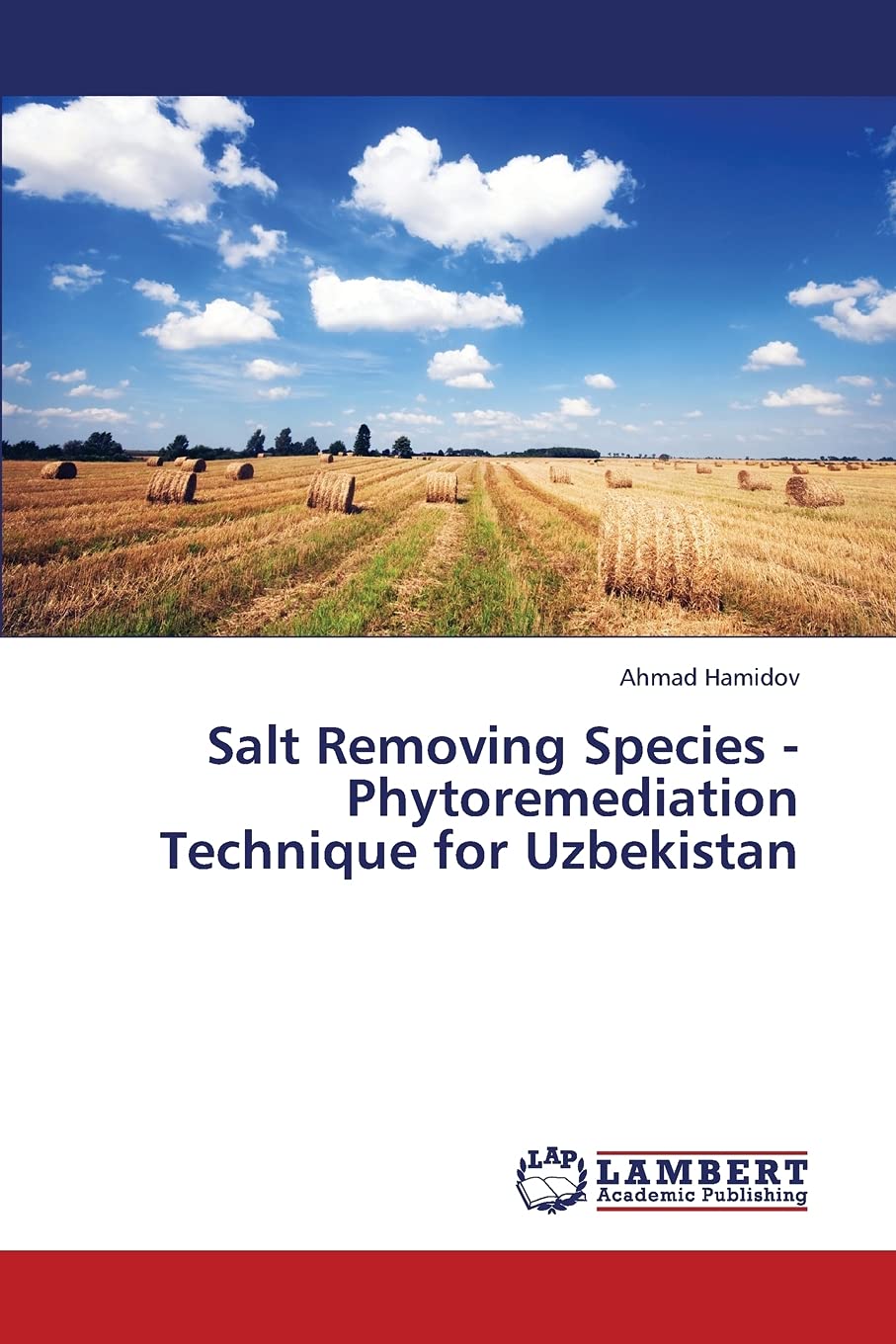
Conventional techniques, namely soil leaching and the use of enhancing fertilization are methods used to mitigate soil salinity and to increase the salt tolerance of agricultural crops grown in saltaffected soils. However, the intense use of these techniques has also attracted public attention due to the environmental pollution caused and the contamination of groundwater resources. Recently, a new environmentally safe and clean remediation technique, whereby salt (ion) removing species are planted in the saltaffected soils, has been introduced to address salinity problems. The salt removal potential of Portulaca oleracea golden purslane has been evaluated under this study. The results have revealed that no irrigation was required, when the water table remained at a depth of about 1.1 m, to remove the highest soil salts and to obtain the highest biomass production in Portulaca oleracea golden purslane; the capillary rise from the groundwater has played a significant role in meeting the demand of plants for water, increasing plant transpiration. The highest salt accumulation was 497 kg ha1, which eventually, removed about 16.8% of the total soil salts, at a depth of 10 cm.
⚠️ WARNING (California Proposition 65):
This product may contain chemicals known to the State of California to cause cancer,
birth defects, or other reproductive harm.
For MAP (Minimum Advertised Price) violations and Intellectual Property (IP) or Trademark concerns, please contact:
support@ergodebooks.com
⚠️ California Proposition 65 Warning: Some products sold on this website may expose you to chemicals known to the State of California to cause cancer, birth defects, or other reproductive harm. For more information, visit www.P65Warnings.ca.gov.