
Title
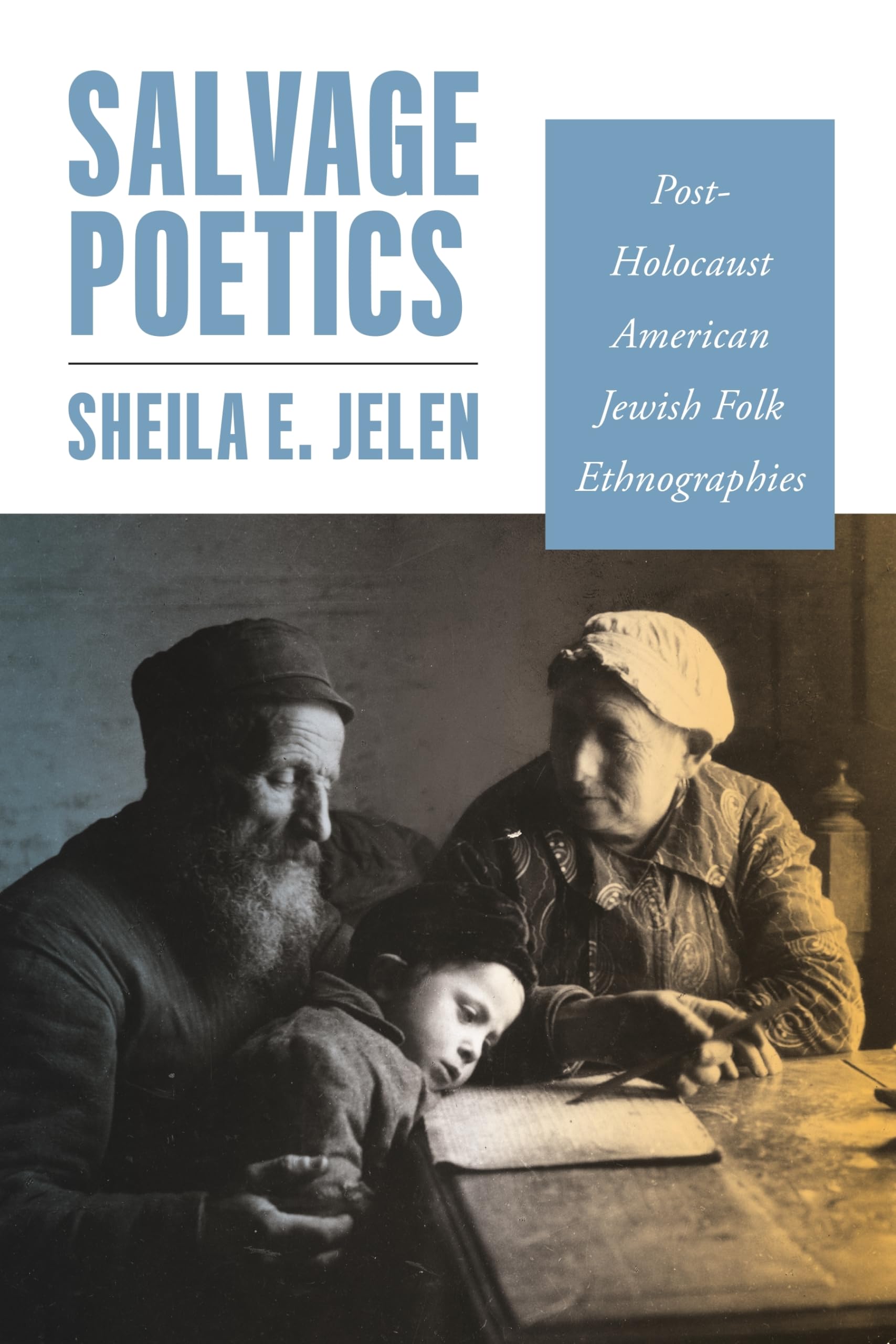
Salvage Poetics: Postholocaust American Jewish Folk Ethnographies (Raphael Patai Series In Jewish Folklore And Anthropology),Used
Sold by Ergodebooks, an authorized reseller.
Returns accepted within 30 days | support@ergodebooks.com
Shipping Information
- Free Standard Shipping — United States only
- Processing Time: 3–5 business days
- Estimated Delivery: 6–10 business days after dispatch
- Double-boxed, fully insured & discreetly packaged
- Tracking number sent via email once dispatched
Returns & Refund
Returns accepted within 30 days of delivery.
Damaged or Defective Item
Free return shipping + replacement or full refund
Wrong Item Received
Free return shipping + replacement or full refund
Change of Mind
Return shipping at customer's expense · 25% restocking fee applies
Payment Option

This volume explores how American Jewish postHolocaust writers, scholars, and editors adapted preHolocaust works, such as Yiddish fiction and documentary photography, for popular consumption by American Jews in the postHolocaust decades. These texts, Jelen argues, served to help clarify the role of East European Jewish identity in the construction of a postHolocaust American one. In her analysis of a variety of 'hybrid' textsthose that exist on the border between ethnography and artJelen traces the gradual shift from verbal to visual Jewish literacy among Jewish Americans after the Holocaust.S. Ansky's ethnographic expedition (19121914) and Martin Buber's adaptation and compilation of Hasidic tales (19061935) are presented as a means of contextualizing the role of an ethnographic consciousness in modern Jewish experience and the way in which literary adaptations and mediations create opportunities for the creation of folk ethnographic hybrid texts. Salvage Poetics looks at classical texts of the American Jewish experience in the second half of the twentieth century, such as Maurice Samuel's The World of Sholem Aleichem (1944), Abraham Joshua Heschel's The Earth Is the Lord's (1950), Elizabeth Herzog and Mark Zborowski's Life Is with People (1952), Lucy Dawidowicz's The Golden Tradition (1967), and Roman Vishniac's A Vanished World (1983), alongside other texts that consider the symbiotic relationship between preHolocaust aesthetic artifacts and their postwar reframings and reconsiderations.Salvage Poetics is particularly attentive to how literary scholars deploy the notion of 'ethnography' in their readings of literature in languages and/or cultures that are considered 'dead' or 'dying' and how their definition of an 'ethnographic' literary text speaks to and enhance the scientific discipline of ethnography. This book makes a fresh contribution to the fields of American Jewish cultural and literary studies and art history.
⚠️ WARNING (California Proposition 65):
This product may contain chemicals known to the State of California to cause cancer, birth defects, or other reproductive harm.
For more information, please visit www.P65Warnings.ca.gov.