
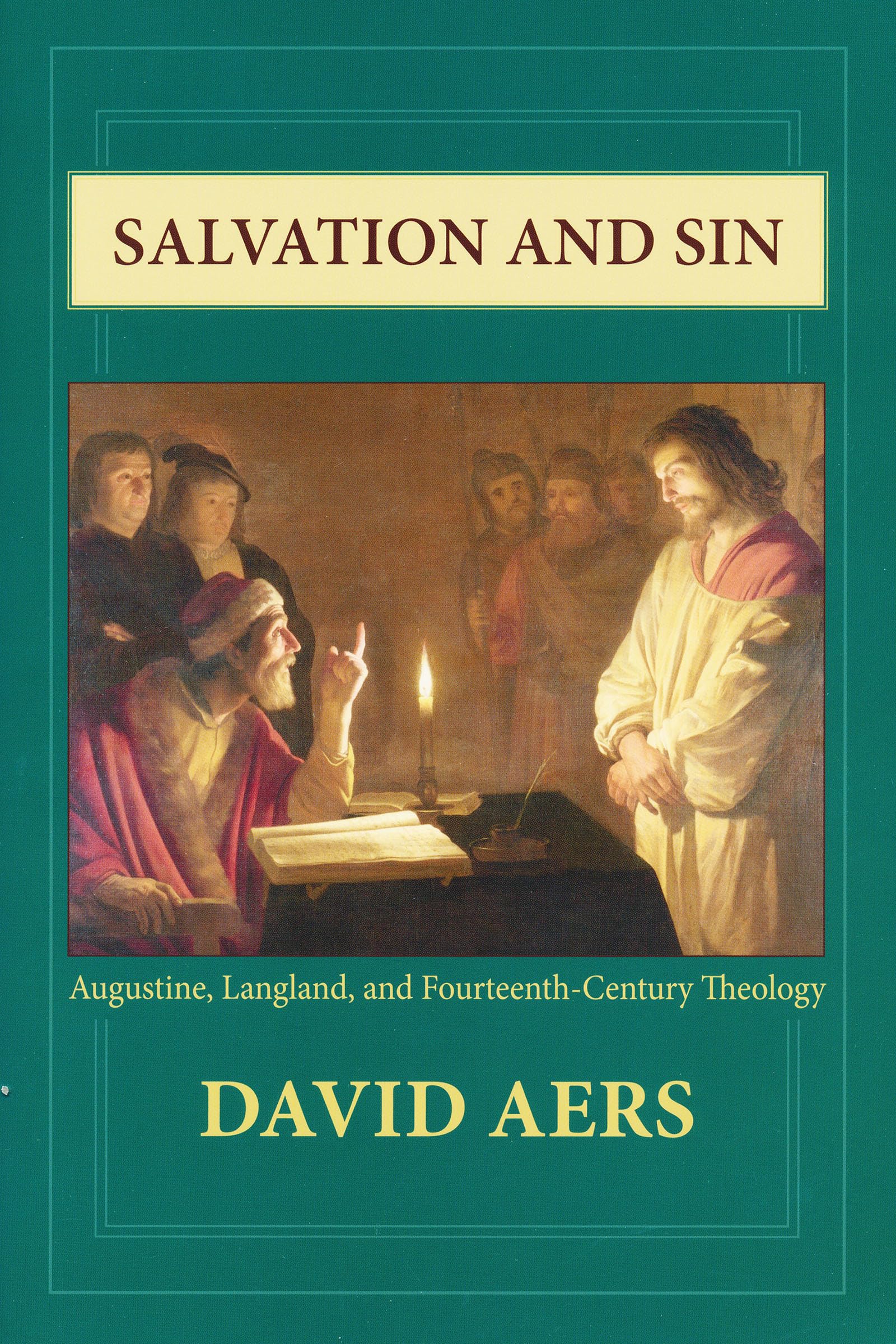
Title
Salvation and Sin: Augustine, Langland, and FourteenthCentury Theology,Used
Sold by Ergodebooks, an authorized reseller.
Returns accepted within 30 days | support@ergodebooks.com
Shipping Information
- Free Standard Shipping — United States only
- Processing Time: 3–5 business days
- Estimated Delivery: 6–10 business days after dispatch
- Double-boxed, fully insured & discreetly packaged
- Tracking number sent via email once dispatched
Returns & Refund
Returns accepted within 30 days of delivery.
Damaged or Defective Item
Free return shipping + replacement or full refund
Wrong Item Received
Free return shipping + replacement or full refund
Change of Mind
Return shipping at customer's expense · 25% restocking fee applies
Payment Option

In Salvation and Sin, David Aers continues his study of Christian theology in the later Middle Ages. Working at the nexus of theology and literature, he combines formidable theological learning with finely detailed and insightful close readings to explore a cluster of central issues in Christianity as addressed by Saint Augustine and by four fourteenthcentury writers of exceptional power.Salvation and Sin explores various modes of displaying the mysterious relations between divine and human agency, together with different accounts of sin and its consequences. Theologies of grace and versions of Christian identity and community are its pervasive concerns. Augustine becomes a major interlocutor in this book: his vocabulary and grammar of divine and human agency are central to Aers' exploration of later writers and their works.After the opening chapter on Augustine, Aers turns to the exploration of these concerns in the work of two major theologians of fourteenthcentury England, William of Ockham and Thomas Bradwardine. From their work, Aers moves to his central text, William Langland's Piers Plowman, a long multigeneric poem contributing profoundly to late medieval conversations concerning theology and ecclesiology. In Langland's poem, Aers finds a theology and ethics shaped by Christology where the poem's modes of writing are intrinsic to its doctrine. His thesis will revise the way in which this canonical text is read. Salvation and Sin concludes with a reading of Julian of Norwich's profound, compassionate, and widely admired theology, a reading which brings her Showings into conversation both with Langland and Augustine.
⚠️ WARNING (California Proposition 65):
This product may contain chemicals known to the State of California to cause cancer, birth defects, or other reproductive harm.
For more information, please visit www.P65Warnings.ca.gov.