
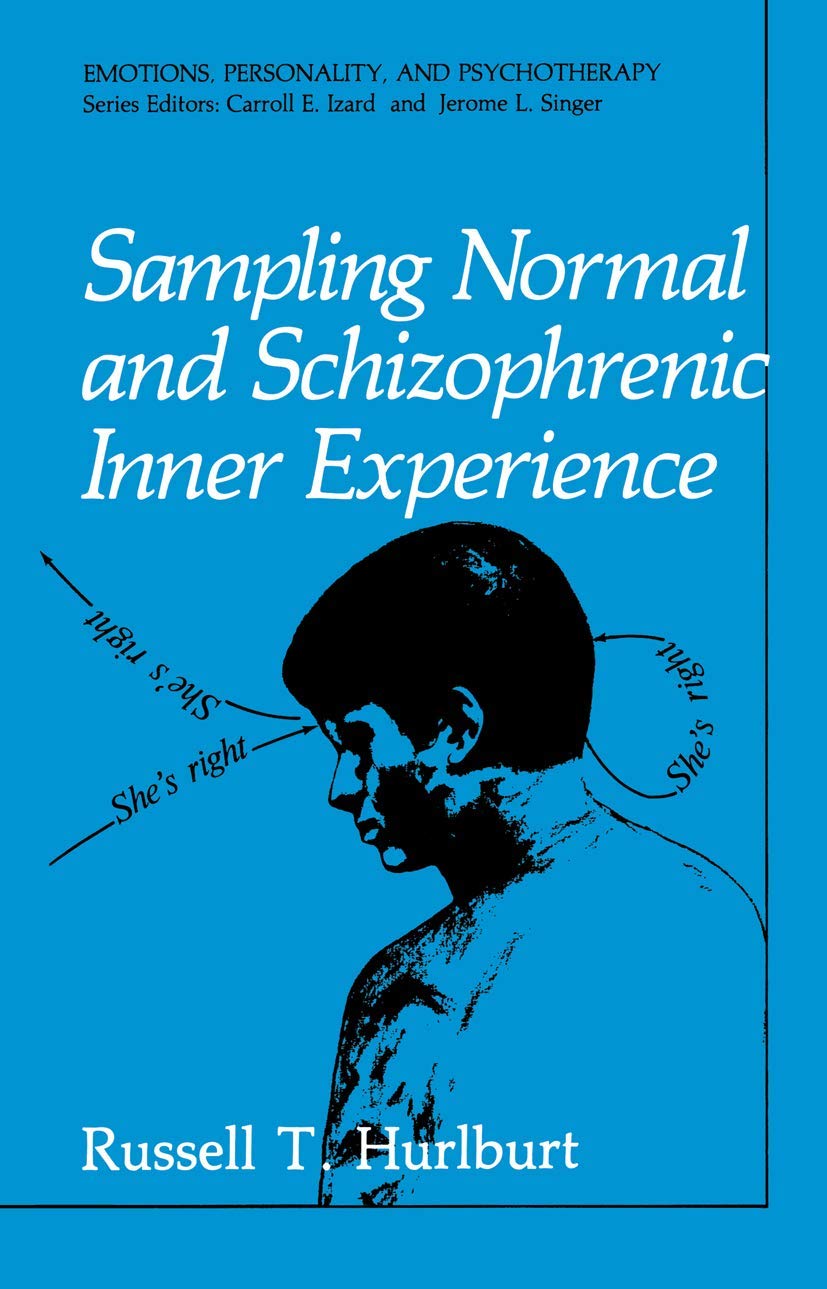
Title
Sampling Normal And Schizophrenic Inner Experience (Emotions, Personality, And Psychotherapy),New
Sold by Ergodebooks, an authorized reseller.
Returns accepted within 30 days | support@ergodebooks.com
Shipping Information
- Free Standard Shipping — United States only
- Processing Time: 3–5 business days
- Estimated Delivery: 6–10 business days after dispatch
- Double-boxed, fully insured & discreetly packaged
- Tracking number sent via email once dispatched
Returns & Refund
Returns accepted within 30 days of delivery.
Damaged or Defective Item
Free return shipping + replacement or full refund
Wrong Item Received
Free return shipping + replacement or full refund
Change of Mind
Return shipping at customer's expense · 25% restocking fee applies
Payment Option

What are the basic data of psychology? In the early years of experimental psychology, they were reports of ''brighter'' or 'heavier' or other esti mates of the magnitude of differences between the sensory stimuli pre sented in psychophysical experiments. Introspective accounts of the ex perience of seeing colored lights or shapes were important sources of psychological data in the laboratories of Cornell, Harvard, Leipzig, or Wiirzburg around the tum of the century. In 1910, John B. Watson called for the objectification of psychological research, even parodying the typical subjective introspective reports that emerged from Edward Bradford Titchener's laboratory. For almost fifty years psychologists largely eschewed subjective information and turned their attention to observable behavior. Rats running mazes or pigeons pecking away on varied schedules of reinforcement became the scientific prototypes for those psychologists who viewed themselves as 'doing science. ' Psychoanalysts and clinical psychologists sustained interest in the personal reports of patients or clients as valuable sources of data for research. For the psychologists, questionnaires and projective tests that allowed for quantitative analysis and psychometrics seemed to circum vent the problem of subjectivity. Sigmund Freud's introduction of on going free association became the basis for psychoanalysis as a therapy and as a means of learning about human psychology. Slipsofthe tongue, thought intrusions, fantasies, hesitations, and sudden emo tional expressions became the data employed by psychoanalysts in for mulating hypotheses about resistance, memory, transference, and a host of presumed human wishes and conflicts.
⚠️ WARNING (California Proposition 65):
This product may contain chemicals known to the State of California to cause cancer, birth defects, or other reproductive harm.
For more information, please visit www.P65Warnings.ca.gov.