
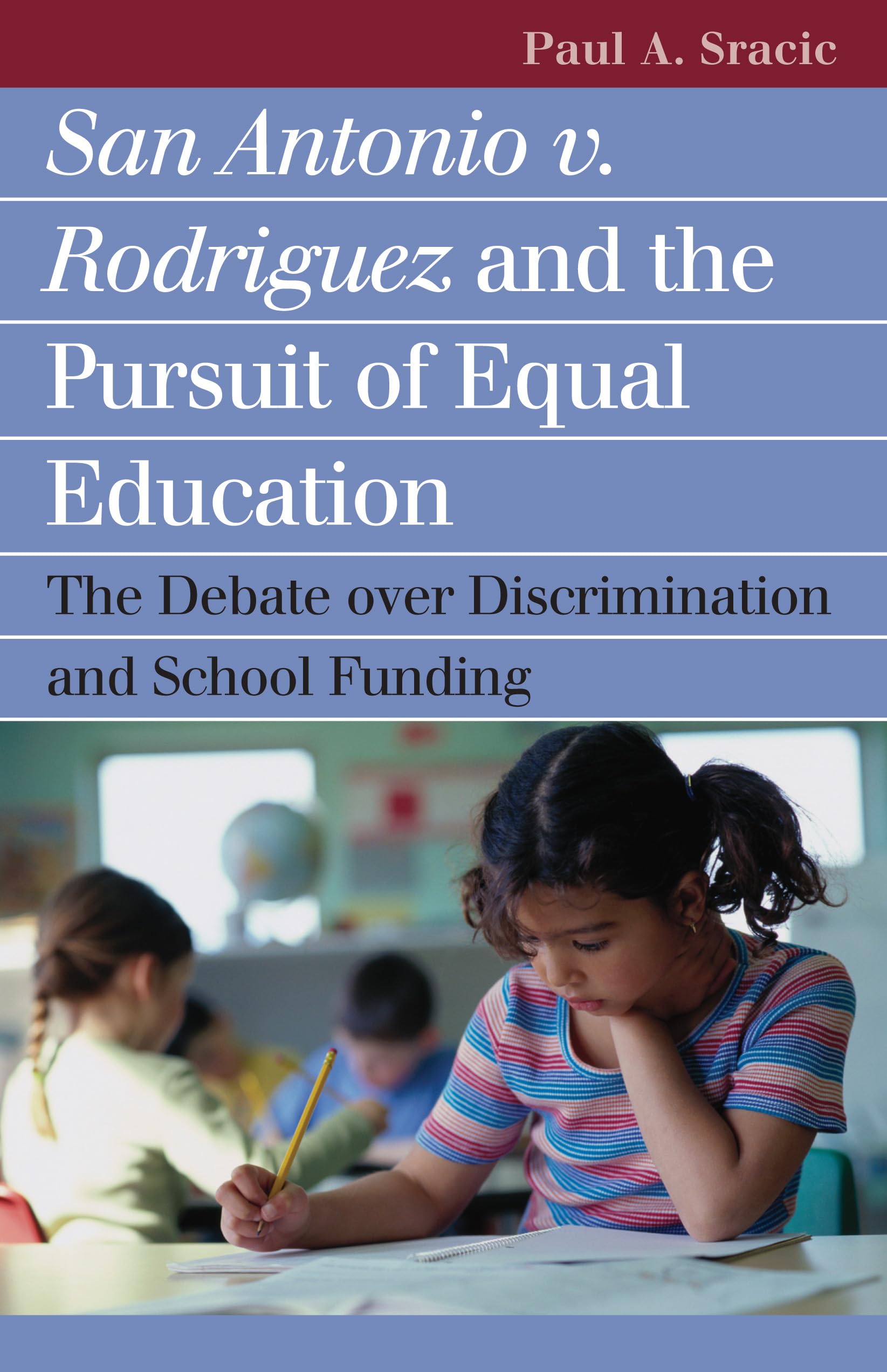
Title
San Antonio V. Rodriguez And The Pursuit Of Equal Education: The Debate Over Discrimination And School Funding
Sold by Ergodebooks, an authorized reseller.
Returns accepted within 30 days | support@ergodebooks.com
Shipping Information
- Free Standard Shipping — United States only
- Processing Time: 3–5 business days
- Estimated Delivery: 6–10 business days after dispatch
- Double-boxed, fully insured & discreetly packaged
- Tracking number sent via email once dispatched
Returns & Refund
Returns accepted within 30 days of delivery.
Damaged or Defective Item
Free return shipping + replacement or full refund
Wrong Item Received
Free return shipping + replacement or full refund
Change of Mind
Return shipping at customer's expense · 25% restocking fee applies
Payment Option

When Arthur Gochman Filed A Classaction Suit In 1968 On Behalf Of San Antonio School Children, He And His Clients Were Directly Challenging The Inequality Of Education Funding In Texas. They Argued That Quality Education, Not Merely Basic Schooling, Was A Constitutional Right, And A District Court Agreed. But The Supreme Court Overruled That Decision, Signaling A Halt To The Idea That The Constitution Contained A Right To An Equal Education And Marking An Important Transition From The Warren To The Burger Court.Paul Sracic Assesses The Impact Of This 54 Decision To Explore The Legacy Of A Landmark Case, Telling The Story Of The Supreme Court And School Finance In A New Way. His Is The First Book To Consider Rodriguez, Tracing Its Progress From Inception Through Appeal To Provide A Fascinating Account Of The Legal Maneuvering Of The Two Sidesand A Lesson In The Limits Of Judicial Solutions To Discrimination In Education.Balanced And Judicious In His Assessment, Sracic Brings Together The Varied Strandsoral History, Litigation, Constitutional Law, Political Contextin This Complex Case, While Clarifying The Positions On Both Sides Of The Conflict. Justice Lewis Powell Argued That Education Was Not A Constitutionally Protected Right And That The Equal Protection Clause Does Not Require Absolute Equality Or Precisely Equal Advantages, While Dissenting Justice Thurgood Marshall Called The Decision A Retreat From America'S Commitment To Equal Opportunity That Denigrated Brown V. Board Of Education.Although Powell'S And Marshall'S Opinions Have Been Documented, Until Now Little Has Been Written About The History Behind The Case. Sracic Puts A Human Face On The Account. Among Other Things, He Interviewed Demetrio Rodriguez, The Parent Whose Name Headlined The Original Suit, Along With Several Students Involved In The Case. He Also Delved Into Justice Powell'S Papers To Show The Influence Of His Prior Experience Championing Local Rather Than State Control Over Education And His Fear Of Centralization'S Potential Constraint On States' Rights.In The Wake Of Rodriguez, The Issue Of School Funding Acquired A Much Higher National Profile, Even As Efforts To Reform It Struggled Towards Varied Degrees Of Successin Texas And Many Other States. Sracic'S Very Readable Account Unravels The Complex Legal Doctrine Links This Vitally Important Case To The Fourteenth Amendment'S Guarantee Of Equal Protectionand Argues That One Cannot Fully Grasp The Scope Of That Amendment Without Fully Understanding Rodriguez.
⚠️ WARNING (California Proposition 65):
This product may contain chemicals known to the State of California to cause cancer, birth defects, or other reproductive harm.
For more information, please visit www.P65Warnings.ca.gov.
- Q: How many pages does the book have? A: The book has one hundred eighty-two pages. This length allows for an in-depth exploration of the case and its implications.
- Q: What is the binding type of this book? A: The book is paperback bound. This makes it lightweight and easy to handle for readers.
- Q: What is the size of the book? A: The book measures five point five six inches by eight point five four inches. Its compact size makes it portable for readers.
- Q: Who is the author of this book? A: The author is Paul A. Sracic. He provides a thorough analysis of the landmark case regarding education funding.
- Q: What is the main topic of the book? A: The main topic is the landmark case San Antonio v. Rodriguez. It discusses discrimination and school funding in Texas.
- Q: Is this book suitable for young readers? A: Yes, the book is suitable for young readers interested in history and law. However, it may require guidance for younger children due to its complex themes.
- Q: Can this book help me understand school funding issues? A: Yes, this book provides a detailed examination of school funding issues. It traces the legal battles and implications of the Rodriguez case.
- Q: How can I use this book for research? A: You can use this book as a primary source for research on educational law and discrimination. It includes historical context and legal analysis.
- Q: What themes are explored in this book? A: This book explores themes of education equality, constitutional rights, and judicial decisions. It provides insights into the complexities of school funding.
- Q: How should I care for this book? A: To care for this book, keep it in a dry place away from direct sunlight. Handle it gently to preserve its condition.
- Q: Is there a warranty for this book? A: No, there is no warranty for this book. However, if it arrives damaged, you can contact the seller for a return or exchange.
- Q: What if I receive a damaged book? A: If you receive a damaged book, you should reach out to the seller immediately. They can assist you with a return or replacement.
- Q: How do I store this book properly? A: Store this book upright on a shelf in a cool, dry place. Avoid stacking heavy items on top to prevent damage.
- Q: Is this book better for beginners or advanced readers? A: This book is suitable for both beginners and advanced readers. It provides foundational knowledge while also offering deeper insights for more experienced readers.
- Q: What makes this book unique? A: This book is unique because it offers a comprehensive analysis of the San Antonio v. Rodriguez case. It includes personal interviews and historical documents.
- Q: Can this book be used in educational settings? A: Yes, this book can be used in educational settings. It is a valuable resource for discussions on education policy and law.