
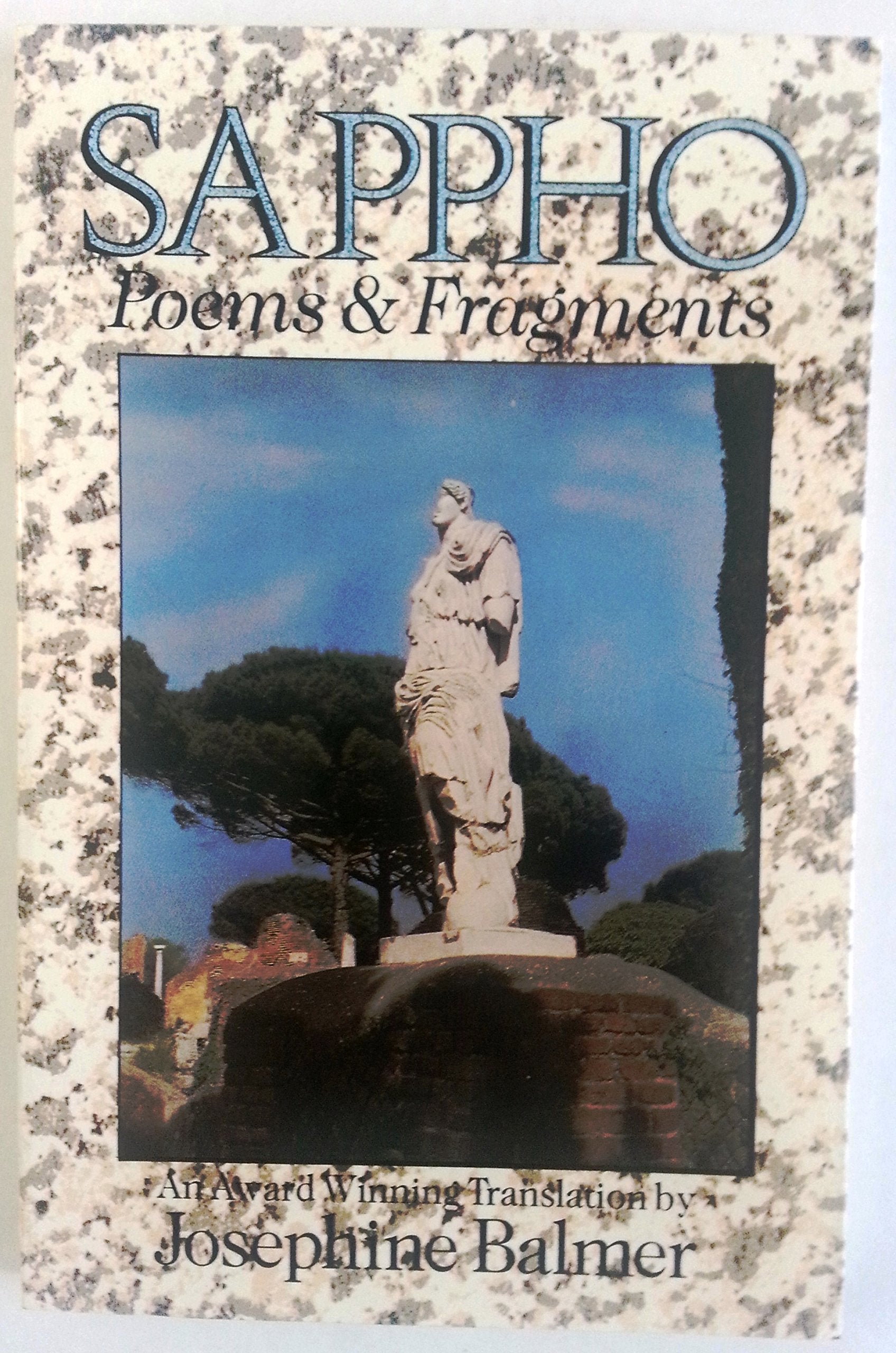
Title
Sappho: Poems And Fragments,Used
Sold by Ergodebooks, an authorized reseller.
Returns accepted within 30 days | support@ergodebooks.com
Shipping Information
- Free Standard Shipping — United States only
- Processing Time: 3–5 business days
- Estimated Delivery: 6–10 business days after dispatch
- Double-boxed, fully insured & discreetly packaged
- Tracking number sent via email once dispatched
Returns & Refund
Returns accepted within 30 days of delivery.
Damaged or Defective Item
Free return shipping + replacement or full refund
Wrong Item Received
Free return shipping + replacement or full refund
Change of Mind
Return shipping at customer's expense · 25% restocking fee applies
Payment Option

Little Remains Today Of The Writings Of The Archaic Greek Poet Sappho (Fl. Late 7Th And Early 6Th Centuries B.C.E.), Whose Work Is Said To Have Filled Nine Papyrus Rolls In The Great Library At Alexandria Some 500 Years After Her Death. The Surviving Texts Consist Of A Lamentably Small And Fragmented Body Of Lyric Poetryamong Them, Poems Of Invocation, Desire, Spite, Celebration, Resignation, And Remembrancethat Nevertheless Enables Us To Hear The Living Voice Of The Poet Plato Called The Tenth Muse. Stanley Lombardos Translations Give Us A Virtuoso Embodiment Of Sapphos Voice, Whose Telltale Charm, Authority, Immediacy, Directness, Intensity, And Sudden Changes Of Tone Are Among The Hallmarks Of His Masterly Translation. Pamela Gordon Introduces Us To The World Of Sappho, Discusses Questions Surrounding The Transmission Of Her Manuscripts, Offers Advice On Reading These Texts, And Concludes With An Enlightening Discussion Of Samesex Desire In Sappho.
⚠️ WARNING (California Proposition 65):
This product may contain chemicals known to the State of California to cause cancer, birth defects, or other reproductive harm.
For more information, please visit www.P65Warnings.ca.gov.
- Q: What is the page count of 'Sappho: Poems and Fragments'? A: The book contains over one hundred pages. This includes a collection of Sappho's lyric poetry, as well as an introduction and commentary.
- Q: What are the dimensions of this book? A: The dimensions are five point five one inches in length, zero point seventy-five inches in width, and eight point twenty-seven inches in height. This size makes it easy to handle and read.
- Q: What type of binding does 'Sappho: Poems and Fragments' have? A: It has a paperback binding. This lightweight binding is suitable for casual reading and portability.
- Q: How can I read 'Sappho: Poems and Fragments'? A: You can read this book by simply opening it and enjoying the poetry. It is suitable for anyone interested in classic literature and lyric poetry.
- Q: Is this book appropriate for all ages? A: Yes, it is generally appropriate for mature readers. The themes of desire and reflection may resonate more with older teens and adults.
- Q: What is the primary genre of this book? A: The primary genre is poetry. The book focuses on lyrical poetry from the ancient Greek poet Sappho.
- Q: How should I store 'Sappho: Poems and Fragments'? A: Store it in a cool, dry place, away from direct sunlight. This will help preserve the quality of the paperback.
- Q: Can I clean the book if it gets dirty? A: Yes, you can gently wipe the cover with a dry cloth. Avoid using water or cleaning solutions to prevent damage.
- Q: What should I do if the book arrives damaged? A: Contact the seller for a return or exchange. Most sellers have policies in place for damaged items.
- Q: Is 'Sappho: Poems and Fragments' a good choice for poetry beginners? A: Yes, it is suitable for beginners. The translations by Stanley Lombardo make Sappho's work accessible and engaging.
- Q: How does this book compare to other poetry collections? A: This book offers a unique insight into ancient Greek poetry, which is different from contemporary collections. Its historical context adds depth to the reading experience.
- Q: What themes are explored in 'Sappho: Poems and Fragments'? A: Themes include love, desire, and memory. These universal emotions are expressed through Sappho's lyrical poetry.
- Q: Who translated 'Sappho: Poems and Fragments'? A: The book was translated by Stanley Lombardo. His translations aim to capture the essence of Sappho's voice.
- Q: Who is the author of the introduction in this book? A: The introduction is written by Pamela Gordon. She provides valuable context about Sappho and her work.
- Q: What should I expect from the writing style in this book? A: Expect a lyrical and emotive writing style. Sappho's work is known for its intensity and directness.