
Title
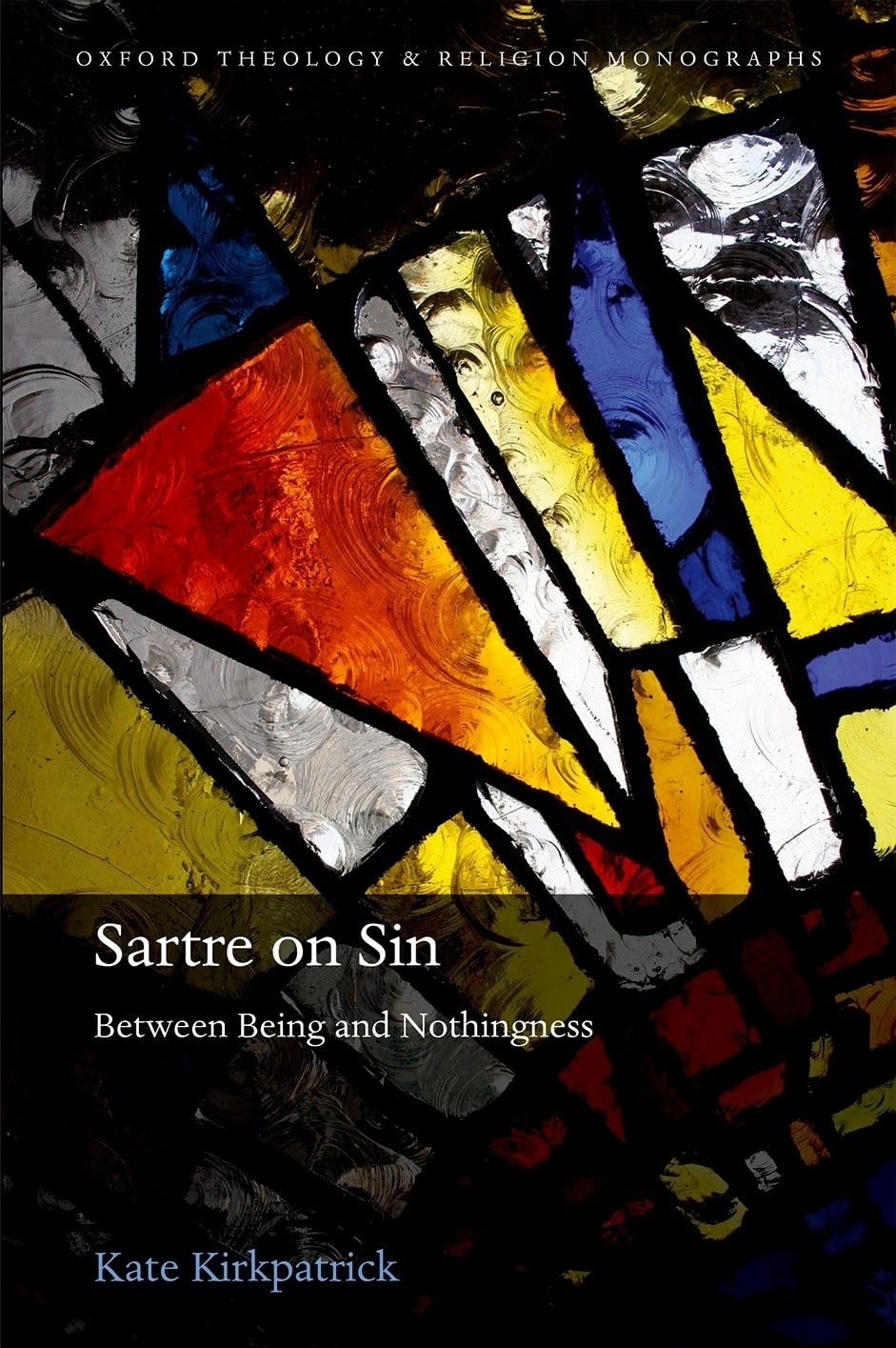
Sartre on Sin: Between Being and Nothingness (Oxford Theology and Religion Monographs),Used
Sold by Ergodebooks, an authorized reseller.
Returns accepted within 30 days | support@ergodebooks.com
Shipping Information
- Free Standard Shipping — United States only
- Processing Time: 3–5 business days
- Estimated Delivery: 6–10 business days after dispatch
- Double-boxed, fully insured & discreetly packaged
- Tracking number sent via email once dispatched
Returns & Refund
Returns accepted within 30 days of delivery.
Damaged or Defective Item
Free return shipping + replacement or full refund
Wrong Item Received
Free return shipping + replacement or full refund
Change of Mind
Return shipping at customer's expense · 25% restocking fee applies
Payment Option

Sartre on Sin: Between Being and Nothingness argues that JeanPaul Sartre's early, antihumanist philosophy is indebted to the Christian doctrine of original sin. On the standard reading, Sartre's most fundamental and attractive idea is freedom: he wished to demonstrate the existence of human freedom, and did so by connecting consciousness with nothingness. Focusing on Being and Nothingness, Kate Kirkpatrick demonstrates that Sartre's concept of nothingness (le neant) has a Christian genealogy which has been overlooked in philosophical and theological discussions of his work. Previous scholars have noted the resemblance between Sartre's and Augustine's ontologies: to name but one shared theme, both thinkers describe the human as the being through which nothingness enters the world. However, there has been no previous indepth examination of this 'resemblance'. Using historical, exegetical, and conceptual methods, Kirkpatrick demonstrates that Sartre's intellectual formation prior to his discovery of phenomenology included theological elementsespecially concerning the compatibility of freedom with sin and grace.After outlining the French Augustinianisms by which Sartre's account of the human as 'between being and nothingness' was informed, Kirkpatrick offers a close reading of Being and Nothingness which shows that the psychological, epistemological, and ethical consequences of Sartre's le neant closely resemble the consequences of its theological predecessor; and that his account of freedom can be read as an antitheodicy. Sartre on Sin illustrates that Sartre' s insights are valuable resources for contemporary hamartiology.
⚠️ WARNING (California Proposition 65):
This product may contain chemicals known to the State of California to cause cancer, birth defects, or other reproductive harm.
For more information, please visit www.P65Warnings.ca.gov.