
Title
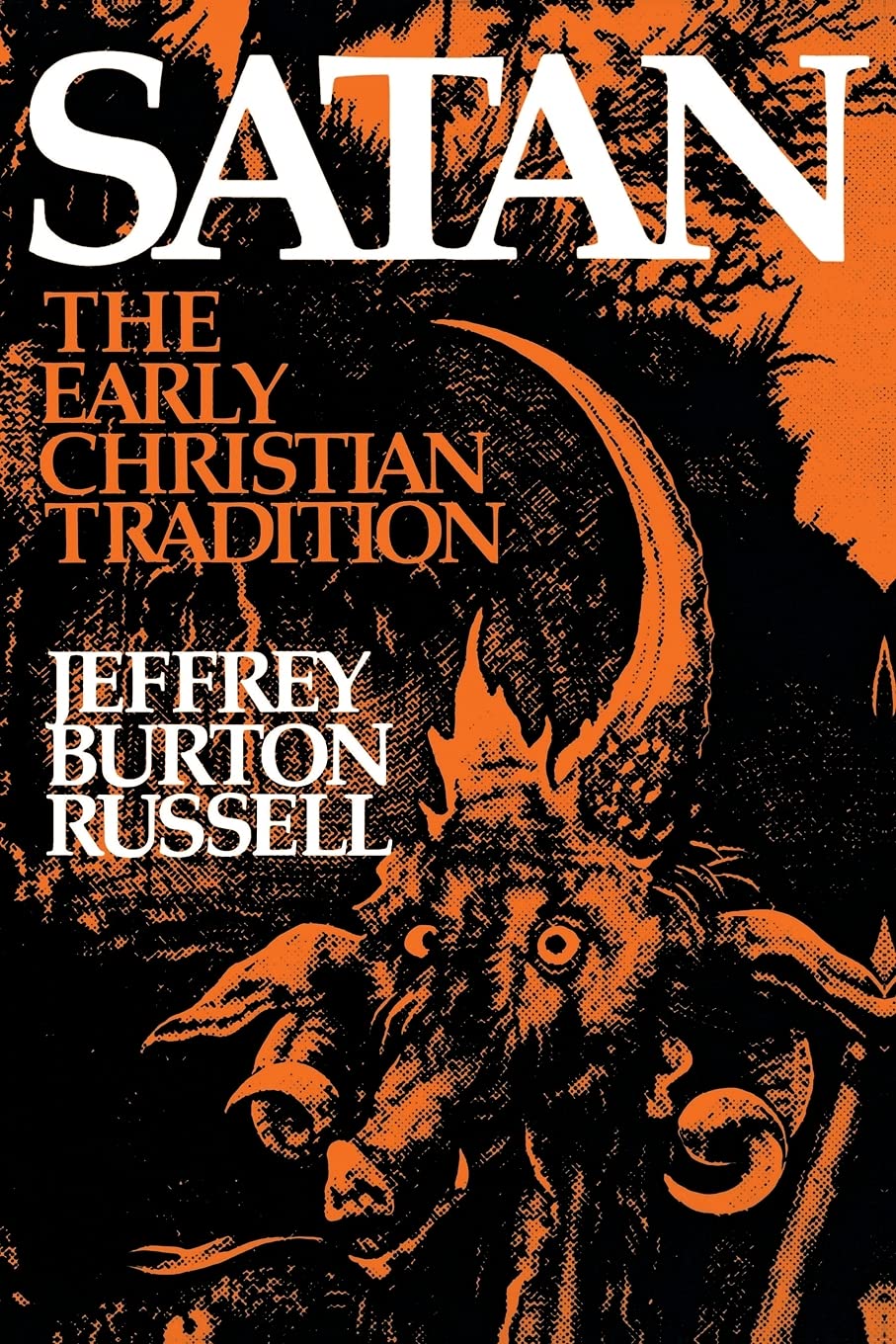
Satan: The Early Christian Tradition (Cornell Paperbacks)
Sold by Ergodebooks, an authorized reseller.
Returns accepted within 30 days | support@ergodebooks.com
Shipping Information
- Free Standard Shipping — United States only
- Processing Time: 3–5 business days
- Estimated Delivery: 6–10 business days after dispatch
- Double-boxed, fully insured & discreetly packaged
- Tracking number sent via email once dispatched
Returns & Refund
Returns accepted within 30 days of delivery.
Damaged or Defective Item
Free return shipping + replacement or full refund
Wrong Item Received
Free return shipping + replacement or full refund
Change of Mind
Return shipping at customer's expense · 25% restocking fee applies
Payment Option

Russell Has Complete Mastery Of His Material, And The Book'S Sweep Is Grand: A Tour Of The First Five Centuries Of Christian Intellectual History With The Spotlight On The Villain Instead Of The Hero.... Satan Is A Valuable Introduction To The Theological Portion Of The Western Devil Tradition. Speculumundeniably, Evil Exists In Our World; We Ourselves Commit Evil Acts. How Can One Account For Evil'S Ageless Presence, Its Attraction, And Its Fruits? The Question Is One That Jeffrey Burton Russell Addresses In His History Of The Concept Of The Devilthe Personification Of Evil Itself. In The Predecessor To This Book, The Devil: Perceptions Of Evil From Antiquity To Primitive Christianity, Russell Traced The Idea Of The Devil In Comparative Religions And Examined Its Development In Western Thought Through Ancient Hebrew Religion And The New Testament. This Volume Follows Its Course Over The First Five Centuries Of The Christian Era.Like Most Theological Problems, The Question Of Evil Was Largely Ignored By The Primitive Christian Community. The Later Christian Thinkers Who Wrestled With It For Many Centuries Were Faced With A Seemingly Irreconcilable Paradox: If God Is Benevolent And Omnipotent, Why Does He Permit Evil? How, On The Other Hand, Can God Be Allpowerful If One Adopts A Dualist Stance, And Posits Two Divine Forces, One Good And One Evil?Drawing Upon A Rich Variety Of Literary Sources As Well As Upon The Visual Arts, Russell Discusses The Apostolic Fathers, The Apologetic Fathers, And The Gnostics. He Goes On To Treat The Thought Of Irenaeus And Tertullian, And To Describe The Diabology Of The Alexandrian Fathers, Clement And Origen, As Well As The Dualist Tendencies In Lactantius And In The Monastic Fathers. Finally He Addresses The Syntheses Of The Fifth Century, Especially That Of Augustine, Whose View Of The Devil Has Been Widely Accepted In The Entire Christian Community Ever Since.Satan Is Both A Revealing Study Of The Compelling Figure Of The Devil And An Imaginative And Persuasive Inquiry Into The Forces That Shape A Concept And Ensure Its Survival.
⚠️ WARNING (California Proposition 65):
This product may contain chemicals known to the State of California to cause cancer, birth defects, or other reproductive harm.
For more information, please visit www.P65Warnings.ca.gov.
- Q: How many pages does the book have? A: The book has two hundred fifty-eight pages. It offers a comprehensive exploration of the concept of the Devil across history.
- Q: What is the binding type of this book? A: This book is available in paperback binding. This makes it lightweight and easy to handle for reading.
- Q: What are the book's dimensions? A: The book measures six inches in length, zero point seventy-five inches in width, and nine point zero two inches in height. These dimensions make it a standard size for paperback books.
- Q: Who is the author of the book? A: The author of the book is Jeffrey Burton Russell. He is known for his work on the history of the concept of evil.
- Q: What is the main theme of this book? A: The main theme of the book is the exploration of evil and the figure of Satan in the early Christian tradition. It examines theological perspectives on evil.
- Q: Is this book suitable for academic study? A: Yes, this book is suitable for academic study. It provides in-depth analysis and historical context beneficial for theological research.
- Q: Can this book be read by beginners? A: Yes, beginners can read this book. It is written in an accessible manner while still being informative for those new to the subject.
- Q: Is this book appropriate for young readers? A: No, this book is not appropriate for young readers. It discusses complex theological issues and the concept of evil that may not be suitable for children.
- Q: How should I store this book? A: Store this book in a cool, dry place. Keeping it upright on a shelf can help maintain its shape and prevent damage.
- Q: Is there a warranty for this book? A: No, there is no warranty for this book. However, you can check the return policy with the retailer if you encounter any issues.
- Q: What should I do if the book arrives damaged? A: If the book arrives damaged, contact the retailer immediately. Most retailers have a return or exchange policy for damaged items.
- Q: Can I find a digital version of this book? A: Yes, a digital version may be available. Check online retailers or library services for an e-book format of this title.
- Q: What makes this book unique compared to other books on the same topic? A: This book uniquely focuses on the early Christian tradition's portrayal of Satan, offering historical depth and theological insights not commonly found in other works.
- Q: Is this book part of a series? A: Yes, this book is part of a series exploring the history of evil and its representations. It follows Russell's previous work on the concept of the Devil.
- Q: What is the publisher of this book? A: The publisher of this book is Cornell University Press. They are known for academic publications across various disciplines.