
Title
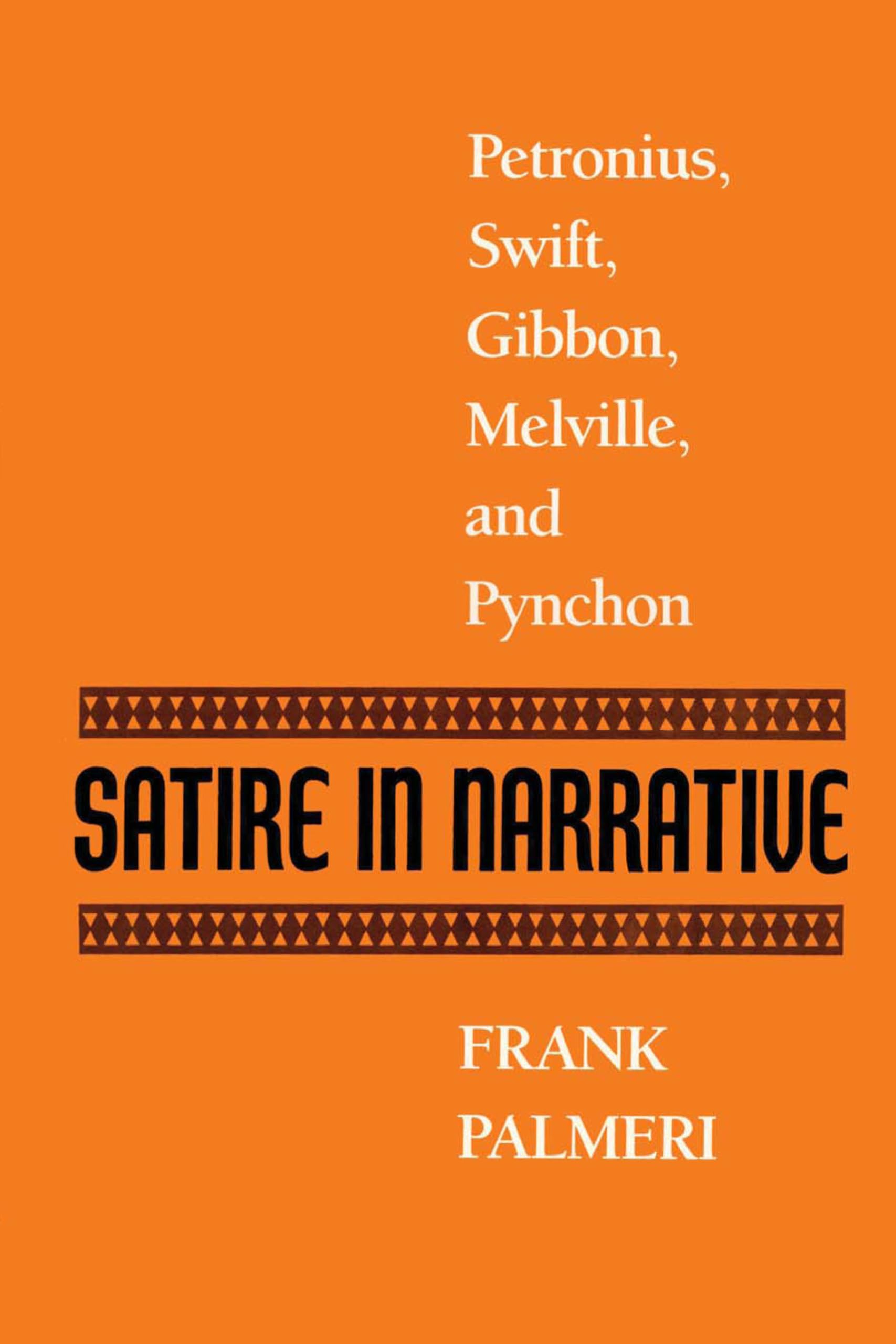
Satire In Narrative: Petronius, Swift, Gibbon, Melville, & Pynchon,Used
Sold by Ergodebooks, an authorized reseller.
Returns accepted within 30 days | support@ergodebooks.com
Shipping Information
- Free Standard Shipping — United States only
- Processing Time: 3–5 business days
- Estimated Delivery: 6–10 business days after dispatch
- Double-boxed, fully insured & discreetly packaged
- Tracking number sent via email once dispatched
Returns & Refund
Returns accepted within 30 days of delivery.
Damaged or Defective Item
Free return shipping + replacement or full refund
Wrong Item Received
Free return shipping + replacement or full refund
Change of Mind
Return shipping at customer's expense · 25% restocking fee applies
Payment Option

Virtually all theories of satire define it as a criticism of contemporary society. Some argue that satire criticizes the present in favor of a standard of values that has been superseded, and thus that satire is generally backwardlooking and conservative. While this is often true of poetic satire, in this study Frank Palmeri asserts that narrative satire performs a different function, that it parodies both the established view of the world and that of its opponents, offering its own distinctive critical perspective.This theory of satire builds on the idea of dialogical parody in the work of Russian theorist Mikhail Bakhtin, while revising Bakhtin's estimate of carnival. In Palmeri's view, the carnivalesque offers only an inverted mirror image of authoritative discourse, while parodic narrative satire suggests an alternative to both the official world and its inverted opposite.Palmeri applies this theory of narrative satire to five works of world literature, each of which has generated sharp controversy about the genre to which it rightly belongs: Petronius' Satyricon, Jonathan Swift's A Tale of a Tub, Edward Gibbon's Decline and Fall of the Roman Empire, Herman Melville's The ConfidenceMan, and Thomas Pynchon's The Crying of Lot 49. He analyzes the features that link these works and shows how the changing pairs of alternatives that are parodied in these satires reflect changes in the terms of social and cultural oppositions.Satire in Narrative will appeal to comparatists, specialists in eighteenthcentury and American literature, and others interested in theories of genre and the relations between literary forms and social history.
⚠️ WARNING (California Proposition 65):
This product may contain chemicals known to the State of California to cause cancer, birth defects, or other reproductive harm.
For more information, please visit www.P65Warnings.ca.gov.