
Title
Savage Preservation: The Ethnographic Origins of Modern Media Technology,Used
Sold by Ergodebooks, an authorized reseller.
Returns accepted within 30 days | support@ergodebooks.com
Shipping Information
- Free Standard Shipping — United States only
- Processing Time: 3–5 business days
- Estimated Delivery: 6–10 business days after dispatch
- Double-boxed, fully insured & discreetly packaged
- Tracking number sent via email once dispatched
Returns & Refund
Returns accepted within 30 days of delivery.
Damaged or Defective Item
Free return shipping + replacement or full refund
Wrong Item Received
Free return shipping + replacement or full refund
Change of Mind
Return shipping at customer's expense · 25% restocking fee applies
Payment Option

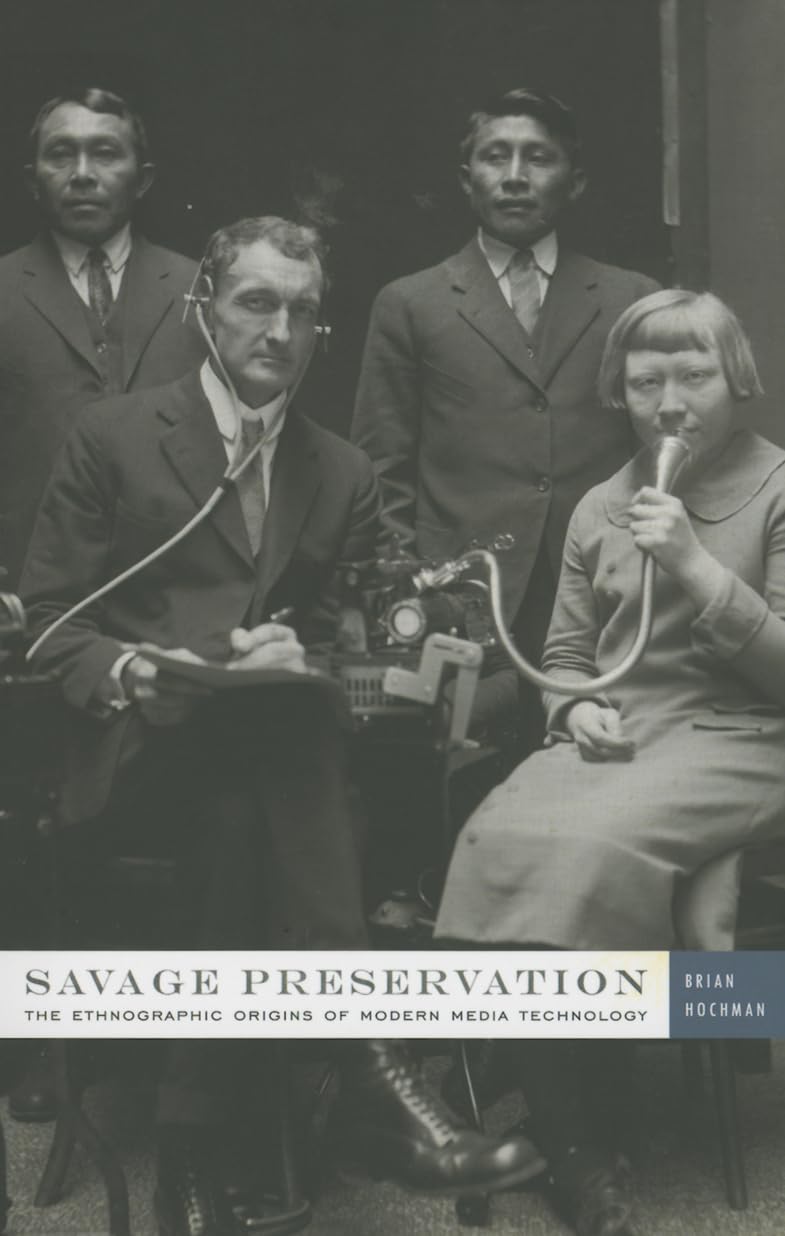
During the late nineteenth and early twentieth centuries, writers and anthropologists believed that the worlds primitive races were on the brink of extinction. They also believed that films, photographs, and phonographic recordingsmodern media in their technological infancycould capture lasting relics of primitive life before it vanished into obscurity. For many Americans, the promise of media and the problem of race were inextricably linked. While professional ethnologists tried out early recording machines to preserve the sounds of authentic indigenous cultures, photographers and filmmakers hauled newfangled equipment into remote corners of the globe to document rituals and scenes that seemed destined to vanish forever.In Savage Preservation, Brian Hochman shows how widespread interest in recording vanishing races and disappearing cultures influenced audiovisual innovation, experimentation, and use in the United States. Drawing extensively on seldomseen archival sourcesfrom phonetic alphabets and sign language drawings to wax cylinder recordings and early color photographsHochman uncovers the parallel histories of ethnography and technology in the turnofthecentury period. While conventional wisdom suggests that media technologies work mostly to produce ideas about race, Savage Preservation reveals that the reverse has also been true. During this period, popular conceptions of race constructed the authority of new media technologies as reliable archives of the real. Brimming with nuanced critical insights and unexpected historical connections, Savage Preservation offers a new model for thinking about race and media in the American contextand a fresh take on a period of accelerated technological change that closely resembles our own.
⚠️ WARNING (California Proposition 65):
This product may contain chemicals known to the State of California to cause cancer, birth defects, or other reproductive harm.
For more information, please visit www.P65Warnings.ca.gov.