
Title
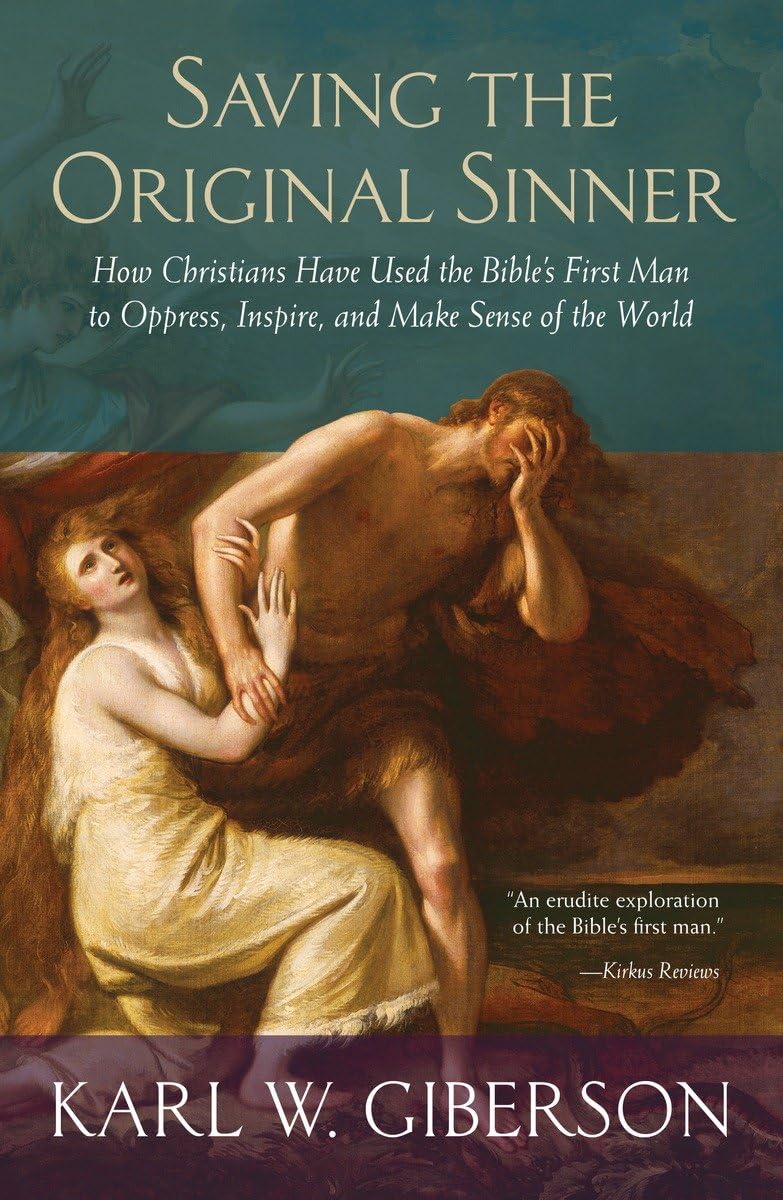
Saving The Original Sinner: How Christians Have Used The Bible'S First Man To Oppress, Inspire, And Make Sense Of The World
Sold by Ergodebooks, an authorized reseller.
Returns accepted within 30 days | support@ergodebooks.com
Shipping Information
- Free Standard Shipping — United States only
- Processing Time: 3–5 business days
- Estimated Delivery: 6–10 business days after dispatch
- Double-boxed, fully insured & discreetly packaged
- Tracking number sent via email once dispatched
Returns & Refund
Returns accepted within 30 days of delivery.
Damaged or Defective Item
Free return shipping + replacement or full refund
Wrong Item Received
Free return shipping + replacement or full refund
Change of Mind
Return shipping at customer's expense · 25% restocking fee applies
Payment Option

A Scientist And Former Evangelical Argues That Holding Onto A Belief In A Literal, Historical Adam Has Forced Many Christians To Reject Science And Become Intellectually Isolated From The Modern World.The Bibles First Man Stands At The Center Of A Crisis That Is Shaking Much Of Christianity. In The Evangelical World, Scholars Have Been Ostracized And Banished From Their Academic Communities For Endorsing A Modern Scientific Understanding Of The World, Even As They Remained Strong Christians. Selfappointed Gatekeepers Of Traditional Theology Demand Intellectual Allegiance To An Implausible Interpretation Of The Genesis Creation Story, Insisting That All Humanity Must Be Descended From A Single, Perfect Human Pair, Adam And Eve. Such A View Is Utterly At Odds With Contemporary Science.It Wasnt Always This Way. Karl Giberson Spotlights The Venerable Tradition Of Christian Engagement With New Knowledge And Discoveries. When Global Exploration, Anthropology, Geology, Paleontology, Biblical Studies, And Even Linguistics Cast Doubt On The Historicity Of Adam And His Literal Fall Into Sin, Christians Responded By Creatively Reimagining The Creation Story, Letting Adam Evolve To Accommodate His Changing Context. Even Conservative Evangelical Institutions Until Recently Encouraged Serious Engagement With Evolutionary Science, Unhindered By The Straitjacket Of Youngearth Creationism, Intelligent Design, Or Other Views Demanding That Adam Be A Historical Figure.Giberson Calls For A Renewed Conversation Between Science And Christianity, And For More Open Engagement With New Scientific Discoveries, Even When They Threaten Central Doctrines. Christians Should Not Be Made To Choose Between Their Faith And Their Understanding Of The Universe. Instead, As Giberson Argues, They Should Follow In The Once Robust Tradition Of Exploring Science Openly Within The Broad Contours Of Christian Belief.
⚠️ WARNING (California Proposition 65):
This product may contain chemicals known to the State of California to cause cancer, birth defects, or other reproductive harm.
For more information, please visit www.P65Warnings.ca.gov.
- Q: What is the main focus of 'Saving the Original Sinner'? A: The book explores how the belief in a literal Adam has influenced Christian thought, often leading to a rejection of scientific understanding.
- Q: Who is the author of this book? A: The author is Karl W. Giberson, a scientist and former evangelical.
- Q: What is the publication date of 'Saving the Original Sinner'? A: The book was published on May 10, 2016.
- Q: How many pages does the book have? A: The book contains 224 pages.
- Q: What is the binding type of this book? A: The book is available in paperback binding.
- Q: Is the book in new condition? A: Yes, the item condition is listed as 'New'.
- Q: What category does this book fall under? A: The book is categorized under 'Old Testament'.
- Q: Does the book address the relationship between science and Christianity? A: Yes, Giberson calls for a renewed conversation between science and Christianity, encouraging open engagement with scientific discoveries.
- Q: What are some themes discussed in 'Saving the Original Sinner'? A: Themes include the historical interpretation of Adam, the conflict between faith and science, and the need for intellectual engagement within Christianity.
- Q: Is this book suitable for both believers and non-believers? A: Yes, the book provides insights that can be valuable to both believers seeking to reconcile their faith with science and non-believers interested in Christian perspectives.