If you have any questions, you are always welcome to contact us. We'll get back to you as soon as possible, withing 24 hours on weekdays.
Customer service
All questions about your order, return and delivery must be sent to our customer service team by e-mail at yourstore@yourdomain.com
Sale & Press
If you are interested in selling our products, need more information about our brand or wish to make a collaboration, please contact us at press@yourdomain.com
Help
If you have any questions, you are always welcome to contact us. We'll get back to you as soon as possible, withing 24 hours on weekdays.
Customer service
All questions about your order, return and delivery must be sent to our customer service team by e-mail at yourstore@yourdomain.com
Sale & Press
If you are interested in selling our products, need more information about our brand or wish to make a collaboration, please contact us at press@yourdomain.com
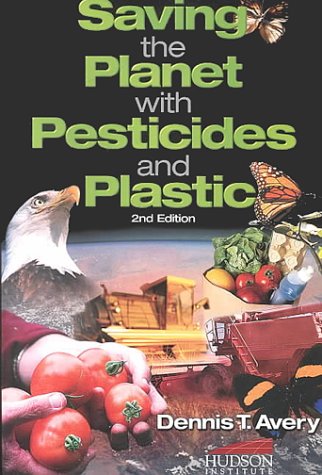
If one listens to the latest pronouncements from a number of prominent environmentalists, things seem very dire indeed. Poisonous apples, genetically engineered milk, rising global temperatures, and decreasing rainforest acreage are favorite causes. And all too often the media uncritically carries the environmentalists' tainted water.Fortunately, there is another side to the story. The second edition of Dennis Avery's 1995 seminal work, Saving the Planet Through Pesticides and Plastics shows that cancer risks in the industrialized nations are decreasing; that the world's temperature rises and falls naturally; that governments, not agribusinesses, have been encouraging people to cut down rain forests; that the industrial nations pollute less than other countries; and that the widespread use of organic farming threatens the world's wildlife.Avery shows that high yield farming techniques can both feed the earth's burgeoning population that will reach 8 billion in the next century while preserving wildlands and wildlife. Thoroughly updated and rewritten with new information and data, Avery's controversial book shows how agricultural technology can save the planet for both people and wildlife.
⚠️ WARNING (California Proposition 65):
This product may contain chemicals known to the State of California to cause cancer,
birth defects, or other reproductive harm.
For MAP (Minimum Advertised Price) violations and Intellectual Property (IP) or Trademark concerns, please contact:
support@ergodebooks.com
⚠️ California Proposition 65 Warning: Some products sold on this website may expose you to chemicals known to the State of California to cause cancer, birth defects, or other reproductive harm. For more information, visit www.P65Warnings.ca.gov.