
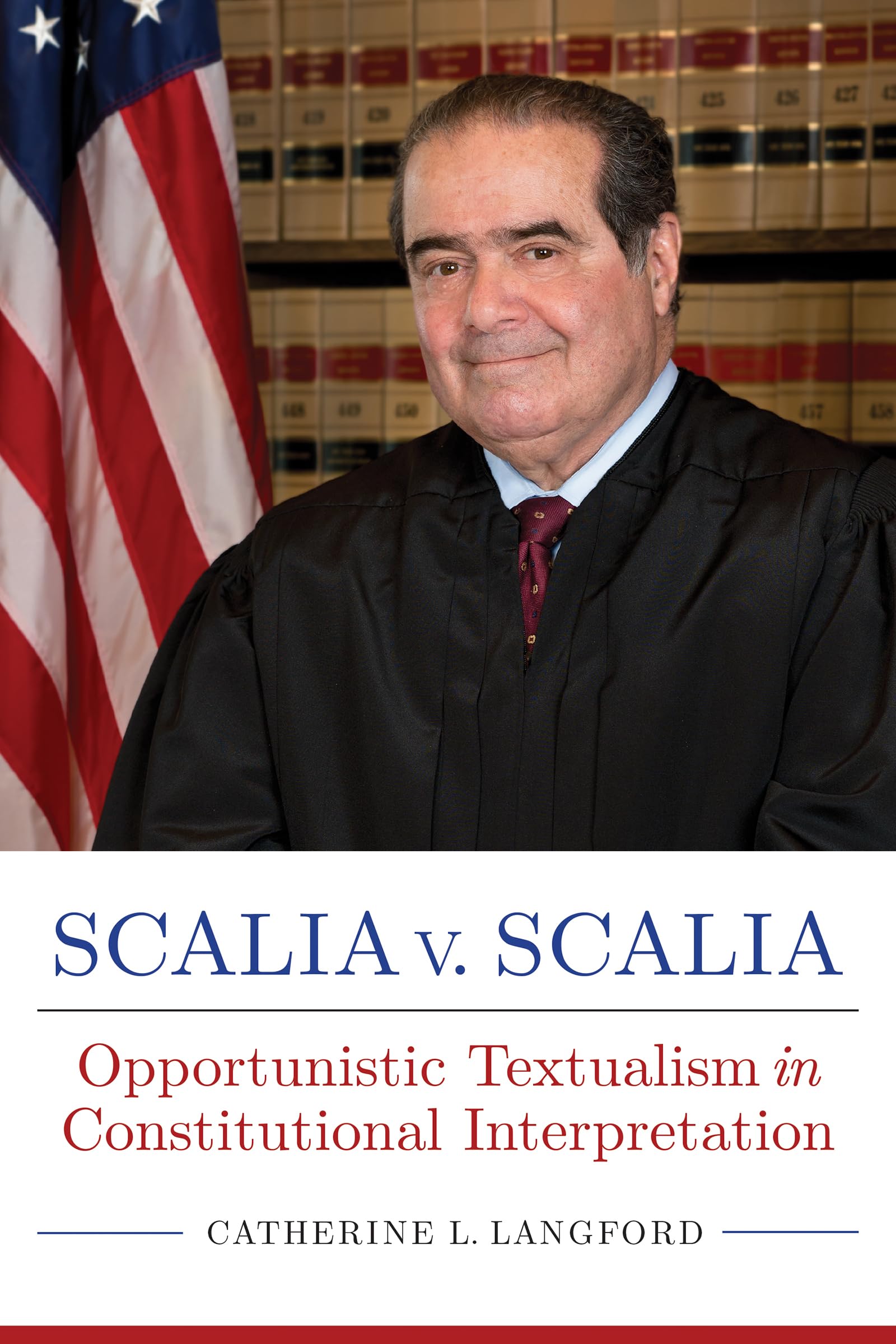
Title
Scalia V. Scalia: Opportunistic Textualism In Constitutional Interpretation (Rhetoric, Law, And The Humanities),Used
Sold by Ergodebooks, an authorized reseller.
Returns accepted within 30 days | support@ergodebooks.com
Shipping Information
- Free Standard Shipping — United States only
- Processing Time: 3–5 business days
- Estimated Delivery: 6–10 business days after dispatch
- Double-boxed, fully insured & discreetly packaged
- Tracking number sent via email once dispatched
Returns & Refund
Returns accepted within 30 days of delivery.
Damaged or Defective Item
Free return shipping + replacement or full refund
Wrong Item Received
Free return shipping + replacement or full refund
Change of Mind
Return shipping at customer's expense · 25% restocking fee applies
Payment Option

An analysis of the discrepancy between the ways Supreme Court Justice Antonin Scalia argued the Constitution should be interpreted versus how he actually interpreted the lawAntonin Scalia is considered one of the most controversial justices to have been on the United States Supreme Court. A vocal advocate of textualist interpretation, Justice Scalia argued that the Constitution means only what it says and that interpretations of the document should be confined strictly to the directives supplied therein. This narrow form of constitutional interpretation, which limits constitutional meaning to the written text of the Constitution, is known as textualism.Scalia v. Scalia:Opportunistic Textualism in Constitutional Interpretation examines Scalias discussions of textualism in his speeches, extrajudicial writings, and judicial opinions. Throughout his writings, Scalia argues textualism is the only acceptable form of constitutional interpretation. Yet Scalia does not clearly define his textualism, nor does he always rely upon textualism to the exclusion of other interpretive means.Scalia is seen as the standard bearer for textualism. But when textualism fails to support his ideological aims (as in cases that pertain to states rights or separation of powers), Scalia reverts to other forms of argumentation. Langford analyzes Scalias opinions in a clear area of law, the cruel and unusual punishment clause; a contested area of law, the free exercise and establishment cases; and a silent area of law, abortion. Through her analysis, Langford shows that Scalia uses rhetorical strategies beyond those of a textualist approach, concluding that Scalia is an opportunistic textualist and that textualism is as rhetorical as any other form of judicial interpretation.
⚠️ WARNING (California Proposition 65):
This product may contain chemicals known to the State of California to cause cancer, birth defects, or other reproductive harm.
For more information, please visit www.P65Warnings.ca.gov.