
Title
Scandal and Civility: Journalism and the Birth of American Democracy,Used
Sold by Ergodebooks, an authorized reseller.
Returns accepted within 30 days | support@ergodebooks.com
Shipping Information
- Free Standard Shipping — United States only
- Processing Time: 3–5 business days
- Estimated Delivery: 6–10 business days after dispatch
- Double-boxed, fully insured & discreetly packaged
- Tracking number sent via email once dispatched
Returns & Refund
Returns accepted within 30 days of delivery.
Damaged or Defective Item
Free return shipping + replacement or full refund
Wrong Item Received
Free return shipping + replacement or full refund
Change of Mind
Return shipping at customer's expense · 25% restocking fee applies
Payment Option

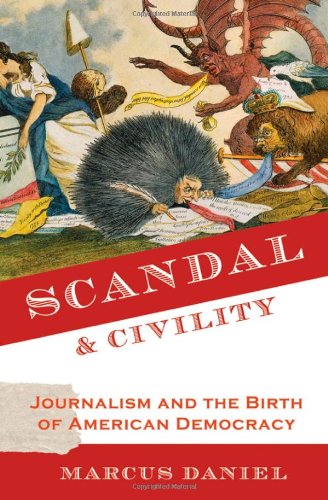
A new breed of journalists came to the fore in postrevolutionary Americafiercely partisan, highly ideological, and possessed of a bold sense of vocation and purpose as they entered the fray of political debate. Often condemned by latterday historians and widely seen in their own time as a threat to public and personal civility, these colorful figures emerge in this provocative new book as the era's most important agents of political democracy.Through incisive portraits of the most influential journalists of the 1790sWilliam Cobbett, Benjamin Franklin Bache, Philip Freneau, Noah Webster, John Fenno, and William DuaneScandal and Civility moves beyond the usual cast of "revolutionary brothers" and "founding fathers" to offer a fresh perspective on a seemingly familiar story. Marcus Daniel demonstrates how partisan journalists, both Federalist and DemocraticRepublican, were instrumental in igniting and expanding vital debates over the character of political leaders, the nature of representative government, and, ultimately, the role of the free press itself. Their rejection of civility and selfrestraintnot even icons like George Washington were spared their satirical skeweringsearned these men the label "peddlers of scurrility." Yet, as Daniel shows, by breaking with earlier conceptions of "impartial" journalism, they challenged the elite dominance of political discourse and helped fuel the enormous political creativity of the early republic.Daniel's nuanced and penetrating narrative captures this key period of American history in all its contentious complexity. And in today's climate, when many decry media "excesses" and the relentlessly partisan and personal character of political debate, his book is a timely reminder that discord and difference were essential to the very creation of our political culture.
⚠️ WARNING (California Proposition 65):
This product may contain chemicals known to the State of California to cause cancer, birth defects, or other reproductive harm.
For more information, please visit www.P65Warnings.ca.gov.