
Title
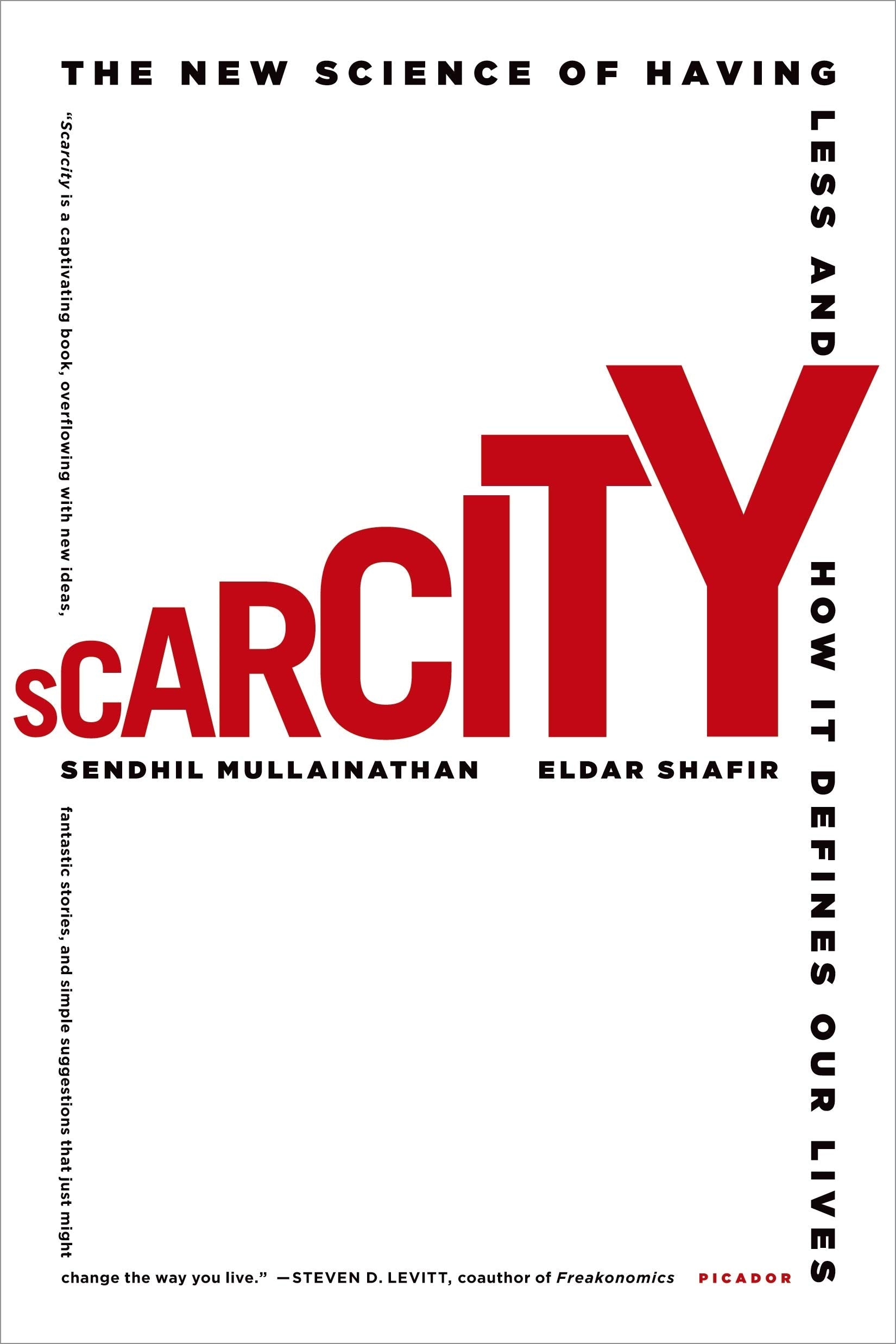
Scarcity: The New Science of Having Less and How It Defines Our Lives,Used
Sold by Ergodebooks, an authorized reseller.
Returns accepted within 30 days | support@ergodebooks.com
Shipping Information
- Free Standard Shipping — United States only
- Processing Time: 3–5 business days
- Estimated Delivery: 6–10 business days after dispatch
- Double-boxed, fully insured & discreetly packaged
- Tracking number sent via email once dispatched
Returns & Refund
Returns accepted within 30 days of delivery.
Damaged or Defective Item
Free return shipping + replacement or full refund
Wrong Item Received
Free return shipping + replacement or full refund
Change of Mind
Return shipping at customer's expense · 25% restocking fee applies
Payment Option

In this provocative book based on cuttingedge research, Sendhil Mullainathan and Eldar Shafir show that scarcity creates a distinct psychology for everyone struggling to manage with less than they need.Busy people fail to manage their time efficiently for the same reasons the poor and those maxed out on credit cards fail to manage their money. The dynamics of scarcity reveal why dieters find it hard to resist temptation, why students and busy executives mismanage their time, and why the same sugarcane farmers are smarter after harvest than before.Once we start thinking in terms of scarcity, the problems of modern life come into sharper focus, and Scarcity reveals not only how it leads us astray but also how individuals and organizations can better manage scarcity for greater satisfaction and success.
⚠️ WARNING (California Proposition 65):
This product may contain chemicals known to the State of California to cause cancer, birth defects, or other reproductive harm.
For more information, please visit www.P65Warnings.ca.gov.
- Q: What is the main theme of 'Scarcity: The New Science of Having Less and How It Defines Our Lives'? A: The book explores how scarcity affects decision-making and behavior, showing that the psychology of having less influences our ability to manage time, money, and resources effectively.
- Q: Who are the authors of this book? A: The book is authored by Sendhil Mullainathan and Eldar Shafir, both of whom are noted researchers in the field of economics and psychology.
- Q: What is the publication date of this book? A: The book was published on November 4, 2014.
- Q: How many pages does the book contain? A: The book contains a total of 304 pages.
- Q: What format is the book available in? A: The book is available in paperback format.
- Q: Is 'Scarcity' suitable for academic study? A: Yes, 'Scarcity' is categorized under Microeconomics and is based on research, making it suitable for academic study as well as general readers interested in economics.
- Q: Can this book help with time management? A: Yes, the authors illustrate how scarcity impacts our time management skills and provide insights into improving efficiency.
- Q: Does the book address personal finance issues? A: Yes, the book discusses how scarcity affects financial decision-making, particularly for individuals with limited resources.
- Q: What type of readers would benefit from this book? A: Readers interested in psychology, economics, personal finance, and those seeking to understand the impact of scarcity on everyday life would benefit from this book.
- Q: Are there any specific case studies mentioned in the book? A: Yes, the authors provide various examples, including the behavior of sugarcane farmers and individuals managing their finances, to illustrate their points about scarcity.