
Title
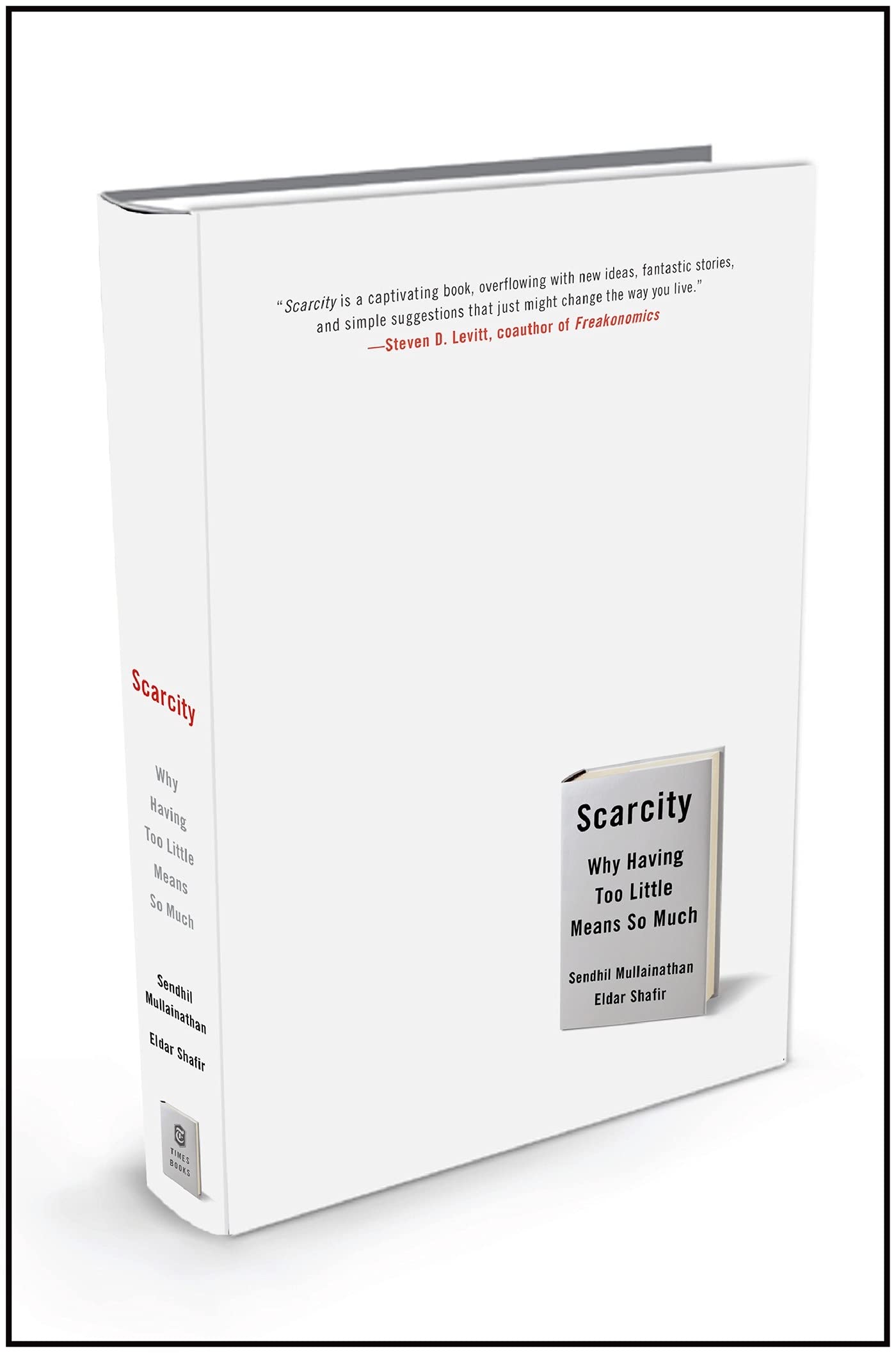
Scarcity: Why Having Too Little Means So Much
Sold by Ergodebooks, an authorized reseller.
Returns accepted within 30 days | support@ergodebooks.com
Shipping Information
- Free Standard Shipping — United States only
- Processing Time: 3–5 business days
- Estimated Delivery: 6–10 business days after dispatch
- Double-boxed, fully insured & discreetly packaged
- Tracking number sent via email once dispatched
Returns & Refund
Returns accepted within 30 days of delivery.
Damaged or Defective Item
Free return shipping + replacement or full refund
Wrong Item Received
Free return shipping + replacement or full refund
Change of Mind
Return shipping at customer's expense · 25% restocking fee applies
Payment Option

In This Provocative Book Based On Cuttingedge Research, Sendhil Mullainathan And Eldar Shafir Show That Scarcity Creates A Distinct Psychology For Everyone Struggling To Manage With Less Than They Need.Busy People Fail To Manage Their Time Efficiently For The Same Reasons The Poor And Those Maxed Out On Credit Cards Fail To Manage Their Money. The Dynamics Of Scarcity Reveal Why Dieters Find It Hard To Resist Temptation, Why Students And Busy Executives Mismanage Their Time, And Why The Same Sugarcane Farmers Are Smarter After Harvest Than Before.Once We Start Thinking In Terms Of Scarcity, The Problems Of Modern Life Come Into Sharper Focus, And Scarcity Reveals Not Only How It Leads Us Astray But Also How Individuals And Organizations Can Better Manage Scarcity For Greater Satisfaction And Success.
⚠️ WARNING (California Proposition 65):
This product may contain chemicals known to the State of California to cause cancer, birth defects, or other reproductive harm.
For more information, please visit www.P65Warnings.ca.gov.
- Q: What is the page count for the book 'Scarcity'? A: The book 'Scarcity: Why Having Too Little Means So Much' has three hundred four pages. This length allows for an in-depth exploration of the psychology of scarcity.
- Q: What are the dimensions of 'Scarcity'? A: The book measures six point three eight inches in length, one point one one inches in width, and nine point four two inches in height. These dimensions make it a standard-sized hardcover book.
- Q: What type of binding does 'Scarcity' have? A: The book is bound in hardcover. This type of binding provides durability and a premium feel for readers.
- Q: Who is the author of 'Scarcity'? A: The author of 'Scarcity: Why Having Too Little Means So Much' is Sendhil Mullainathan. He is known for his research in behavioral economics.
- Q: What category does 'Scarcity' fall into? A: The book is categorized under Microeconomics. It delves into economic theories and the implications of scarcity.
- Q: How do I read 'Scarcity'? A: You can read 'Scarcity' like any other book, starting from the first page to the last. It is suitable for anyone interested in economics and psychology.
- Q: Is 'Scarcity' suitable for students? A: Yes, 'Scarcity' is suitable for students, especially those studying economics or psychology. Its insights can be beneficial for academic understanding.
- Q: What themes are explored in 'Scarcity'? A: The book explores themes of psychology, time management, and economic behavior. It highlights how scarcity affects decision-making in various contexts.
- Q: Can 'Scarcity' help with time management? A: Yes, 'Scarcity' offers insights into time management challenges faced by busy individuals. It connects scarcity in resources to inefficiencies in time management.
- Q: How should I care for 'Scarcity'? A: To care for 'Scarcity', keep it in a cool, dry place and avoid exposure to direct sunlight. This will help preserve the book's condition.
- Q: Is there a recommended storage location for 'Scarcity'? A: Yes, store 'Scarcity' upright on a bookshelf to prevent warping. This helps maintain its shape and readability.
- Q: What if 'Scarcity' arrives damaged? A: If 'Scarcity' arrives damaged, contact the seller for a return or exchange. Most sellers have policies in place for such issues.
- Q: What is the return policy for 'Scarcity'? A: The return policy for 'Scarcity' usually allows returns within thirty days of purchase. Check with the seller for specific details.
- Q: Is 'Scarcity' a good choice for beginners in economics? A: Yes, 'Scarcity' is a great choice for beginners in economics. Its accessible language makes complex ideas understandable.
- Q: How does 'Scarcity' compare to other economics books? A: Unlike traditional economics books, 'Scarcity' integrates psychological insights, making it unique. It emphasizes the real-world impact of scarcity.
- Q: Can I find 'Scarcity' in digital format? A: Yes, 'Scarcity' is available in digital formats, including eBooks. This allows for convenient reading on various devices.