
Title
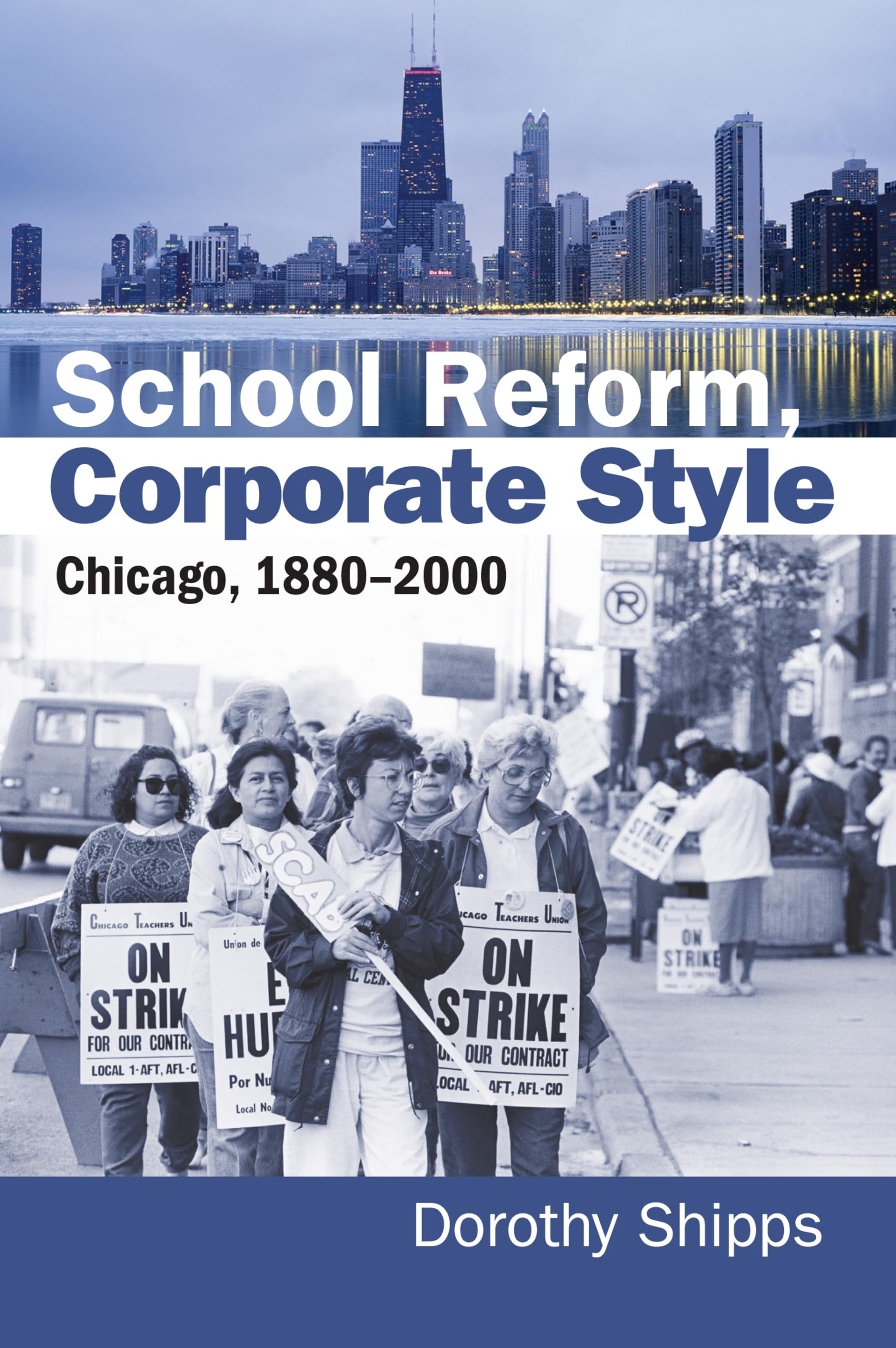
School Reform, Corporate Style: Chicago, 18802000 (Studies in Government and Public Policy),Used
Sold by Ergodebooks, an authorized reseller.
Returns accepted within 30 days | support@ergodebooks.com
Shipping Information
- Free Standard Shipping — United States only
- Processing Time: 3–5 business days
- Estimated Delivery: 6–10 business days after dispatch
- Double-boxed, fully insured & discreetly packaged
- Tracking number sent via email once dispatched
Returns & Refund
Returns accepted within 30 days of delivery.
Damaged or Defective Item
Free return shipping + replacement or full refund
Wrong Item Received
Free return shipping + replacement or full refund
Change of Mind
Return shipping at customer's expense · 25% restocking fee applies
Payment Option

Like other big city school systems, Chicago's has been repeatedly 'reformed' over the last century. Yet its schools have fallen far short of citizens' expectations and left a gap between the performances of white and minority students. Many blame the educational establishment for resisting change. Other critics argue that reform occurs too often; still others claim it comes not often enough.Dorothy Shipps reappraises the tumultuous history of educational progress in Chicago, revealing that the persistent lack of improvement is due not to the extent but rather the type of reform. Throughout the twentieth century, managerial reorganizations initiated by the business community repeatedly altered the governance structure of schoolsas well as the relationships of teachers to children and parentsbut brought little improvement, while other more promising reform models were either resisted or crowded out.Shipps chronicles how Chicago's corporate actors led, abetted, or restrained nearly every attempt to transform the city's school system, then asks whether schools might be better reformed by others. To show why city schools have failed urban children so badly, she traces Chicago's reform history over four political eras, revealing how corporate power was instrumental in designing and revamping the system. Her narrative encompasses the formative era of 18801930, when teachers' unions moderated business plans; previously unexplored business activism from 1930 to 1980, when civil rights dominated school reform, and the decentralization of the 1980s. She also covers the uneasy cooperation among business associations in the 1990s to install the mayor as head of the school system, a governing regime now challenged by privatization advocates.Business people may be too wedded to a stunted view of educators to forge a productive partnership for change. Unionized teachers bridle at the secondclass status accorded them by managers. If reform is to reach deeply into classrooms, Shipps concludes, it might well require a new coalition of teachers' unions and parents to create a fresh agenda that supersedes corporate interests.This study clearly shows that, in Chicago as elsewhere, urban schooling is intertwined with politics and power. By reviewing more than a century of corporate efforts to make education work, Shipps makes a strong case that it's high time to look elsewhereperhaps to educators themselvesfor new leadership.
⚠️ WARNING (California Proposition 65):
This product may contain chemicals known to the State of California to cause cancer, birth defects, or other reproductive harm.
For more information, please visit www.P65Warnings.ca.gov.