If you have any questions, you are always welcome to contact us. We'll get back to you as soon as possible, withing 24 hours on weekdays.
Customer service
All questions about your order, return and delivery must be sent to our customer service team by e-mail at yourstore@yourdomain.com
Sale & Press
If you are interested in selling our products, need more information about our brand or wish to make a collaboration, please contact us at press@yourdomain.com
Help
If you have any questions, you are always welcome to contact us. We'll get back to you as soon as possible, withing 24 hours on weekdays.
Customer service
All questions about your order, return and delivery must be sent to our customer service team by e-mail at yourstore@yourdomain.com
Sale & Press
If you are interested in selling our products, need more information about our brand or wish to make a collaboration, please contact us at press@yourdomain.com
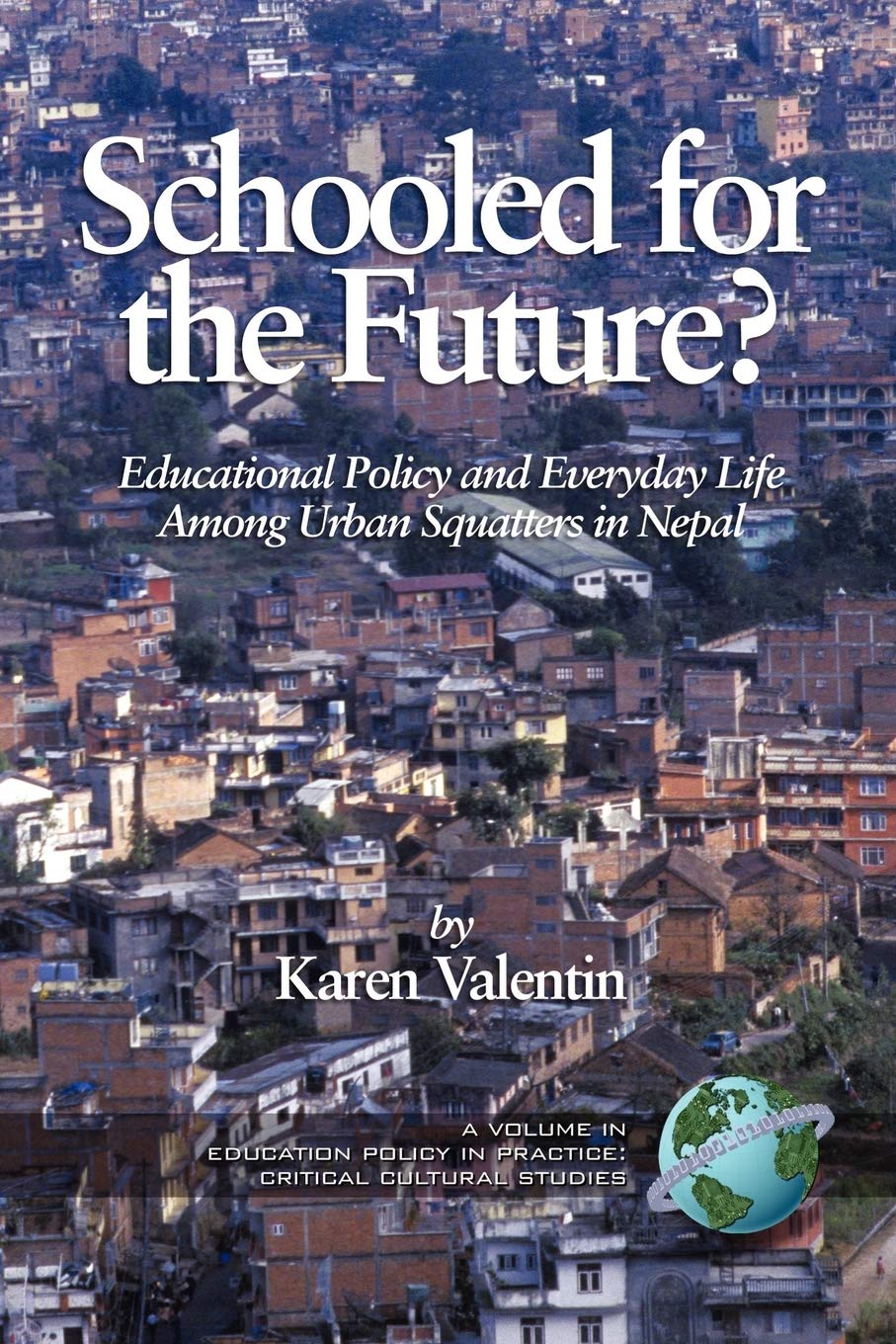
Schooled for the future?'offers an ethnographically rich account about squatter families in Kathmandu and their struggles to improve their living conditions and create a better future through education. Examining how people children and adults experience and respond to policy initiatives aimed at improving their life the book discusses the paradoxes inherent in modern schooling. Firstly, schooling promises social justice and equal opportunities, yet it also contributes to the reproduction of social inequalities by strengthening existing class divisions and by producing a new category of unschooled people. Secondly, within the context of the family, schooling is attributed an economic and symbolic value, but it is also considered a potential threat to family values based on generational hierarchy and caste identity. Through detailed ethnographic accounts the author demonstrates how urban poor families experience the schooling process ambivalently, both as a source of alienation and inferiority as well as a source of selfesteem and sense of progress. Acknowledging the interconnectedness between global, national and local forces framing and informing processes of education the book, thus, sheds light on the complex relationship between educational policy and everyday life experiences of the urban poor in Kathmandu, a hitherto understudied segment of the Nepalese society.
⚠️ WARNING (California Proposition 65):
This product may contain chemicals known to the State of California to cause cancer,
birth defects, or other reproductive harm.
For MAP (Minimum Advertised Price) violations and Intellectual Property (IP) or Trademark concerns, please contact:
support@ergodebooks.com
⚠️ California Proposition 65 Warning: Some products sold on this website may expose you to chemicals known to the State of California to cause cancer, birth defects, or other reproductive harm. For more information, visit www.P65Warnings.ca.gov.