
Title
Science and Christianity: Past, Present, and Future,Used
Sold by Ergodebooks, an authorized reseller.
Returns accepted within 30 days | support@ergodebooks.com
Shipping Information
- Free Standard Shipping — United States only
- Processing Time: 3–5 business days
- Estimated Delivery: 6–10 business days after dispatch
- Double-boxed, fully insured & discreetly packaged
- Tracking number sent via email once dispatched
Returns & Refund
Returns accepted within 30 days of delivery.
Damaged or Defective Item
Free return shipping + replacement or full refund
Wrong Item Received
Free return shipping + replacement or full refund
Change of Mind
Return shipping at customer's expense · 25% restocking fee applies
Payment Option

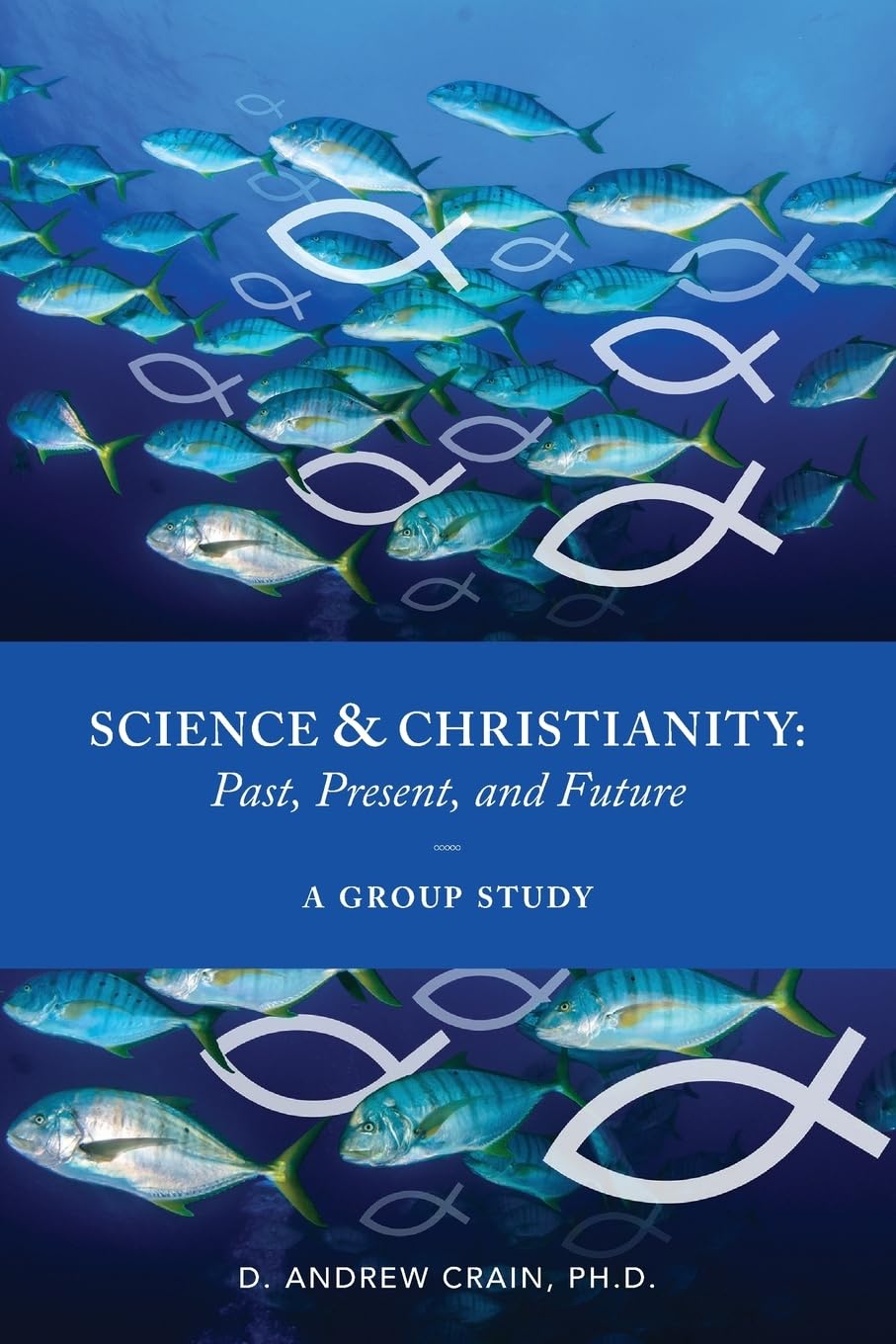
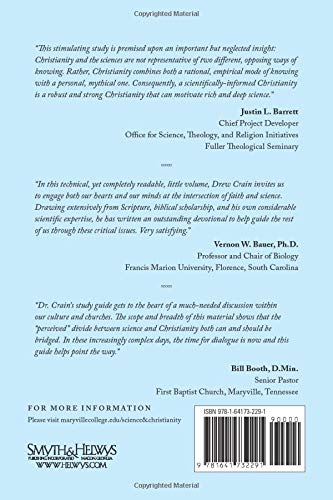
This guide is meant to be an instrument for faith communities to become places where scientific engagement is welcome rather than ignored or feared.This study is divided into 5 sessions, each featuring Bible verses that can be used to provide insight into modern scientific topics and background information on the topics from scientists, theologians, and philosophers that includes numerous references and footnotes if individuals desire more indepth study. Questions for discussion are provided at the end of each chapter to foster collective learning. Whereas there are no quick or easy answers for topics raised in these sessions, it is hoped that the scientific information provided and scriptures to consider will provide insight.Drew Crain is Professor of Biology at Maryville College in East Tennessee. Passionate about his undergraduate students, Drew has won the "Teacher of the Year" award several times and can often be found teaching and leading hikes in the Great Smoky Mountains National Park. Dr. Crains main area of research is focused on environmental health, but recently his scholarly activities have turned to the compatibility of science and Christianity. Drew is active in his local church, where he has served as elder, pastoral council member, and Bible study teacher for the past 20 years.Praise for Science & Christianity: Past, Present, and Future"This stimulating study is premised upon an important but neglected insight: Christianity and the sciences are not representative of two different, opposing ways of knowing. Rather, Christianity combines both a rational, empirical mode of knowing with a personal, mythical one. Consequently, a scientificallyinformed Christianity is a robust and strong Christianity that can motivate rich and deep science." Justin L. Barrett, Chief Project Developer, Office for Science, Theology, and Religion Initiatives, Fuller Theological Seminary ?n this technical, yet completely readable, little volume, Drew Crain invites us to engage both our hearts and our minds at the intersection of faith and science. Drawing extensively from Scripture, biblical scholarship, and his own considerable scientific expertise, he has written an outstanding devotional to help guide the rest of us through these critical issues. Very satisfying.?Vernon W. Bauer, Professor and Chair of Biology, Francis Marion University?r. Crain? study guide gets to the heart of a muchneeded discussion within our culture and churches. The scope and breadth of this material shows that the ?erceived?divide between science and Christianity both can and should be bridged. In these increasingly complex days, the time for dialogue is now and this guide helps point the way.?Bill Booth, Senior Pastor, First Baptist Church, Maryville, Tennessee
⚠️ WARNING (California Proposition 65):
This product may contain chemicals known to the State of California to cause cancer, birth defects, or other reproductive harm.
For more information, please visit www.P65Warnings.ca.gov.
- Q: How many pages does the book have? A: The book contains seventy-two pages. This makes it a concise yet informative read for those exploring the intersection of science and Christianity.
- Q: What is the binding type of this book? A: This book is available in paperback binding. The paperback format ensures it is lightweight and easy to handle during study sessions.
- Q: What are the dimensions of the book? A: The dimensions of the book are six inches in length, zero point seventeen inches in width, and nine point zero two inches in height. These dimensions make it portable for readers.
- Q: How is this guide structured for use? A: The guide is structured into five sessions. Each session includes Bible verses, scientific insights, discussion questions, and references for deeper study.
- Q: What type of audience is this book suitable for? A: This book is suitable for faith communities and individuals interested in the dialogue between science and Christianity. It encourages collective learning and discussion.
- Q: Can this book help in group discussions? A: Yes, the book includes questions for discussion at the end of each chapter. These questions are designed to foster dialogue among readers.
- Q: How should I store this book to keep it in good condition? A: Store the book in a cool, dry place away from direct sunlight. This will help preserve the quality of the paperback and the printed material.
- Q: Is this book appropriate for children? A: Yes, the book can be appropriate for older children, depending on their maturity. It addresses complex topics, making it suitable for teenagers and adults.
- Q: What should I do if my book arrives damaged? A: If the book arrives damaged, contact the seller for a return or exchange. Always keep your receipt as proof of purchase to facilitate the process.
- Q: How can I best engage with the content of this book? A: Engage with the content by following the structured sessions, reading the Bible verses, and participating in group discussions using the provided questions.
- Q: Does the book provide references for further reading? A: Yes, the book includes numerous references and footnotes for readers who wish to explore the topics in greater depth. This enhances the learning experience.
- Q: Is there a warranty for the book? A: Typically, books do not come with a warranty. However, check the return policy of the seller for any guarantees or protections.
- Q: Can this book be used in educational settings? A: Yes, the book can be used in educational settings, such as church study groups or classroom discussions, due to its structured approach and discussion questions.
- Q: Who is the author of this book? A: The author of the book is Dr. D. Andrew Crain, a Professor of Biology with a focus on environmental health and the compatibility of science and Christianity.
- Q: What themes does this book cover? A: The book covers themes of science, faith, and their intersection. It aims to bridge perceived divides and promote dialogue between the two.