
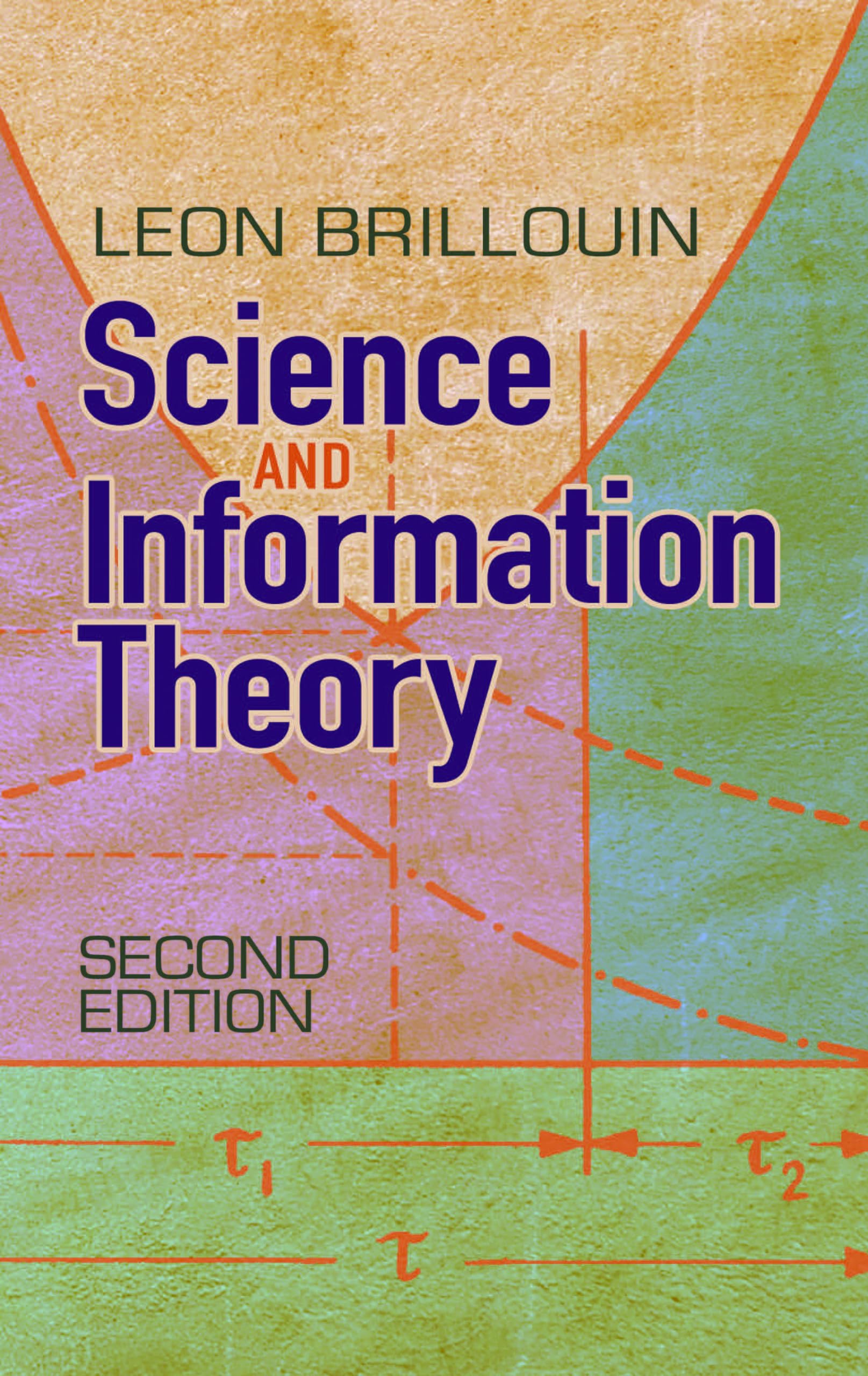
Title
Science And Information Theory: Second Edition (Dover Books On Physics)
Sold by Ergodebooks, an authorized reseller.
Returns accepted within 30 days | support@ergodebooks.com
Shipping Information
- Free Standard Shipping — United States only
- Processing Time: 3–5 business days
- Estimated Delivery: 6–10 business days after dispatch
- Double-boxed, fully insured & discreetly packaged
- Tracking number sent via email once dispatched
Returns & Refund
Returns accepted within 30 days of delivery.
Damaged or Defective Item
Free return shipping + replacement or full refund
Wrong Item Received
Free return shipping + replacement or full refund
Change of Mind
Return shipping at customer's expense · 25% restocking fee applies
Payment Option

A Classic Source For Exploring The Connections Between Information Theory And Physics, This Text Is Geared Toward Upperlevel Undergraduates And Graduate Students. The Author, A Giant Of Twentiethcentury Mathematics, Applies The Principles Of Information Theory To A Variety Of Issues, Including Maxwell'S Demon, Thermodynamics, And Measurement Problems.Author Leon Brillouin Begins By Defining And Applying The Term Information And Proceeds To Explorations Of The Principles Of Coding, Coding Problems And Solutions, The Analysis Of Signals, A Summary Of Thermodynamics, Thermal Agitation And Brownian Motion, And Thermal Noise In An Electric Circuit. A Discussion Of The Negentropy Principle Of Information Introduces Brillouin'S Renowned Examination Of Maxwell'S Demon. Concluding Chapters Explore The Associations Between Information Theory, The Uncertainty Principle, And Physical Limits Of Observation, In Addition To Problems Related To Computing, Organizing Information, And Inevitable Errors.
⚠️ WARNING (California Proposition 65):
This product may contain chemicals known to the State of California to cause cancer, birth defects, or other reproductive harm.
For more information, please visit www.P65Warnings.ca.gov.
- Q: How many pages does this book have? A: This book has three hundred sixty-eight pages. It provides an in-depth exploration of information theory and its applications in physics.
- Q: What are the dimensions of this book? A: The dimensions of this book are five point five one inches in length, zero point seven five inches in width, and eight point two seven inches in height. These measurements ensure it is a standard paperback size.
- Q: What type of binding does this book have? A: This book has a paperback binding. This makes it lightweight and easy to handle for readers.
- Q: Who is the author of this book? A: The author of this book is Leon Brillouin. He is recognized as a significant figure in the fields of mathematics and information theory.
- Q: Is this book suitable for beginners? A: No, this book is geared toward upper-level undergraduates and graduate students. Its content assumes a foundational understanding of physics and mathematics.
- Q: What key topics are covered in this book? A: This book covers topics such as coding principles, thermodynamics, and measurement problems. It also discusses Maxwell's demon and the uncertainty principle.
- Q: How should I store this book? A: Store this book in a cool, dry place away from direct sunlight. This helps to preserve the physical condition and readability of the pages.
- Q: Can this book be used as a reference for research? A: Yes, this book can be used as a reference for research. It is a classic source for understanding the connections between information theory and physics.
- Q: Is this book intended for a specific age group? A: Yes, this book is intended for upper-level undergraduates and graduate students. It is not recommended for younger readers.
- Q: What should I do if my book arrives damaged? A: If your book arrives damaged, contact the seller for a return or exchange. Most sellers have policies to address such issues.
- Q: Does this book include any illustrations? A: Yes, this book contains black and white illustrations. These visuals help to clarify complex concepts discussed in the text.
- Q: Are there any prerequisites for reading this book? A: Yes, a foundational understanding of physics and mathematics is recommended. This will enhance comprehension of the advanced topics covered.
- Q: Is there a glossary or index in this book? A: Yes, this book includes an index. This helps readers locate specific topics or terms discussed throughout the text.
- Q: Can I read this book for leisure? A: While you can read this book for leisure, it is primarily an academic text. It may be more suited for those interested in information theory and physics.
- Q: What is the publication year of this book? A: The publication year of this book is the second edition, which builds on earlier works in the field of information theory. Check the specific edition for the exact release date.