If you have any questions, you are always welcome to contact us. We'll get back to you as soon as possible, withing 24 hours on weekdays.
Customer service
All questions about your order, return and delivery must be sent to our customer service team by e-mail at yourstore@yourdomain.com
Sale & Press
If you are interested in selling our products, need more information about our brand or wish to make a collaboration, please contact us at press@yourdomain.com
Help
If you have any questions, you are always welcome to contact us. We'll get back to you as soon as possible, withing 24 hours on weekdays.
Customer service
All questions about your order, return and delivery must be sent to our customer service team by e-mail at yourstore@yourdomain.com
Sale & Press
If you are interested in selling our products, need more information about our brand or wish to make a collaboration, please contact us at press@yourdomain.com
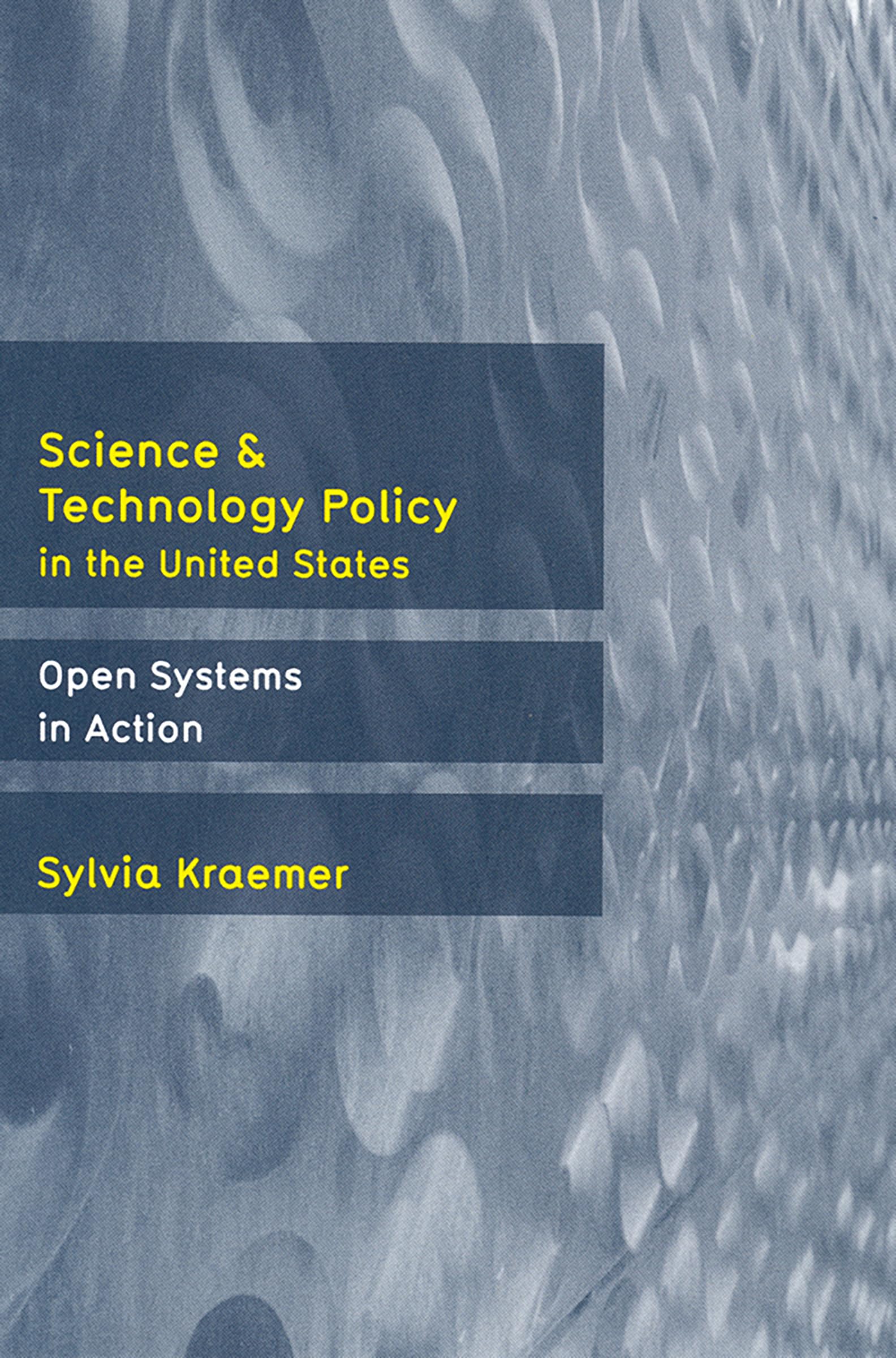
During the latter half of the twentieth century, federal funding in the United States for scientific research and development increased dramatically. Yet despite the infusion of public funds into research centers, the relationship between public policy and research and development remains poorly understood.How does the federal government attempt to harness scientific knowledge and resources for the nation's economic welfare and competitiveness in the global marketplace? Who makes decisions about controversial scientific experiments, such as genetic engineering and space exploration? Who is held accountable when things go wrong?In this lucidlywritten introduction to the topic, Sylvia Kraemer draws upon her extensive experience in government to develop a useful and powerful framework for thinking about the American approach to shaping and managing scientific innovation. Kraemer suggests that the history of science, technology, and politics is best understood as a negotiation of ongoing tensions between open and closed systems. Open systems depend on universal access to information that is complete, verifiable, and appropriately used. Closed systems, in contrast, are composed of unique and often proprietary features, which are designed to control usage.From the Constitution's patent clause to current debates over intellectual property, stem cells, and internet regulation, Kraemer shows the promiseas well as the limitsof open systems in advancing scientific progress as well as the nation's economic vitality.
⚠️ WARNING (California Proposition 65):
This product may contain chemicals known to the State of California to cause cancer,
birth defects, or other reproductive harm.
For MAP (Minimum Advertised Price) violations and Intellectual Property (IP) or Trademark concerns, please contact:
support@ergodebooks.com
⚠️ California Proposition 65 Warning: Some products sold on this website may expose you to chemicals known to the State of California to cause cancer, birth defects, or other reproductive harm. For more information, visit www.P65Warnings.ca.gov.