
Title
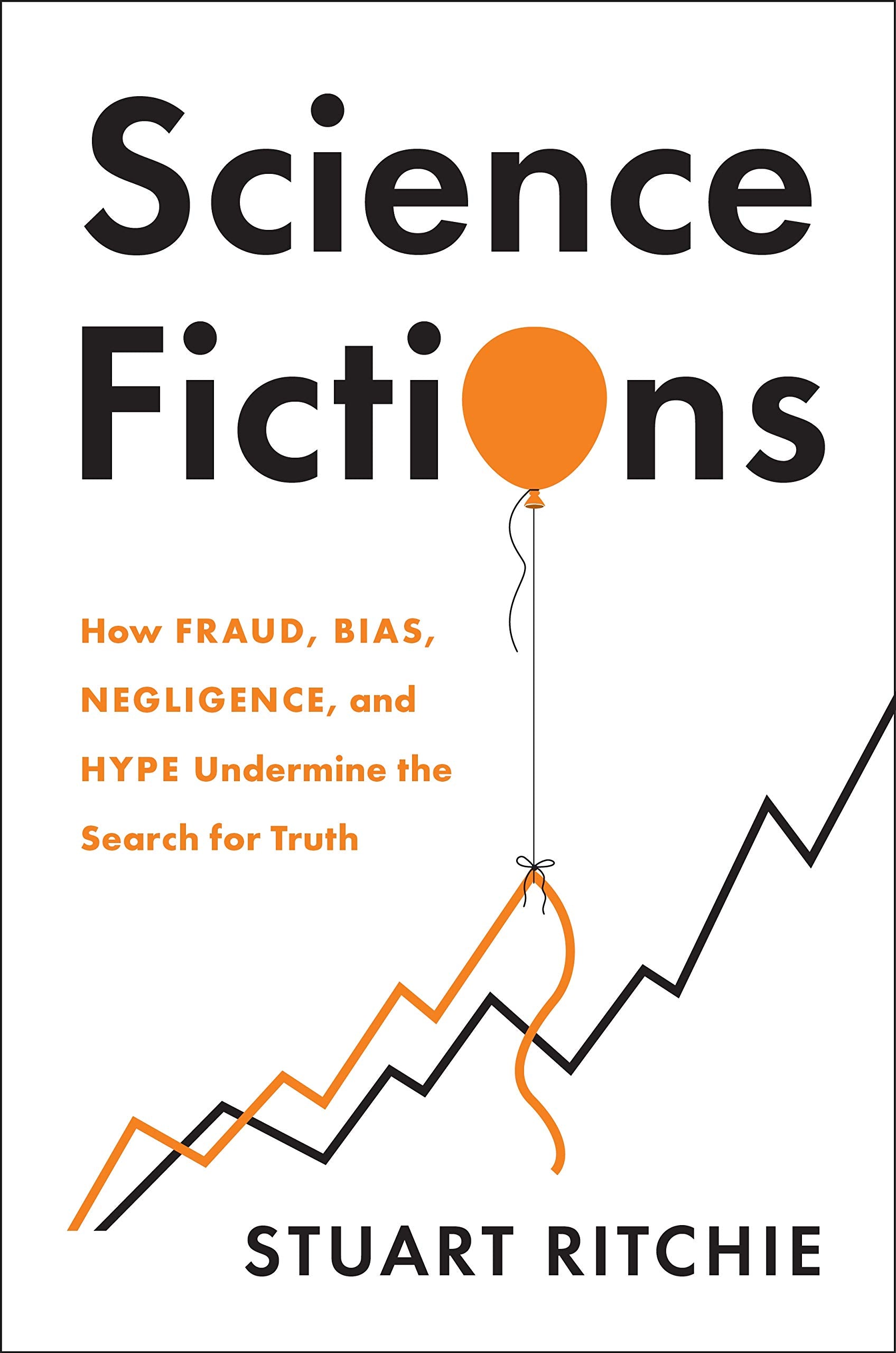
Science Fictions: How Fraud, Bias, Negligence, And Hype Undermine The Search For Truth
Sold by Ergodebooks, an authorized reseller.
Returns accepted within 30 days | support@ergodebooks.com
Shipping Information
- Free Standard Shipping — United States only
- Processing Time: 3–5 business days
- Estimated Delivery: 6–10 business days after dispatch
- Double-boxed, fully insured & discreetly packaged
- Tracking number sent via email once dispatched
Returns & Refund
Returns accepted within 30 days of delivery.
Damaged or Defective Item
Free return shipping + replacement or full refund
Wrong Item Received
Free return shipping + replacement or full refund
Change of Mind
Return shipping at customer's expense · 25% restocking fee applies
Payment Option

An Insiders View Of Science Reveals Why Many Scientific Results Cannot Be Relied Upon And How The System Can Be Reformed.Science Is How We Understand The World. Yet Failures In Peer Review And Mistakes In Statistics Have Rendered A Shocking Number Of Scientific Studies Useless Or, Worse, Badly Misleading. Such Errors Have Distorted Our Knowledge In Fields As Wideranging As Medicine, Physics, Nutrition, Education, Genetics, Economics, And The Search For Extraterrestrial Life. As Science Fictions Makes Clear, The Current System Of Research Funding And Publication Not Only Fails To Safeguard Us From Blunders But Actively Encourages Bad Science With Sometimes Deadly Consequences.Stuart Ritchies Own Work Challenging An Infamous Psychology Experiment Helped Spark What Is Now Widely Known As The Replication Crisis, The Realization That Supposed Scientific Truths Are Often Just Plain Wrong. Now, He Reveals The Very Human Biases, Misunderstandings, And Deceptions That Undermine The Scientific Endeavor: From Contamination In Science Labs To The Secret Vaults Of Failed Studies That Nobody Gets To See; From Outright Cheating With Fake Data To The More Common, But Still Ruinous, Temptation To Exaggerate Mediocre Results For A Shot At Scientific Fame.Yet Science Fictions Is Far From A Counsel Of Despair. Rather, Its A Defense Of The Scientific Method Against The Pressures And Perverse Incentives That Lead Scientists To Bend The Rules. By Illustrating The Many Ways That Scientists Go Wrong, Ritchie Gives Us The Knowledge We Need To Spot Dubious Research And Points The Way To Reforms That Could Make Science Trustworthy Once Again.
⚠️ WARNING (California Proposition 65):
This product may contain chemicals known to the State of California to cause cancer, birth defects, or other reproductive harm.
For more information, please visit www.P65Warnings.ca.gov.
- Q: What is the main topic of 'Science Fictions' by Stuart Ritchie? A: 'Science Fictions' explores how fraud, bias, negligence, and hype impact scientific research, revealing the shortcomings of the current scientific system and advocating for necessary reforms.
- Q: Who is the author of this book? A: The author of 'Science Fictions' is Stuart Ritchie, a researcher who has contributed to discussions on the replication crisis in psychology.
- Q: What are some key themes discussed in the book? A: Key themes include the flaws in peer review, statistical errors, human biases in research, and the consequences of misleading scientific studies.
- Q: Is this book suitable for readers without a scientific background? A: Yes, 'Science Fictions' is written for a general audience and explains complex topics in an accessible manner.
- Q: What is the format and length of the book? A: 'Science Fictions' is a hardcover book with 368 pages.
- Q: When was 'Science Fictions' published? A: The book was published on July 21, 2020.
- Q: Does the book provide solutions to the problems it discusses? A: Yes, Ritchie not only highlights the issues in scientific research but also suggests reforms to improve the reliability of scientific findings.
- Q: What is the significance of the 'replication crisis' mentioned in the book? A: The replication crisis refers to the growing recognition that many scientific studies cannot be replicated, calling into question the validity of widely accepted scientific claims.
- Q: Are there any specific examples of misleading studies discussed? A: Yes, Ritchie discusses various examples of misleading studies across different fields, illustrating how biases and errors can lead to incorrect conclusions.
- Q: What can readers expect to learn from 'Science Fictions'? A: Readers can expect to gain insights into the flaws in current scientific practices, understand how to critically evaluate research, and learn about potential reforms to enhance scientific integrity.