
Title
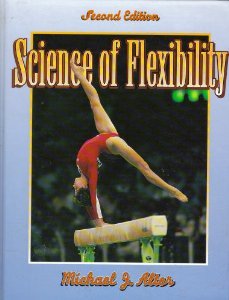
Science Of Flexibility,Used
Sold by Ergodebooks, an authorized reseller.
Returns accepted within 30 days | support@ergodebooks.com
Shipping Information
- Free Standard Shipping — United States only
- Processing Time: 3–5 business days
- Estimated Delivery: 6–10 business days after dispatch
- Double-boxed, fully insured & discreetly packaged
- Tracking number sent via email once dispatched
Returns & Refund
Returns accepted within 30 days of delivery.
Damaged or Defective Item
Free return shipping + replacement or full refund
Wrong Item Received
Free return shipping + replacement or full refund
Change of Mind
Return shipping at customer's expense · 25% restocking fee applies
Payment Option

Science Of Flexibility Has Long Been Considered The Leading Reference On The Topic, And This Second Edition Reaffirms That Status. No Other Book Covers These Concepts And Principles Better.Based On The Latest Research, This Completely Revised And Updated Edition Includes Five New Chapters, Nearly Doubling The Content. These Chapters Discuss The Hypermobility Of Joints, Joint Manipulation And Chiropractic Adjustment, Controversial Stretches, The Relationship Of Stretching And Special Populations, And The Functionality Of Stretching And Flexibility For Specific Sports And Health Conditions.In The First Few Chapters, Readers Will Learn About Factors That Limit Flexibility, Such As The Titin Filament In Muscle, Plasticity In The Spinal Cords Neural Circuits, And The Influence Of Circadian Cycles.The Remaining Chapters Discuss How Such Limiting Factors Can Be Modified To Enhance Joint Range Of Motion. These Chapters Feature A Variety Of Techniques To Enhance Flexibility Throughout The Body.With More Than 1,400 Scholarly And Professional References And Over 200 Illustrations, Photos, And Tables, Science Of Flexibility Is Invaluable For Exercise Scientists, Health And Fitness Professionals, Athletic Trainers, Sport Physical Therapists And Chiropractors, Massage Therapists, And Instructors And Practitioners Of Dance, Yoga, And The Martial Arts.Its Also An Excellent Textbook For Physical Therapy, Massage Therapy, And Other Professional Therapy Training Programs.
⚠️ WARNING (California Proposition 65):
This product may contain chemicals known to the State of California to cause cancer, birth defects, or other reproductive harm.
For more information, please visit www.P65Warnings.ca.gov.
- Q: What is the page count of Science of Flexibility? A: The book contains three hundred sixty-eight pages. This extensive content explores various aspects of flexibility, making it a comprehensive resource.
- Q: What type of binding does Science of Flexibility have? A: Science of Flexibility is bound in hardcover. This durable binding type ensures longevity and protection for the book.
- Q: Who is the author of Science of Flexibility? A: The author is Michael J. Alter. He is well-respected in the field of exercise science and flexibility training.
- Q: What is the main focus of Science of Flexibility? A: The book focuses on the principles and techniques of flexibility and stretching. It serves as a leading reference for professionals in sports and health fields.
- Q: How do I apply the techniques from Science of Flexibility? A: You can apply the techniques by incorporating them into your training or rehabilitation routines. The book provides detailed instructions for enhancing flexibility safely.
- Q: Is Science of Flexibility suitable for beginners? A: Yes, the book is suitable for beginners and professionals alike. It covers foundational concepts and advanced techniques, catering to various experience levels.
- Q: Are there specific populations discussed in the book? A: Yes, it discusses the relationship between flexibility and special populations. This includes considerations for athletes and individuals with specific health conditions.
- Q: What are the key techniques featured in Science of Flexibility? A: The book features techniques to enhance flexibility, such as joint manipulation and various stretching methods. These techniques aim to improve overall joint range of motion.
- Q: What safety precautions should I take when using flexibility techniques? A: Always warm up before practicing flexibility techniques. Ensure that you follow the guidelines provided in the book to prevent injury and maximize effectiveness.
- Q: How should I store Science of Flexibility to keep it in good condition? A: Store the book upright in a cool, dry place, away from direct sunlight. This helps preserve the cover and pages over time.
- Q: Can I return Science of Flexibility if I'm not satisfied? A: Yes, most retailers offer return policies for books. Be sure to check the specific return policy before purchasing.
- Q: What if Science of Flexibility arrives damaged? A: If the book arrives damaged, contact the retailer for a return or exchange. Most companies have policies in place for damaged items.
- Q: How does Science of Flexibility compare to other flexibility books? A: Science of Flexibility is considered a leading reference, offering more comprehensive content than many other books in the field. It includes extensive research and practical applications.
- Q: Is Science of Flexibility appropriate for physical therapy students? A: Yes, it is an excellent textbook for physical therapy students. It covers essential topics relevant to their training and practice.
- Q: What types of professionals benefit from reading Science of Flexibility? A: Exercise scientists, athletic trainers, physical therapists, and yoga instructors can all benefit from this book. It provides valuable insights into flexibility and its applications.