
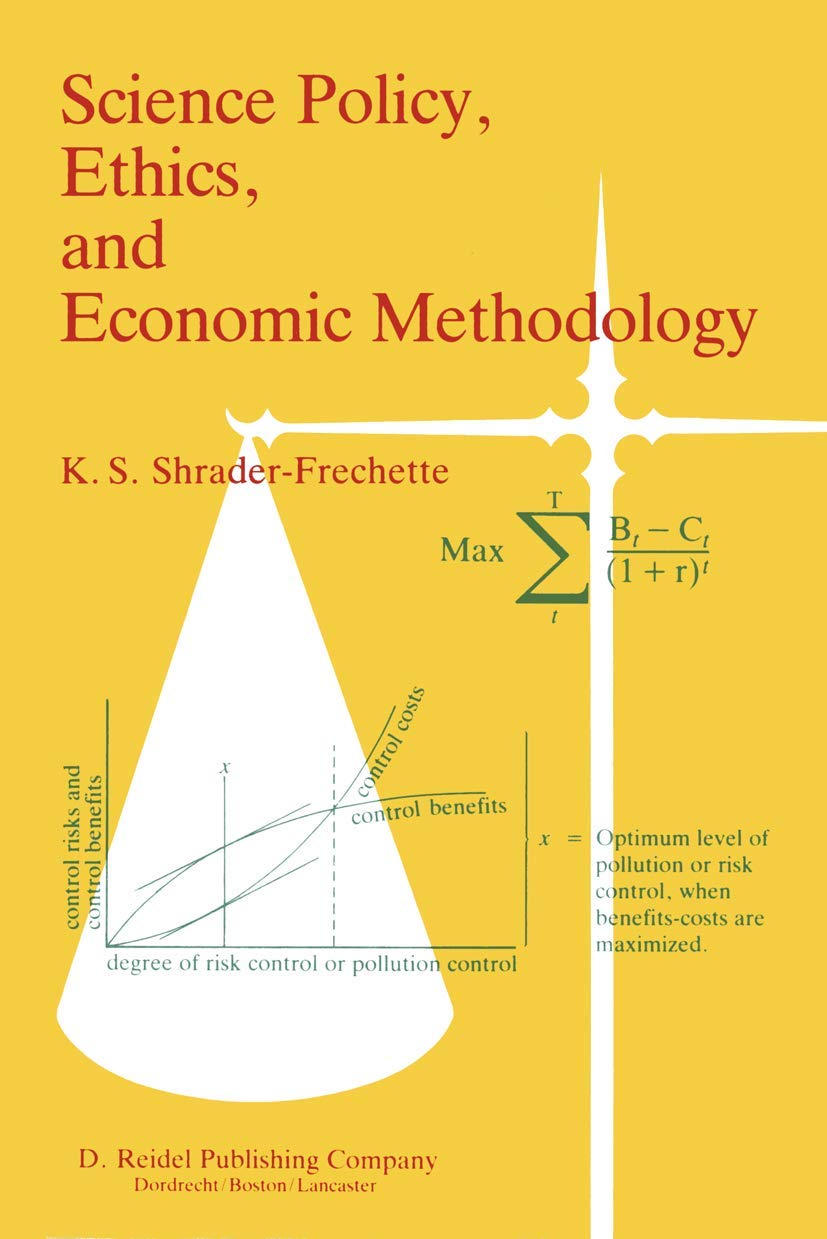
Title
Science Policy, Ethics, and Economic Methodology: Some Problems of Technology Assessment and EnvironmentalImpact Analysis,New
Sold by Ergodebooks, an authorized reseller.
Returns accepted within 30 days | support@ergodebooks.com
Shipping Information
- Free Standard Shipping — United States only
- Processing Time: 3–5 business days
- Estimated Delivery: 6–10 business days after dispatch
- Double-boxed, fully insured & discreetly packaged
- Tracking number sent via email once dispatched
Returns & Refund
Returns accepted within 30 days of delivery.
Damaged or Defective Item
Free return shipping + replacement or full refund
Wrong Item Received
Free return shipping + replacement or full refund
Change of Mind
Return shipping at customer's expense · 25% restocking fee applies
Payment Option

If indeed scientists and technologists, especially economists, set much of the agenda by which the future is played out, and I think they do, then the student of scientific methodology and public ethics has at least three options. He can embrace certain scientific methods and the value they hold for social decisionmaking, much as Milton Friedman has accepted neoclassical econom ics. Or, he can condemn them, regardless of their value, much as Stuart Hampshire has rejected riskcostbenefit analysis (RCBA). Finally, he can critically assess these scientific methods and attempt to provide solutions to the problems he has uncovered. As a philosopher of science seeking the middle path between uncritical acceptance and extremist rejection of the economic methods used in policy analysis, I have tried to avoid the charge of being 'anti science'. Fred Hapgood, in response to my presentation at a recent Boston Colloquium for the Philosophy of Science, said that my arguments 'felt like' a call for rejection of the methods of riskcostbenefit analysis. Not so, as Chapter Two of this volume should make eminently clear. All my criticisms are construc tive ones, and the flaws in economic methodology which I address are uncovered for the purpose of suggesting means of making good techniques better. Likewise, although I criticize the economic methodology by which many technology assessments (TA's) and environmentalimpact analyses (EIA's) have been used to justify public projects, it is wrong to conclude that I am antitechnology.
⚠️ WARNING (California Proposition 65):
This product may contain chemicals known to the State of California to cause cancer, birth defects, or other reproductive harm.
For more information, please visit www.P65Warnings.ca.gov.