
Title
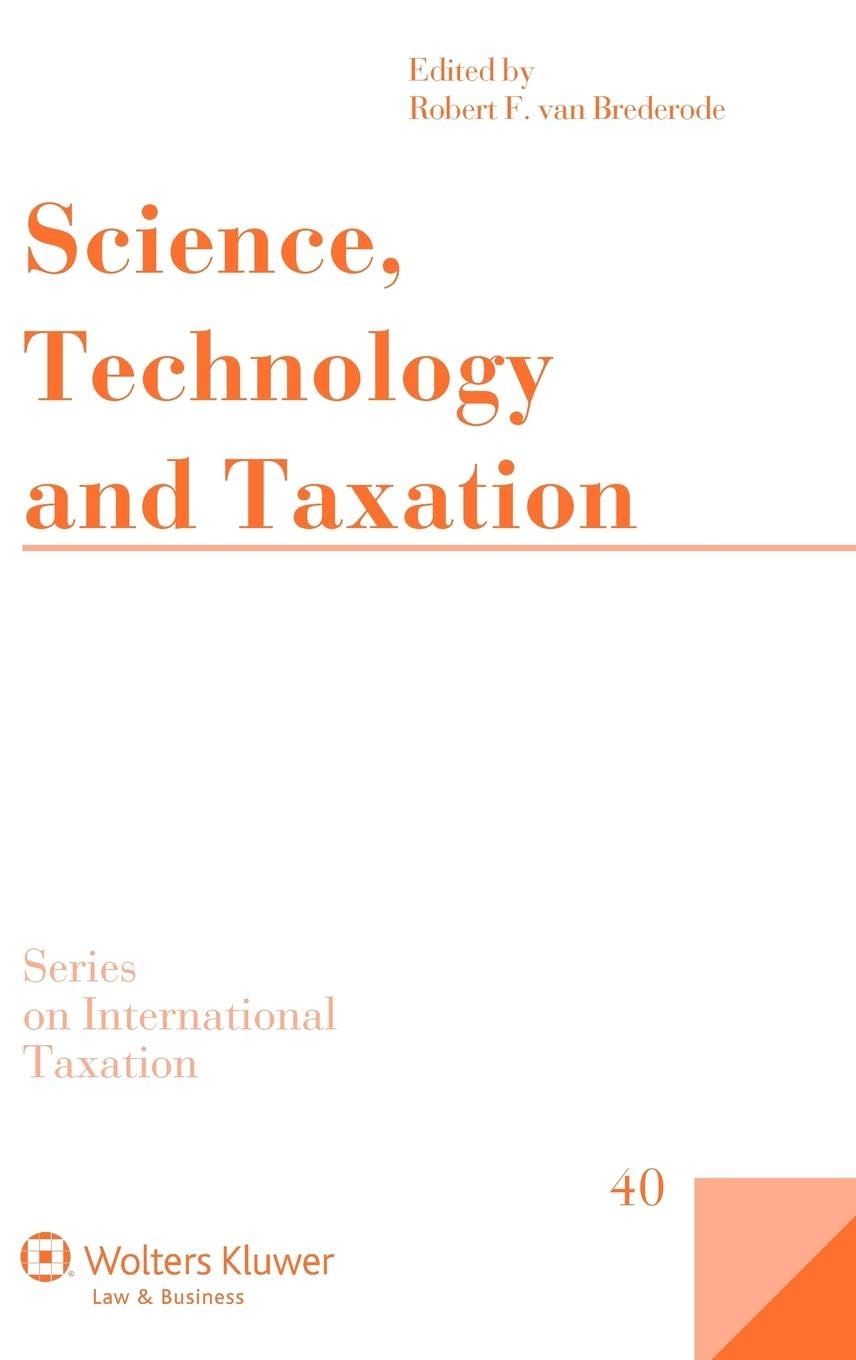
Science Technology And Taxation (Series On International Taxation) (Series On International Taxation, 40),Used
Sold by Ergodebooks, an authorized reseller.
Returns accepted within 30 days | support@ergodebooks.com
Shipping Information
- Free Standard Shipping — United States only
- Processing Time: 3–5 business days
- Estimated Delivery: 6–10 business days after dispatch
- Double-boxed, fully insured & discreetly packaged
- Tracking number sent via email once dispatched
Returns & Refund
Returns accepted within 30 days of delivery.
Damaged or Defective Item
Free return shipping + replacement or full refund
Wrong Item Received
Free return shipping + replacement or full refund
Change of Mind
Return shipping at customer's expense · 25% restocking fee applies
Payment Option

This first comprehensive study of the interaction between technology and taxation approaches the subject along four main avenues: insight and analysis gained from empirical legal studies conducted in the area of taxation; methods for improving the control and management of the tax function in business; tax auditing through statistical sampling; and changes in the fiscal environment as a result of technological capabilities. Among the topics that arise are the following: what choices of sampling methodology exist; determination of both onesided and twosided confidence intervals; under what circumstances statistical sampling is acceptable as proof of underpayment and as a basis for penalties; the use of sampling agreements as a tool to improve taxpayers understanding of the process; complexities encountered by the introduction of technology in tax administration in developing countries; technological capability to detect economic activity in the informal sector; technological innovation as substitute for inadequate human capacity; improvements available to better monitor the movement and values of goods entering a country; safeguards to prevent unauthorized use of personal information; prioritizing resources to ensure that the key strategic objectives of the agency are being addressed; government defensive action and the threat to privacy; and capabilities and limitations of enterprise resource planning systems and tax engines.Although the author pays especially detailed attention to the technologies developed and used by the United States Internal Revenue Service, other notable systems developed by the European Union, Brazil, Mexico, and China are also examined. Various sampling methods and practices are illustrated with numerical examples. As tax systems acquire ever higher levels of integration, and because accuracy is crucial to the measurement of tax compliance, the perspectives opened and expertly analyzed by the author will prove of great importance. Practitioners, tax policymakers and administrators, tax standard setters, and tribunals dealing with disputes over tax administration and procedure, as well as academics and researchers, will instantly recognize the book's great importance and practical value.
⚠️ WARNING (California Proposition 65):
This product may contain chemicals known to the State of California to cause cancer, birth defects, or other reproductive harm.
For more information, please visit www.P65Warnings.ca.gov.