
Title
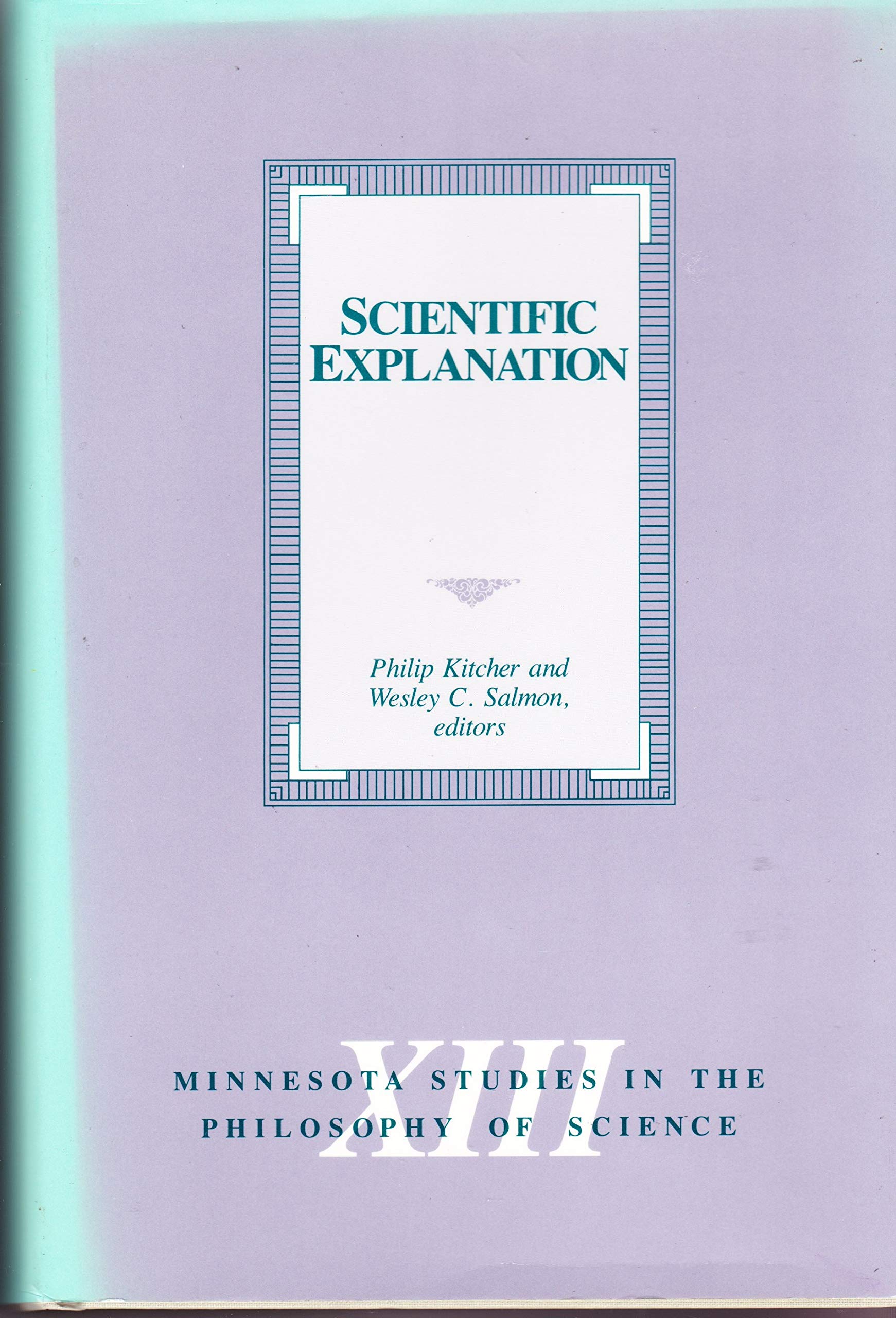
Scientific Explanation (Minnesota Studies in the Philosophy of Science),Used
Sold by Ergodebooks, an authorized reseller.
Returns accepted within 30 days | support@ergodebooks.com
Shipping Information
- Free Standard Shipping — United States only
- Processing Time: 3–5 business days
- Estimated Delivery: 6–10 business days after dispatch
- Double-boxed, fully insured & discreetly packaged
- Tracking number sent via email once dispatched
Returns & Refund
Returns accepted within 30 days of delivery.
Damaged or Defective Item
Free return shipping + replacement or full refund
Wrong Item Received
Free return shipping + replacement or full refund
Change of Mind
Return shipping at customer's expense · 25% restocking fee applies
Payment Option

Scientific Explanation was first published in 1962. Minnesota Archive Editions uses digital technology to make longunavailable books once again accessible, and are published unaltered from the original University of Minnesota Press editions.Is a new consensus emerging in the philosophy of science? The nine distinguished contributors to this volume apply that question to the realm of scientific explanation and, although their conclusions vary, they agree in one respect: there definitely was an old consensus.Coeditor Wesley Salmon's opening essay, 'Four Decades of Scientific Explanation,' grounds the entire discussion. His point of departure is the founding document of the old consensus: a 1948 paper by Carl G. Hempel and Paul Oppenheim, 'Studies in the Logic of Explanation,' that set forth, with remarkable clarity, a mode of argument that came to be known as the deductivenomological model. This approach, holding that explanation dies not move beyond the sphere of empirical knowledge, remained dominant during the hegemony of logical empiricism from 1950 to 1975. Salmon traces in detail the rise and breakup of the old consensus, and examines the degree to which there is, if not a new consensus, at least a kind of reconciliation on this issue among contemporary philosophers of science and clear agreement that science can indeed tell us why.The other contributors, in the order of their presentations, are: Peter Railton, Matti Sintonen, Paul W. Humphreys, David Papineau, Nancy Cartwright, James Woodward, Merrilee H. Salmon, and Philip Kitcher.
⚠️ WARNING (California Proposition 65):
This product may contain chemicals known to the State of California to cause cancer, birth defects, or other reproductive harm.
For more information, please visit www.P65Warnings.ca.gov.