
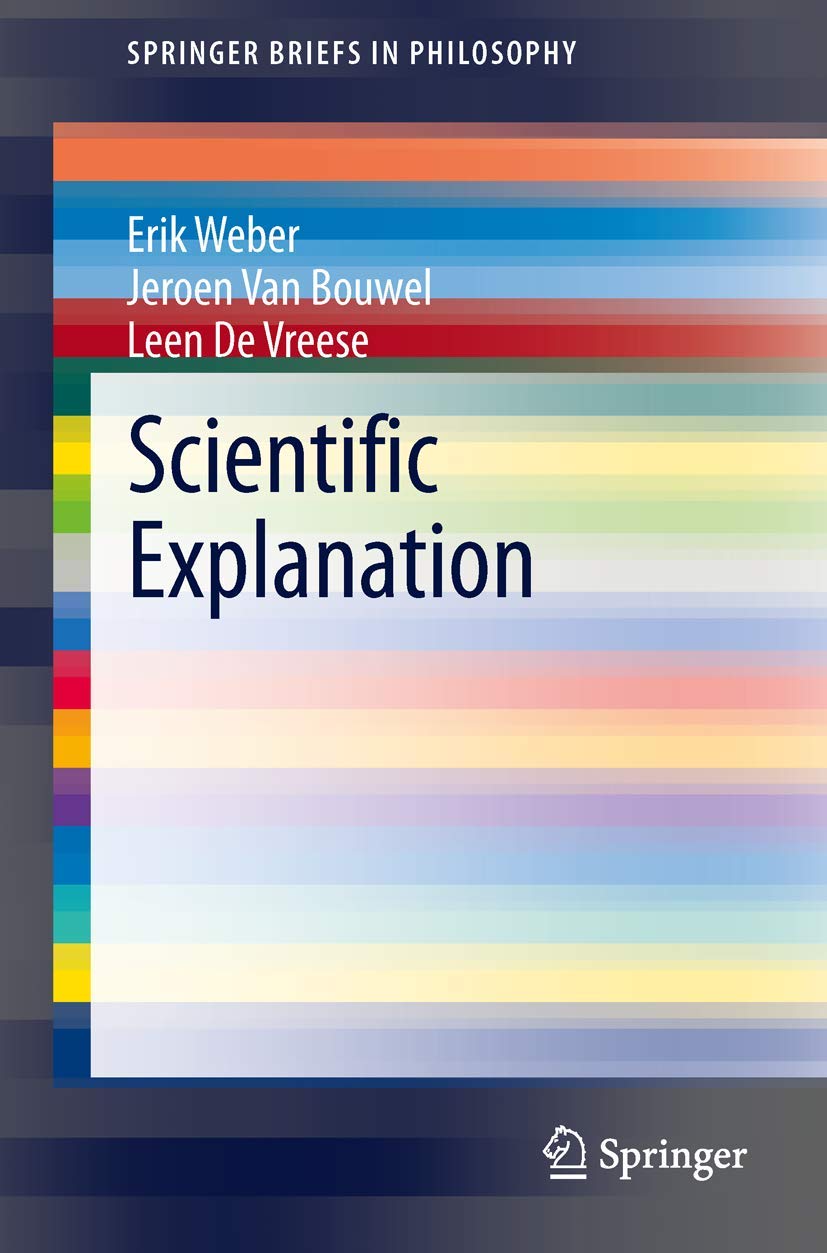
Title
Scientific Explanation (SpringerBriefs in Philosophy),Used
Sold by Ergodebooks, an authorized reseller.
Returns accepted within 30 days | support@ergodebooks.com
Shipping Information
- Free Standard Shipping — United States only
- Processing Time: 3–5 business days
- Estimated Delivery: 6–10 business days after dispatch
- Double-boxed, fully insured & discreetly packaged
- Tracking number sent via email once dispatched
Returns & Refund
Returns accepted within 30 days of delivery.
Damaged or Defective Item
Free return shipping + replacement or full refund
Wrong Item Received
Free return shipping + replacement or full refund
Change of Mind
Return shipping at customer's expense · 25% restocking fee applies
Payment Option

When scientist investigate why things happen, they aim at giving an explanation. But what does a scientific explanation look like? In the first chapter (Theories of Scientific Explanation) of this book, the milestones in the debate on how to characterize scientific explanations are exposed. The second chapter (How to Study Scientific Explanation?) scrutinizes the workingmethod of three important philosophers of explanation, Carl Hempel, Philip Kitcher and Wesley Salmon and shows what went wrong. Next, it is the responsibility of current philosophers of explanation to go on where Hempel, Kitcher and Salmon failed. However, we should go on in a clever way. We call this clever way the pragmatic approach to scientific explanation and clarify briefly what this approach consists in. The third chapter (A Toolbox for Describing and Evaluating Explanatory Practices) elaborates the pragmatic approach by presenting a toolbox for analysing scientific explanation. In the last chapter (Examples of Descriptions and Evaluations of Explanatory Practices) the approach is illustrated with reallife examples of scientists aiming at explaining.This book can be used as a textbook for intermediate philosophy of science courses and is also valuable as suggested reading for introductory courses in philosophy of science. The way the book is set up makes it an excellent study and research guide for advanced (MA and PhD) students that work on the topic of scientific explanation. Finally, it is a handy source and reference book for senior researchers in the field of scientific explanations and more generally for all philosophers of science.
⚠️ WARNING (California Proposition 65):
This product may contain chemicals known to the State of California to cause cancer, birth defects, or other reproductive harm.
For more information, please visit www.P65Warnings.ca.gov.