
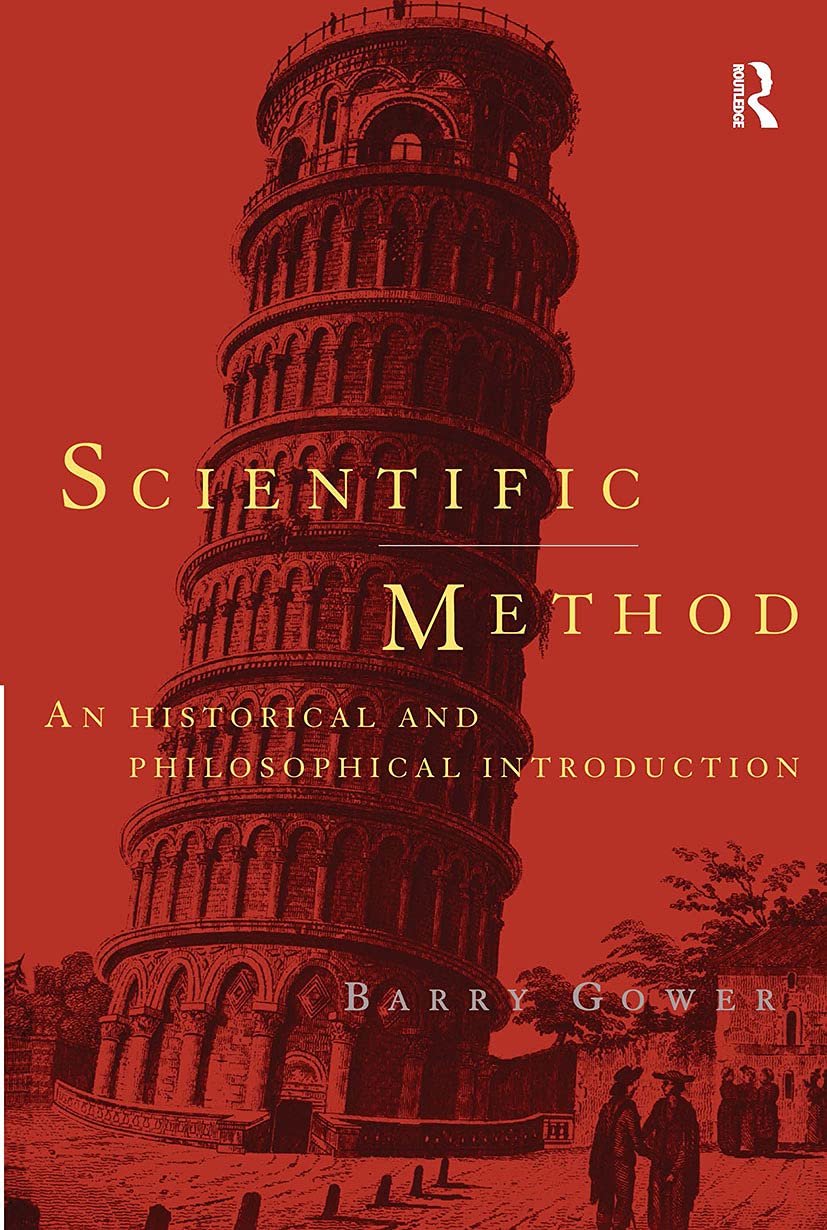
Title
Scientific Method: A Historical and Philosophical Introduction (Routledge Advances in Management and),Used
Sold by Ergodebooks, an authorized reseller.
Returns accepted within 30 days | support@ergodebooks.com
Shipping Information
- Free Standard Shipping — United States only
- Processing Time: 3–5 business days
- Estimated Delivery: 6–10 business days after dispatch
- Double-boxed, fully insured & discreetly packaged
- Tracking number sent via email once dispatched
Returns & Refund
Returns accepted within 30 days of delivery.
Damaged or Defective Item
Free return shipping + replacement or full refund
Wrong Item Received
Free return shipping + replacement or full refund
Change of Mind
Return shipping at customer's expense · 25% restocking fee applies
Payment Option

The central theme running throughout this outstanding new survey is the nature of the philosophical debate created by modern science's foundation in experimental and mathematical method. More recently, recognition that reasoning in science is probabilistic generated intense debate about whether and how it should be constrained so as to ensure the practical certainty of the conclusions drawn. These debates brought to light issues of a philosophical nature which form the core of many scientific controversies today. Scientific Method: A Historical and Philosophical Introduction presents these debates through clear and comparative discussion of key figures in the history of science. Key chapters critically discuss* Galileo's demonstrative method, Bacon's inductive method, and Newton's rules of reasoning* the rise of probabilistic Bayesian' methods in the eighteenth century* the method of hypotheses through the work of Herschel, Mill and Whewell* the conventionalist views of Poincar and Duhem* the inductivism of Peirce, Russell and Keynes* Popper's falsification compared with Reichenbach's enumerative induction* Carnap's scientific method as Bayesian reasoningThe debates are brought up to date in the final chapters by considering the ways in which ideas about method in the physical and biological sciences have affected thinking about method in the social sciences. This debate is analyzed through the ideas of key theorists such as Kuhn, Lakatos, and Feyerabend.
⚠️ WARNING (California Proposition 65):
This product may contain chemicals known to the State of California to cause cancer, birth defects, or other reproductive harm.
For more information, please visit www.P65Warnings.ca.gov.
- Q: How many pages does the book have? A: This book has two hundred eighty-eight pages. It provides a comprehensive exploration of the philosophy of science.
- Q: What are the dimensions of the book? A: The book measures six point fourteen inches in length, zero point sixty-seven inches in width, and nine point twenty-one inches in height.
- Q: What type of binding does the book have? A: This book is published in paperback binding. This makes it lightweight and easy to handle.
- Q: Who is the author of the book? A: The author of this book is Barry Gower. He discusses key philosophical debates in the context of the history of science.
- Q: What genre does this book belong to? A: This book falls under the genre of philosophy and science. It addresses historical and philosophical aspects of scientific methods.
- Q: Is this book suitable for beginners? A: Yes, this book is suitable for beginners. It provides clear explanations of complicated philosophical debates in science.
- Q: What themes are explored in the book? A: The book explores themes such as the scientific method, probabilistic reasoning, and historical debates in science. It critically analyzes the works of key figures.
- Q: Can this book be used for academic study? A: Yes, this book can be used for academic study. It offers insights into the philosophical foundations of scientific inquiry.
- Q: Is this book appropriate for all ages? A: Yes, this book is appropriate for all ages. However, it is best suited for readers with an interest in philosophy and science.
- Q: How should I store this book? A: Store this book in a cool, dry place away from direct sunlight. This helps preserve the quality of the paperback cover.
- Q: How can I keep this book in good condition? A: To keep this book in good condition, avoid bending the spine and keep it on a shelf or in a protective cover when not in use.
- Q: What if the book arrives damaged? A: If the book arrives damaged, contact the seller for a replacement or refund. Ensure you have your order details available.
- Q: Is there a warranty on the book? A: No, there is typically no warranty on books. However, check the return policy of the retailer for any guarantees.
- Q: What do I do if I have an issue with my order? A: If you have an issue with your order, reach out to customer service. Provide details about your order and the issue you're experiencing.
- Q: Can I return the book if I change my mind? A: Yes, you can usually return the book if you change your mind. Check the return policy for the specific timeframe and conditions.
- Q: Are there any common issues with this book? A: Common issues may include misprints or shipping damage. Always inspect the book upon receipt to ensure it meets your expectations.