
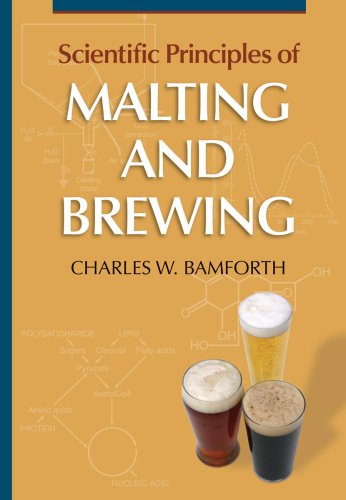
Title
Scientific Principles Of Malting & Brewing
Sold by Ergodebooks, an authorized reseller.
Returns accepted within 30 days | support@ergodebooks.com
Shipping Information
- Free Standard Shipping — United States only
- Processing Time: 3–5 business days
- Estimated Delivery: 6–10 business days after dispatch
- Double-boxed, fully insured & discreetly packaged
- Tracking number sent via email once dispatched
Returns & Refund
Returns accepted within 30 days of delivery.
Damaged or Defective Item
Free return shipping + replacement or full refund
Wrong Item Received
Free return shipping + replacement or full refund
Change of Mind
Return shipping at customer's expense · 25% restocking fee applies
Payment Option

This Timely Book Provides A Refreshing Update For Experienced Brewing Professionals And A Valuable Primer On Brewing Science For Anyone New To The Science Or In Need Of A Current Review. It Provides Readerfriendly Coverage Of Basic Brewing Chemistry And Biochemistry That Will Be Meaningful To Anyone With An Interest In Brewing.The Book Addresses The Key Issues Involved With Malting, Brewhouse Operations, Fermentation, Downstream Processing, And Product Quality. It Is Comprehensive Yet Presents The Essential Science Of Brewing In A Useful And Applied Manner, Without The Minutiae Of A Research Monograph. Readers Get The Details They Need To Improve Their Knowledge And Understanding Of The Entire Brewing Process From Barley To Beer. Industry Newcomers And Seasoned Brewing Professionals Will Find This To Be A Versatile Sourcebook.In Scientific Principles Of Malting And Brewing, The Author Reveals The Approach Taught In His University Courses On Malting And Brewing Science. Bamforth Is A Wellrespected Brewing Educator And Chair Of The Department Of Food Science And Technology At The University Of California, Davis. His Many Years Of Experience Teaching On This Topic Are Evident In His Clear And Concise Approach To Every Chapter. His Influential Research On Beer Quality, Including The Stability Of Beer Flavor And Foam, Make Him A Particularly Qualified Expert. With This Strong Background, He Has Written A Book That Fills A Significant Need For An Uptodate Teaching Text To Help Prepare Students For Technical Careers In Brewing Science.Contentsintroduction; Basics Of Malting And Brewing; Beer Types; The Quality And Wholesomeness Of Beer; Barley And Malting; The Components Of Barley And Their Degradation During Malting And Mashing; Production Of Sweet Wort; Water; Hops; Wort Boiling, Clarification, And Cooling; Sugars; Yeast; Brewery Fermentations; Beer Flavor: Its Nature, Origins, And Control; Downstream Processing: Cold Conditioning, Filtration, And Stabilization; Haze Instability; Flavor Instability; Foam; Gushing; Light Instability; Biological Instability; Packaging; Quality Control And Quality Assurance; Environmental Impacts And Outputs; Appendix 1 Chemistry And Biochemistry For Brewers; Appendix 2 Fundamental Statistics For Brewers; Index
⚠️ WARNING (California Proposition 65):
This product may contain chemicals known to the State of California to cause cancer, birth defects, or other reproductive harm.
For more information, please visit www.P65Warnings.ca.gov.
- Q: How many pages does this book have? A: This book has two hundred fifty-six pages. It provides an in-depth exploration of malting and brewing science.
- Q: What is the binding of the book? A: The book is bound in hardcover. This durable binding is ideal for frequent use in both professional and academic settings.
- Q: Who is the author of 'Scientific Principles of Malting & Brewing'? A: The author is Charles Bamforth. He is a well-respected brewing educator and Chair at the University of California, Davis.
- Q: What topics does this book cover? A: The book covers malting, fermentation, and brewing processes. It addresses key issues in product quality and downstream processing.
- Q: Is this book suitable for beginners in brewing? A: Yes, this book serves as a valuable primer for newcomers to brewing science. It balances complex concepts with accessible explanations.
- Q: Can experienced professionals benefit from this book? A: Yes, experienced brewing professionals will find it to be a refreshing update. It offers current insights into brewing chemistry and biochemistry.
- Q: How should I store this book to keep it in good condition? A: Store the book upright in a cool, dry place. Avoid direct sunlight to prevent fading and damage to the cover and pages.
- Q: Are there any specific care instructions for this book? A: Yes, avoid exposure to moisture and handle it with clean hands. This will help maintain the integrity of the pages and binding.
- Q: What if I receive a damaged copy of the book? A: If the book arrives damaged, contact customer support for a return or replacement. Most retailers offer hassle-free return policies.
- Q: Is this book appropriate for a college course on brewing? A: Yes, it is an excellent resource for college courses. It provides comprehensive coverage of essential brewing science topics.
- Q: Does the book contain any appendices? A: Yes, it includes two appendices. They cover chemistry and biochemistry fundamentals, as well as essential statistics for brewers.
- Q: What age group is this book suitable for? A: This book is suitable for adults and students interested in brewing science. It is not targeted at children due to its technical content.
- Q: Does the book address environmental impacts in brewing? A: Yes, it includes a section on environmental impacts and outputs. This highlights the importance of sustainability in brewing practices.
- Q: Is there a glossary or index in the book? A: Yes, the book features an index. This helps readers quickly locate specific topics and concepts related to brewing science.
- Q: What kind of readers would find this book useful? A: Both novices and seasoned professionals will find this book useful. It combines foundational knowledge with advanced brewing techniques.